
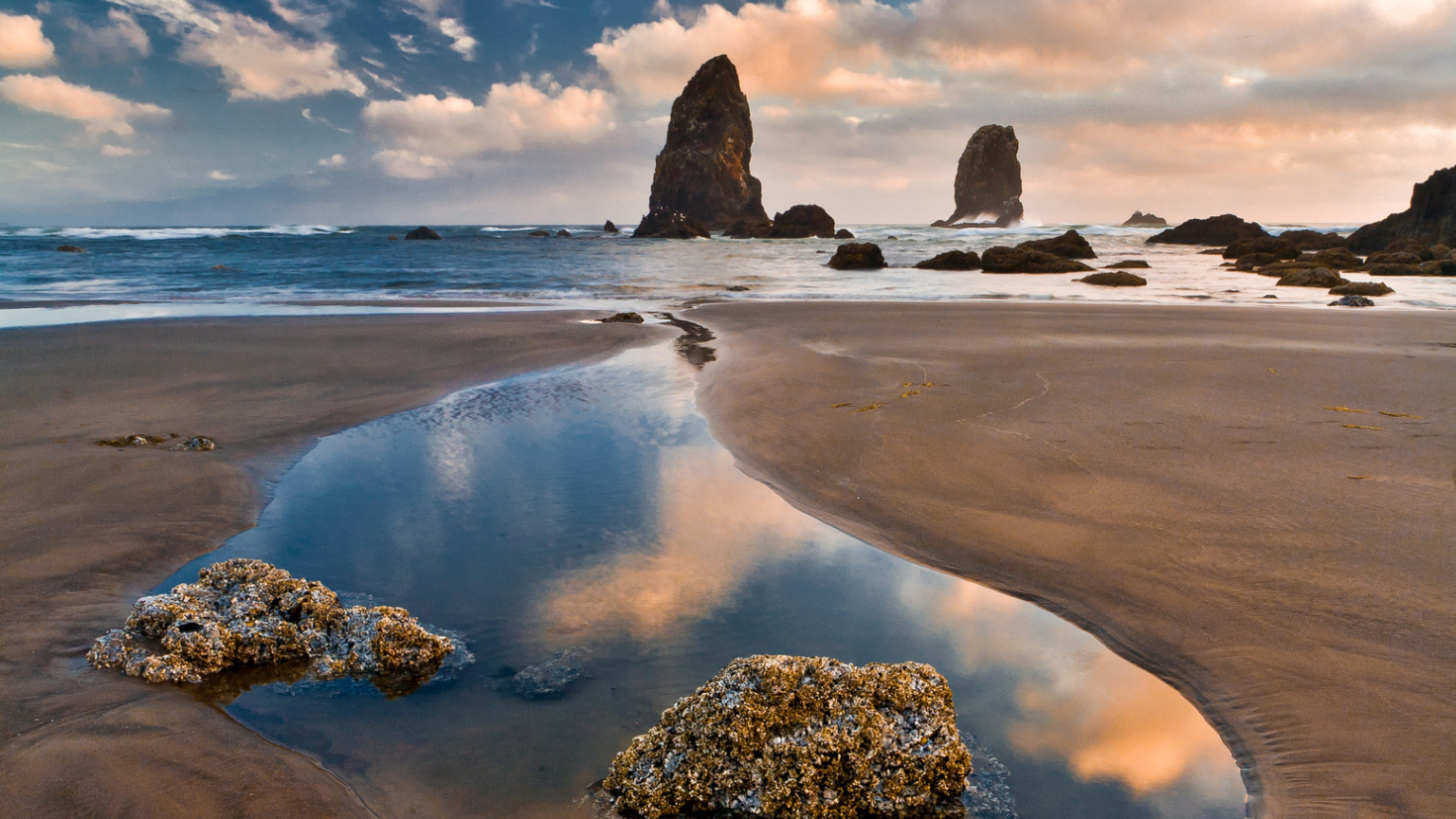

If you are already thinking about where to travel in 2026, you might want to look a little closer to home. A major news outlet in the U.K., the BBC, has named the Oregon Coast one of its 20 top travel destinations for next year. For a region that often flies under the radar compared with bigger name coastal spots, it is a big nod from an international audience and a reminder of just how special this stretch of shoreline really is.
A Wild, Dramatic Coastline That Belongs to Everyone
The Oregon Coast runs for nearly 370 miles, starting near the dramatic cliffs around the Columbia River Gorge in the north and ending near the towering redwood forests by the California border. BBC described it as a mesmerizing mix of strength and beauty, and that is a pretty fair summary. You get wave battered beaches backing up to dense evergreen forests, lonely lighthouses materializing out of fog, and quiet fishing towns where you might spot migrating whales just offshore.
One of the most remarkable things about this coastline is that every inch of it is open to the public. Thanks to a landmark bill passed in 1967, Oregon is still the only state where the entire ocean shoreline is legally free and accessible to everyone. That means whether you are walking a windswept beach in winter or picnicking above sea stacks in summer, you never have to wonder if you are trespassing on a private patch of sand.
Highway 101 as a Bucket List Road Trip
BBC also pointed out that while California’s coast tends to get more attention and heavier crowds, Oregon’s Highway 101 has quietly become one of the country’s true bucket list road trips. The highway hugs the shoreline for long stretches, weaving past viewpoints, state parks, tiny harbor towns, and wide open beaches.
You can roll into classic stops like Cannon Beach with its famous Haystack Rock, wander the funfair vibe in Seaside, or watch the waves crash against the rocks in Depoe Bay and Yachats. Farther south, places like Bandon, Gold Beach, and Brookings feel even more remote and wild. Because the entire coast is threaded together by this one main route, it is easy to build anything from a quick weekend loop to a multi day drive that hits all your favorite spots.
Easier Access from Portland: Shuttles and EV Charging
It is not just the scenery that earned the Oregon Coast a spot on BBC’s list. The region is also being recognized for how it is updating its infrastructure to meet modern travelers where they are. Sustainable Travel International highlighted the growing network of charging stations along the coast, which makes it much more practical to drive an electric vehicle without worrying about getting stranded.
On top of that, there is now a seasonal shuttle that connects Portland to several Northern Coast towns. Launched by the Oregon Coast Visitors Association ahead of last summer, this express service runs from Portland’s Sunset Transit Center out to coastal favorites like Cannon Beach, Seaside, and Rockaway Beach. It is designed for people who either do not want to drive or would prefer to leave the car behind for a stress free day trip. The shuttle is expected to relaunch in May, giving both locals and out of state visitors an easy way to hop between the city and the sea.
A Dream Route for Cyclists
If you would rather travel on two wheels than four, the Oregon Coast also offers a dedicated option. The Oregon Coast Bike Route stretches the same 370 miles from Astoria in the north to Brookings in the south. Cyclists can follow a mix of Highway 101 segments and quieter back roads, with coastal viewpoints, small towns, and state parks breaking up the ride.
For bike travelers, this route feels like a movable feast of sea views, forested climbs, and small town diners where you can refuel with chowder, fish and chips, or fresh baked pies. Some riders tackle the full length over a week or more, while others choose shorter sections and base themselves in one or two towns. Either way, it is another example of how the region is set up for slow, scenic travel rather than rush and congestion.
Fresh Seafood, Accessibility, and Sustainability
BBC’s praise did not stop at views and road trips. The article also highlighted the Oregon Coast’s commitment to freshly caught seafood, accessibility, and environmental sustainability. Many coastal communities still rely on working harbors, so you can eat local fish, crab, clams, and oysters that came off boats just hours earlier.
At the same time, there has been a growing push to make trails, viewpoints, and beaches more accessible to visitors with different mobility needs. That includes improved paths, better signage, and more thoughtful design at popular stops. Environmental efforts, from dune restoration to marine reserves and sustainable tourism campaigns, are also front and center. The message is clear. The Oregon Coast wants visitors to enjoy the landscape while helping protect it for the long term.
Oregon’s Moment on the Global Travel Stage
In BBC’s roundup, the Oregon Coast was in good company. Outside of the coast, the only other U.S. destination on the list was Philadelphia, which underscores how selective the editors were with American picks. Other global standout destinations included Abu Dhabi, Santo Domingo in the Dominican Republic, and British Columbia’s Slocan Valley.
For Oregon, making this kind of list means more international eyes on a region that has long been a favorite of Pacific Northwest locals. If you have been thinking about driving Highway 101, hopping on that coastal shuttle, or planning a bike trip down the shore, 2026 may be the year to finally do it. Just be prepared to fall a little bit in love with a coastline that is wild, accessible, and proudly shared with everyone.
Follow us on MSN for all your travel and lifestyle tips.
This article was written by Hunter and edited with AI Assistance