
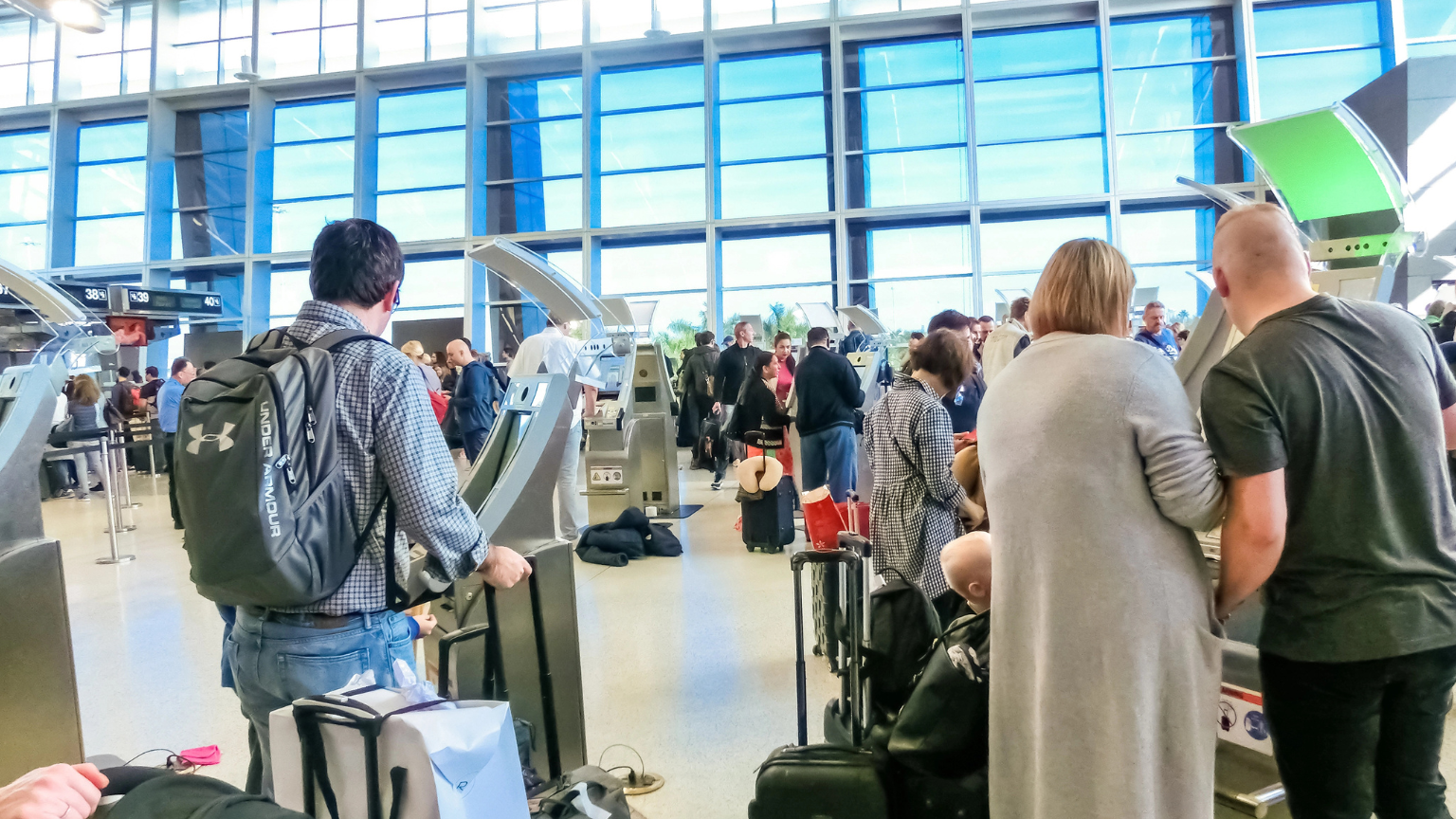

Thanksgiving is always one of the most hectic travel periods of the year, but this weekend pushed patience to the limit. Winter weather and last minute aircraft software issues combined to snarl flights across the United States, leaving travelers facing long lines, unexpected overnights, and rebooked itineraries just as they were trying to head home after the holiday.
By Sunday morning, tracking site FlightAware reported 1,815 flight delays and 490 cancellations nationwide. Major hubs in Chicago, New York City, Boston, Des Moines, Minneapolis, and Detroit were among the hardest hit, with ripple effects spreading throughout the system. Even rail travel saw trouble when a fire beneath three Amtrak cars in Providence, Rhode Island, forced an emergency response. Fire crews quickly put out the blaze and moved the train to safety, and no injuries were reported.
A Thanksgiving Storm That Would Not Let Go
The first blow came from a powerful snowstorm sweeping across the Midwest and Great Lakes in the days following Thanksgiving. National Weather Service offices from Montana to Ohio issued a broad swath of winter storm warnings and advisories, warning travelers to expect airport disruptions and hazardous driving conditions, especially in areas where snow was falling at more than an inch an hour.
Northern Iowa was one of the early trouble spots, with the storm dropping around 8 inches of snow. By Saturday night, the focus shifted to Chicago, where the system threatened to deliver up to 10 inches. More than 1,400 flights were canceled at Chicago airports as crews struggled to keep up with snow removal and deicing.
Similar totals were forecast in other parts of Illinois as well as sections of Indiana, Michigan, and Wisconsin. As the storm moved east, Detroit’s airports logged more than 300 delays and dozens of cancellations on Saturday night, adding another busy hub to the long list of impacted travelers.
Software Snags Add Another Layer of Disruption
While winter weather caused most of the early chaos, airlines spent the weekend dealing with a second, more technical problem. The Federal Aviation Administration flagged thousands of Airbus A320 family aircraft worldwide for required software updates. The directive covered jets used by several carriers, including the Airbus model carrying Pope Leo XIV on a trip through the Middle East.
For U.S. travelers, the biggest impact came from JetBlue. The airline canceled roughly 170 flights on Sunday as it pulled a portion of its Airbus A320 and A321 fleet out of service for the mandated software installations. JetBlue said it expected to complete updates on nearly 120 aircraft by Sunday morning, with around 30 planes still waiting their turn.
The airline warned that more cancellations were possible while the work continued. In a statement, JetBlue acknowledged how disruptive the timing felt during one of the busiest travel periods of the year and said it was working to reduce the impact as much as possible for customers.
FlightAware data showed that by Sunday, JetBlue had canceled 74 flights that were originally scheduled for that day, about 7 percent of its operation. When asked whether the software work would wrap up Sunday or extend into Monday, a JetBlue source said the airline was working as quickly as it could to finish the upgrades.
Other Airlines Race to Finish Required Updates
JetBlue was not the only airline touched by the FAA directive. Both Frontier Airlines and Spirit Airlines confirmed that some of their Airbus aircraft required the same software update.
Frontier reported that it had completed all necessary updates by Sunday morning and said the process did not affect its customers. Spirit Airlines announced earlier that it expected to finish updating its affected planes on Saturday. The carrier emphasized that it was doing everything possible to keep its schedule running smoothly and to minimize disruption to travelers’ plans.
What This Means for Holiday Travelers
For passengers caught in the middle, the combination of a major winter storm and fleet wide software work created a perfect storm of delays and cancellations. Many travelers who thought the worst of the Thanksgiving rush was behind them ended up spending extra hours in terminals or adjusting their plans on the fly.
The weekend served as a reminder that even in an era of detailed forecasts and complex scheduling tools, weather and technical issues can still collide at the worst possible moment. For anyone planning to fly during peak holiday windows, building in extra time, monitoring flight status closely, and having backup options in mind remain some of the best ways to protect your trip when the system starts to strain.
Follow us on MSN for all your travel and lifestyle tips.
This article was written by Hunter and edited with AI Assistance