
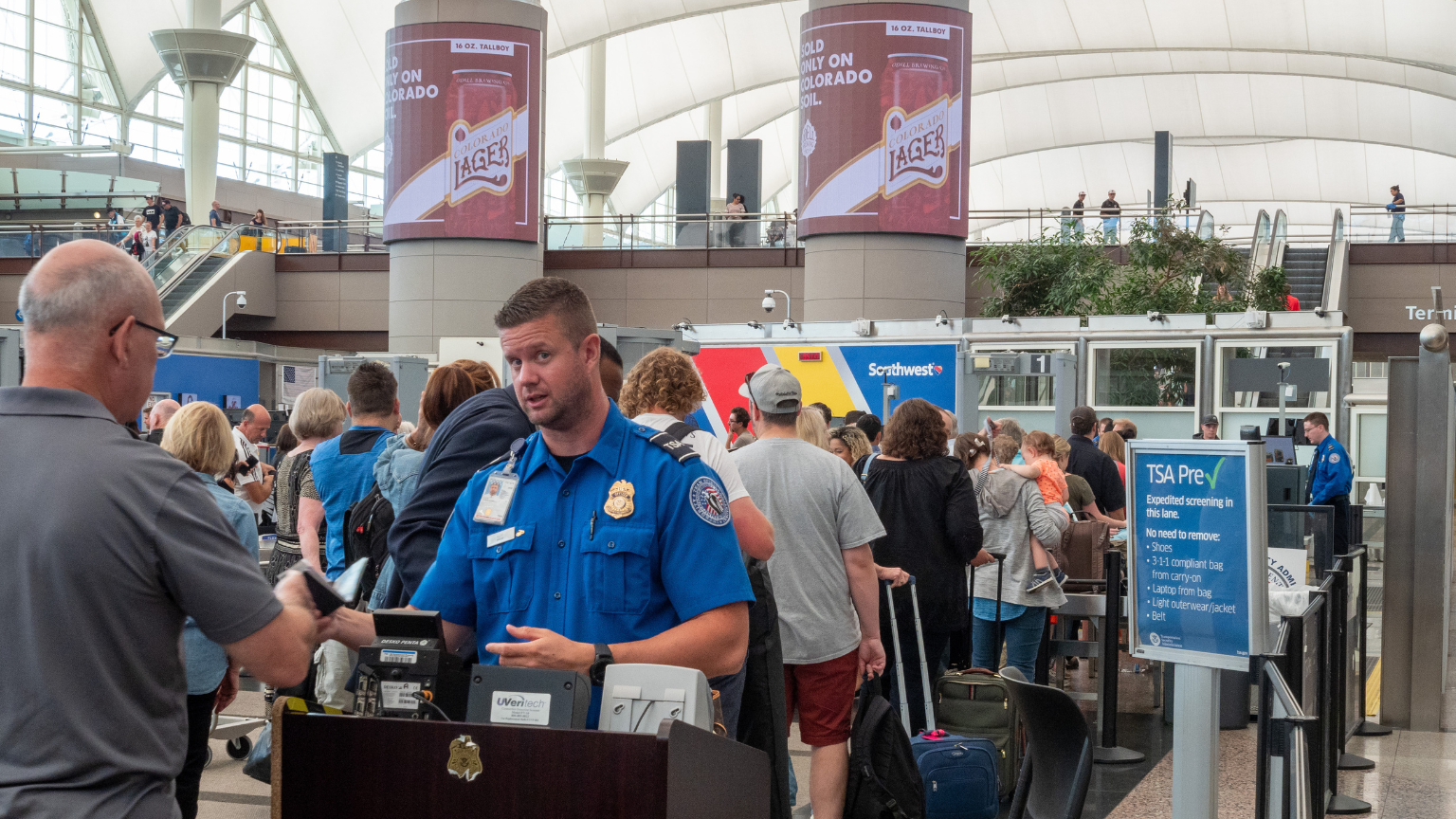

Beginning February 1, air travelers who show up at airport security without a REAL ID–compliant document could face an extra expense they were not expecting. The Transportation Security Administration (TSA) has announced a new $45 fee for passengers whose IDs do not meet stricter federal standards, part of a broader push to get more people to upgrade before the rules fully tighten.
The fee is meant as both a backup option for travelers and a strong nudge to update their identification ahead of time. Here is how it will work and what you need to know before your next flight.
What Is Changing and When
The TSA started enforcing REAL ID standards at U.S. airport checkpoints in May 2025. Up to now, passengers who did not have a compliant ID were allowed to fly after going through enhanced screening and receiving a warning.
From February 1 onward, that safety net becomes more expensive. If you arrive at security without a REAL ID–compliant document or another acceptable form of identification, you will be asked to pay a $45 fee in order to continue your trip.
Originally, the TSA floated a lower fee. A notice posted in the Federal Register on November 20 mentioned an $18 charge. After reviewing the actual costs of providing this alternative screening option, officials raised the fee to $45 before rolling it out.
How the $45 Fee Works
The new fee is designed as a temporary access pass rather than a one-time charge for a single flight.
- The $45 payment will cover a 10-day travel period. If you are taking multiple flights within that window, you will not need to pay again each time.
- The fee is nonrefundable, even if your plans change or you decide not to travel after paying.
- Travelers who do not pay the fee in advance should plan for extra time at the airport. TSA officials estimate it could take up to 30 minutes at the checkpoint to process payment and complete the enhanced screening process.
In rare, extraordinary situations, TSA officers will have the discretion to waive the fee, but that is expected to be the exception, not the rule. The agency’s message is clear. Pay ahead if you must use the option, or better yet, upgrade your ID so you do not need it at all.
Who Needs REAL ID and Who Does Not
Not everyone will be affected by the new fee. The REAL ID rules apply to adults flying within the United States who need to show identification at security checkpoints.
- Children under 18 do not need to present an ID when traveling with an adult on a domestic flight, so the fee will not apply to them.
- Most adult travelers already use state-issued driver’s licenses or ID cards that meet REAL ID standards. Many states now mark these with a star or similar symbol in the corner.
- TSA officials say about 94% of travelers currently present valid, acceptable IDs at the checkpoint, which means a relatively small share of passengers would face the new charge.
If you are not sure whether your ID is REAL ID–compliant, check with your state’s motor vehicle agency or look for the marking on your card.
Other IDs That Still Work
You do not need a state REAL ID license if you already carry another form of acceptable identification. The TSA will continue to accept:
- Valid U.S. passports
- Passports issued by foreign governments
- U.S. permanent resident (green) cards
- U.S. Department of Defense IDs
- DHS trusted traveler cards (such as Global Entry, NEXUS, or SENTRI)
- Other approved federal government identity cards
If you use one of these documents at airport security, the new $45 fee will not apply to you.
Why REAL ID Matters Now
REAL ID is not new. Congress passed the law back in 2005, after the September 11, 2001 attacks. It was based on a recommendation from the 9/11 Commission that the federal government set consistent standards for issuing identification, particularly driver’s licenses.
The law set minimum security requirements for how states issue and produce IDs. Over the years, enforcement has been delayed multiple times to give states and travelers more time to adjust.
Now, with REAL ID enforcement finally underway at airports, the TSA is using the new fee structure to close the gap. The agency wants travelers to treat upgrading their ID as a must-do task, not something that can be put off indefinitely. These same IDs are also needed to enter certain federal buildings, so the impact goes beyond air travel.
What Travelers Should Do Next
If you plan to fly within the United States in 2025 or beyond, this is the time to check your wallet and your calendar.
- Look at your driver’s license or ID card and confirm whether it is REAL ID–compliant. If it is not, schedule an appointment with your state DMV or licensing office as soon as possible.
- If you already carry a valid passport, trusted traveler card, or another approved federal ID, decide which one you want to use at the airport.
- If you know you will not be able to obtain a REAL ID before an upcoming trip, budget for the possibility of paying the $45 fee and consider paying it ahead of time if the TSA offers that option in your account or through their website.
The new rules may feel like one more hoop to jump through, but knowing how they work can save you time, money, and stress on the day you fly. Upgrading your ID now is the simplest way to skip the fee completely—and keep your next airport experience focused on your trip, not your paperwork.
Follow us on MSN for all your travel and lifestyle tips.
This article was written by Hunter and edited with AI Assistance