

After 43 tense days, the longest government shutdown in U.S. history is finally over, but the skies are not instantly snapping back to normal. Late Wednesday night, President Donald Trump signed a funding bill just hours after the House of Representatives voted 222 to 209 to reopen the government. The deal extends funding through January 30 and unlocks paychecks for hundreds of thousands of federal workers, including air traffic controllers and TSA agents.
For travelers and the broader travel industry, the mood is a mix of relief, optimism, and frustration. Flights are still being cut, delays continue to ripple through the system, and leaders across aviation and hospitality are urging Congress to stop using shutdowns as a political tool and instead focus on long term solutions.
Flight Reductions Continue Even as Government Reopens
The end of the shutdown does not mean an immediate return to business as usual at the nation’s airports. The Department of Transportation confirmed that flight reductions at 40 major U.S. airports will remain in place for now. Instead of the previously planned 10 percent cut, the Federal Aviation Administration is holding at about a six percent reduction while operations slowly come back up to speed.
FAA officials expect a rapid decline in air traffic controller callouts as pay resumes, but they are not rushing the process. Transportation Secretary Sean Duffy said that if the FAA safety team sees trends moving in the right direction, the agency will outline a path to restore normal operations. Until then, airlines and travelers must work around a system that is still constrained even though the political crisis has technically ended.
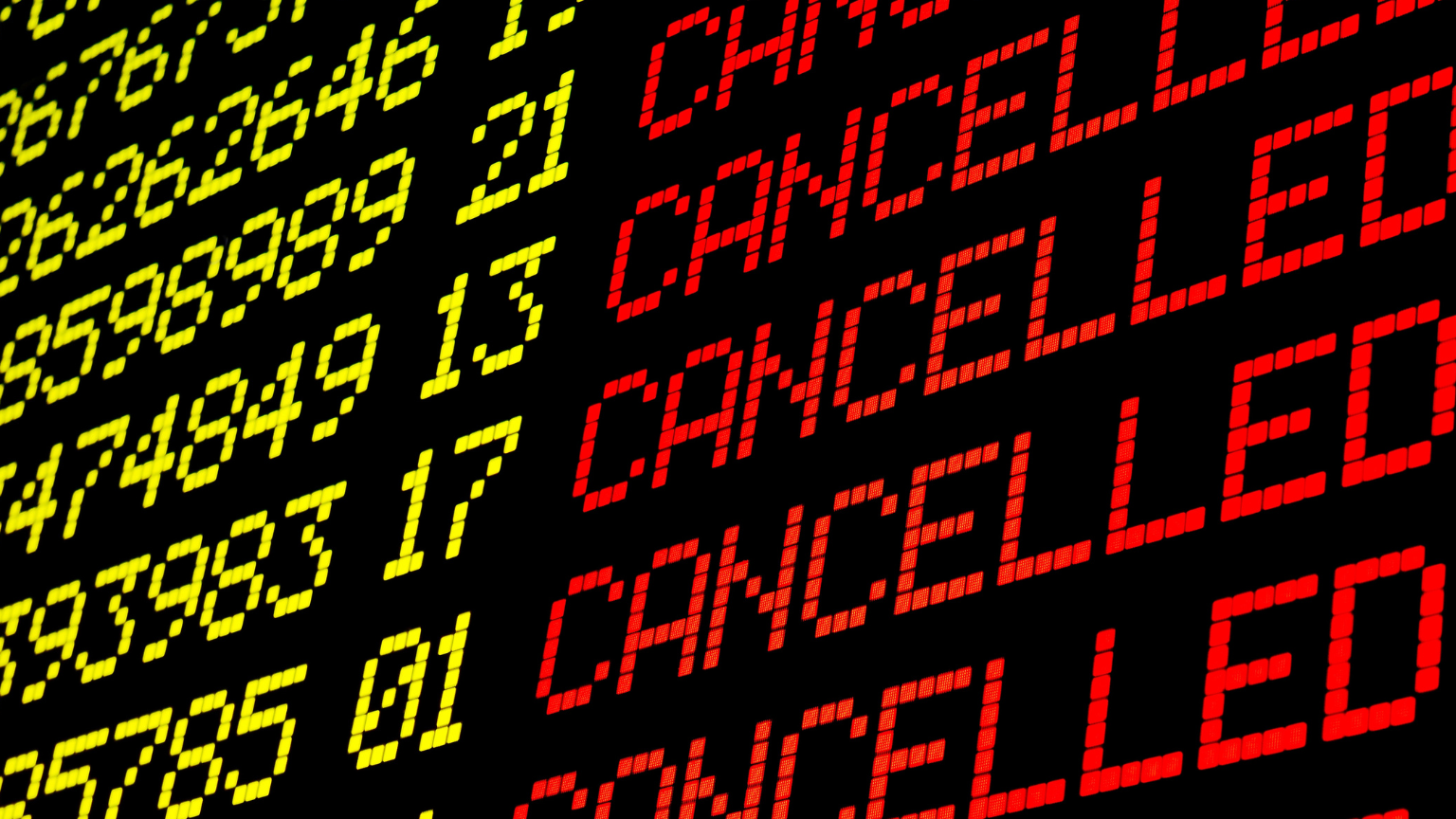
The numbers underline how bumpy the restart has been. By early Thursday afternoon, flight tracking service FlightAware reported more than 1,000 flights within, into, or out of the United States already canceled for the day, with another 1,583 delayed. On Wednesday, 910 flights were canceled and 2,668 delayed. For many passengers, the shutdown’s effects did not end with the president’s signature.
Airlines Welcome the End of the Shutdown
Major carriers quickly issued statements welcoming the deal to reopen the government while also calling attention to the disruption the shutdown caused.
American Airlines said it was pleased to see the shutdown finally end after 43 days. The airline pointed out that the stoppage led to widespread delays and cancellations across the country. It was not just about the FAA mandated reductions, but also the ripple effects of federal aviation professionals working without pay. According to American, hundreds of thousands of its customers were directly affected by schedule changes and operational snags.
Delta Air Lines struck a similar tone. The carrier praised Congress for restoring government operations and publicly thanked federal workers such as air traffic controllers, TSA agents, and Customs and Border Protection officers who kept the system running for more than 40 days without pay. Delta also highlighted the efforts of its own employees, who stepped in to support customers and federal workers during an exceptionally stressful period.
With the shutdown over, Delta says it is focused on bringing its operation back to full capacity over the next few days. The airline is promising to deliver the premium experience its customers expect as it heads into the busy holiday travel season, but that effort still depends on how quickly the air traffic system can stabilize.
Travel Leaders Call Shutdowns “Irresponsible” and Demand Long Term Fixes
While airlines tried to strike a hopeful tone, some industry leaders were openly critical of how the shutdown unfolded. U.S. Travel Association President and CEO Geoff Freeman did not mince words. He called all government shutdowns irresponsible and said they put essential services at risk, damage public trust, and cause unnecessary economic pain.
Freeman argued that if Congress ever allows a shutdown to happen again, essential federal workers such as air traffic controllers and TSA officers must continue to be paid without interruption. In his view, the country cannot afford another self made crisis that undermines systems millions of people rely on every day.
Looking ahead, Freeman said this resolution should not just restore stability in the short term but also spur long term change. He urged lawmakers to invest in modern infrastructure, better technology, and a strong workforce to keep America’s travel network moving forward rather than constantly playing catch up after political standoffs.
Holiday Travel Plans Took a Hit
The timing of the shutdown’s later stages could not have been much worse for holiday travelers. Rosanna Maietta, President and CEO of the American Hotel & Lodging Association, highlighted how the chaos spilled directly into Thanksgiving planning.
She noted that in the days leading up to the holiday, the federal workforce tasked with managing and overseeing the travel ecosystem began to show obvious strain. As delays mounted and uncertainty grew, nearly 20 percent of Americans reported canceling or changing their Thanksgiving travel plans. The combination of economic anxiety and actual travel disruptions shook consumer confidence, leading not just to last minute cancellations but also to weaker future bookings.
For hotels, that meant empty rooms, shorter stays, and nervous guests trying to decide whether it was worth the hassle to travel at all. Even with the shutdown now over, the industry will likely feel the effects in revenue numbers and booking patterns for months.
Business Travel and the Broader U.S. Economy
The impact of the shutdown did not stop with leisure travelers. The Global Business Travel Association estimates that U.S. business travel generates roughly 421 billion dollars in direct spending each year. That is a massive pillar of the economy, supporting jobs, deals, and long term relationships across industries.
CEO Suzanne Neufang emphasized that productive business travel is a cornerstone of a healthy economy, especially in times of uncertainty. When trips are delayed, canceled, or disrupted, meetings are missed, contracts can stall, and companies may rethink travel plans altogether. Neufang expressed hope that Congress would continue working together as the budget deadline at the end of January approaches.
Whether lawmakers can maintain that collaboration is an open question. The underlying policy debates on issues like healthcare costs remain unresolved, which means another funding standoff later in the winter cannot be ruled out. For businesses that rely on predictable travel, that uncertainty is its own form of risk.
Federal Workers Get Paid but Face Possible Consequences
For now, there is at least one bit of concrete good news for federal aviation workers. Compensation for air traffic controllers and Transportation Security Administration employees is back in motion. According to Secretary Duffy, air traffic controllers will receive a lump sum payment equal to 70 percent of their back pay within 48 hours of the shutdown ending.
However, Duffy also signaled that there could be fallout for some workers who called out before they technically missed a paycheck. He said he is concerned about controllers who repeatedly chose not to show up for work before their first skipped pay period, which would have been October 28. Those employees may face consequences, though Duffy did not provide details.
Notably, he did not say whether similar action is being considered for TSA officers who also called out ahead of their missed paychecks. That leaves a lingering question about how the government will handle the human side of a crisis it created, especially among workers who were asked to perform critical safety roles while their pay was uncertain.
What Comes Next for Travelers
With the shutdown over and funding secured through January 30, the travel industry is trying to move from emergency mode back to something closer to normal, even as reduced schedules and lingering delays continue. Airlines are rebuilding operations, federal workers are returning with back pay, and travelers are hoping the worst of the chaos is behind them.
Still, the experience has left a mark. Industry leaders are clearly frustrated, and many travelers may think twice the next time political brinkmanship threatens the systems they rely on. Until Congress can agree on a more stable path forward, the travel sector will keep operating with one eye on the skies and the other on Washington, wondering if and when the next showdown might arrive.
Follow us on MSN for all your travel and lifestyle tips.
This article was written by Hunter and edited with AI Assistance