
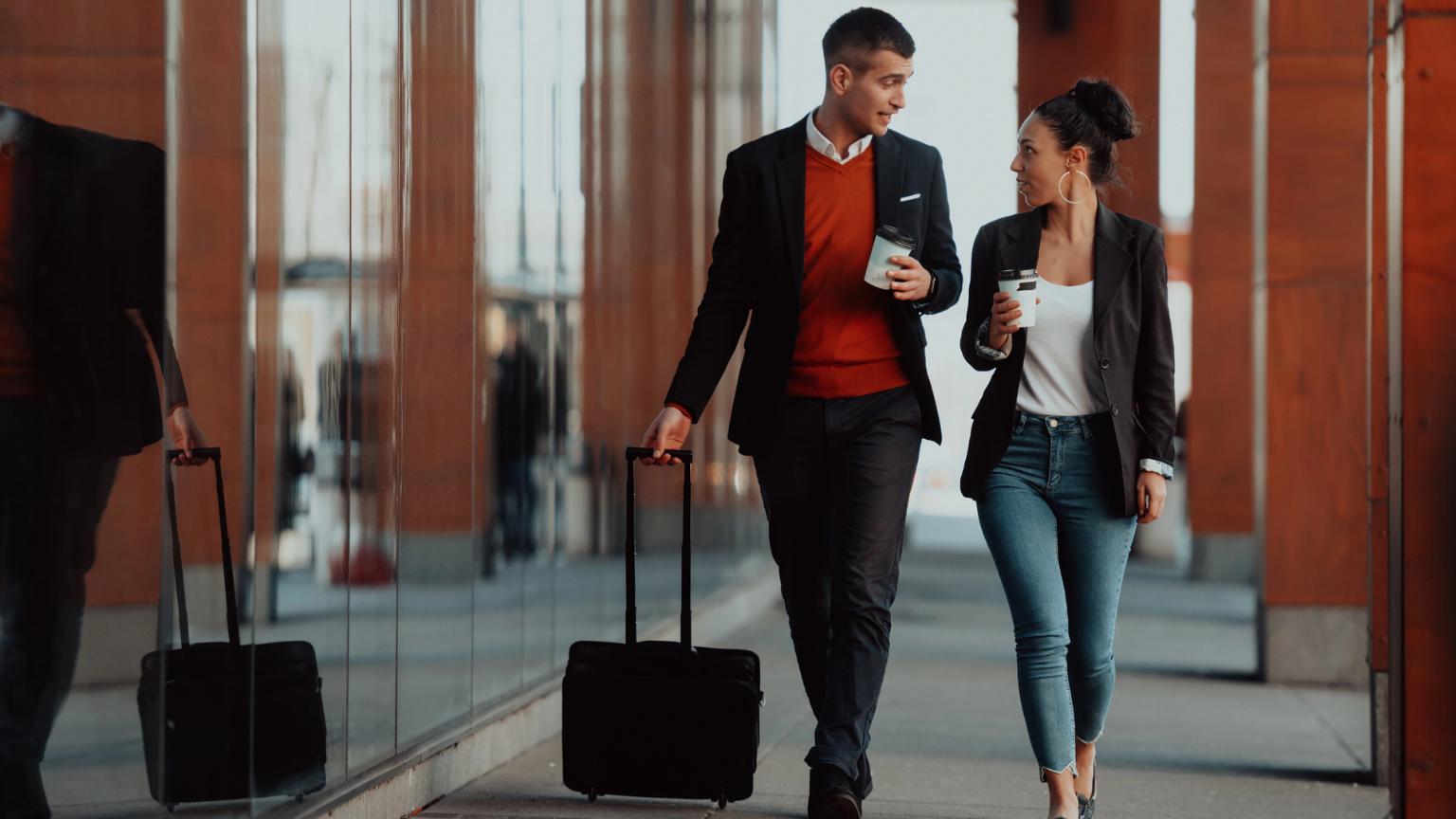

The U.S. Department of Transportation is trying something new to calm tensions in the skies. This week, the agency launched a civility campaign that asks Americans to dress “with respect” when they fly and to remember basic manners like saying “please” and “thank you” to crew members. It is a nostalgic nod to an era when people dressed up to board a plane, but travel experts are not convinced that a nicer outfit will fix modern air travel.
The initiative, called “The Golden Age of Travel Starts With You,” is meant to spark what the agency describes as a nationwide conversation about bringing courtesy and “class” back to flying. Transportation Secretary Sean Duffy announced the effort as a response to a surge in unruly passenger behavior, including arguments and even physical confrontations with other travelers and airline employees.
Federal Aviation Administration data shows that serious incidents with disruptive passengers peaked in 2021, during the height of post lockdown tensions, yet they still remain about twice as common as they were before the pandemic. Against that backdrop, the Transportation Department is hoping that a softer, etiquette focused message might encourage people to behave better on board.
“Dress Up, Help Out, Be Polite”: What the Campaign Is Asking Travelers to Do
The department has not issued any formal rules or dress codes. Instead, its messaging leans heavily on personal responsibility. In a social media post announcing the campaign, Duffy urged travelers to “dress up to go to the airport, help a stranger out, and be in a good mood.”
As part of the rollout, he asked passengers to run through five questions before they fly:
- Are you helping pregnant travelers or older passengers lift their bags into the overhead bin?
- Are you dressing with respect?
- Are you supervising your children and guiding them through the airport?
- Are you saying “thank you” to your flight attendants?
- Are you using “please” and “thank you” in general?
The department’s hope is that these small reminders will nudge people toward more thoughtful behavior at the airport and on board. There are no penalties attached and no promise of enforcement. It is, at its core, a public manners campaign dressed up with a retro travel theme.
Comfort Versus Courtesy: Why Experts Are Skeptical
Frequent flyers and travel professionals are not so sure that clothing is the problem. In 2025, most people flying economy are more concerned with surviving tight legroom, limited recline, and the possibility of delays than they are with looking polished in the aisle.
Many travelers responded to Duffy’s post by suggesting very different solutions: wider seats in coach, more generous pitch between rows, and security checkpoints that feel less stressful and adversarial. Some agreed that a return to basic courtesy would be welcome. Others pointed out that comfortable clothes and elastic waistbands are one of the few comforts left when you are wedged into a narrow seat for hours.
A few decades ago, when most people did put on their best clothes to fly, the experience itself was also very different. “Economy class was actually nice. Now, everyone is wedged together on planes,” travel expert and consumer advocate Chris Elliott told CBS News, noting that it is easy to romanticize the past while ignoring how much the product has changed.
A “Soft Nudge,” Not a Real Rule
Other industry voices see the campaign as more symbolic than practical. Sarah Silbert, a strategist at the flight search engine Points Path, said there is no mechanism for enforcing any kind of dress guideline, which makes it unlikely to have a measurable impact on how people behave.
“It is more of a soft nudge about travel etiquette,” she told CBS News, adding that in such cramped and stressful conditions, it is understandable that a call to “dress up” would trigger some pushback. For many passengers, comfort is not just a preference but a coping strategy when dealing with delays, long lines, and crowded cabins.
There is also a question of interpretation. What feels respectful to one person might seem casual or even inappropriate to someone else. Daniel Green, co founder of Faye Travel Insurance, pointed out that he cannot imagine travelers agreeing on a single standard. He also does not believe there should be a formal dress code at all.
“At the end of the day, this is just a well intentioned messaging campaign about behaving well in public that will likely have no practical or tangible implications for people,” Green said. In other words, it may raise awareness, but few expect it to lead to real changes at the gate.
Why Passengers Are More Unruly in the First Place
Some experts argue that the focus on clothing risks missing deeper issues. According to Transport Security International, a travel industry publication that tracks disruptive incidents, the rise in unruly passengers has many roots. Alcohol and drug use, untreated or poorly managed mental health challenges, and the sheer stress of crowded airports all play a role. So do frequent delays, cancellations, and last minute schedule changes that leave travelers feeling powerless and on edge.
In this view, asking people to dress better treats the symptoms, not the cause. It might encourage some passengers to think twice before snapping at a flight attendant, but it does not address the conditions that make flying feel so fraught in the first place. If anything, critics say, it risks sounding tone deaf to the experience of travelers who feel squeezed physically and financially every time they board a plane.
Was the “Golden Age of Travel” Really That Great?
The campaign’s title leans on nostalgia, but not everyone agrees that the so called golden age of air travel is something we should want back. Scott Keyes, founder of the flight deals site Going.com, notes that during that era, flying was far from democratic.
He points out that airfare used to be so expensive that only wealthier Americans could afford to fly regularly. “Many more people are traveling today. You see people from all walks of life getting on planes, and this campaign harkens back to a time when air travel was only for the elite,” he told CBS News.
Keyes also questions the idea that the passenger experience itself was better back then. Flights were often longer, there was no Wi Fi to help you work or stream entertainment, and cigarette smoke was common in cabins. Compare that with today’s cheaper fares, modern aircraft, and in flight connectivity, and the picture becomes more complicated than a simple “then versus now.”
Even so, he doubts that a civility push anchored in dress guidelines will change much. “If you think it is a good thing that most of society today can afford to buy tickets and travel, then you have to accept that people are going to behave how they are going to behave,” he said. “I do not think I would want to live in a society that had dress recommendations to be on an airplane.”
Will It Change Anything for Travelers?
For now, the Transportation Department’s civility campaign is more of a reminder than a rulebook. Airlines are not turning away passengers for wearing sweatpants, and no one is measuring the formality of your outfit at security. You are more likely to see the message in social media posts and airport posters than in any actual policy changes.
At best, the push might inspire a few travelers to offer a hand with an overhead bin, thank a tired flight attendant, or keep a closer eye on their kids in a crowded boarding area. At worst, it may feel like yet another way of telling passengers to behave better without addressing the cramped seats, long lines, and schedule chaos that fuel frustration in the first place.
Whether you fly in jeans, leggings, or a blazer, the core advice is simple enough. Show up on time. Be kind to the crew and to the people sitting around you. Keep your voice down, your bags out of the aisle, and your temper in check. Those are the changes that will actually make air travel more bearable, no matter what you are wearing when you step onto the plane.
Follow us on MSN for all your travel and lifestyle tips.
This article was written by Hunter and edited with AI Assistance