

Every traveler gets sucked into at least one tourist trap in Europe. Maybe it is a sight that sounded legendary in the guidebook but turns out to be crowded, overpriced, and strangely underwhelming when you finally get there. Rick Steves has spent decades crisscrossing the continent, and he is pretty blunt about places he thinks waste your time and money. He is not saying you should never go. He is saying that if your vacation days are limited, there are usually better ways to experience real European culture.
Based on his own lists, articles, and recent commentary, a handful of attractions consistently land in Rick Steves territory of “just not worth it.” These are the spots where the hype, the marketing, and the tour bus schedules are doing more work than the actual experience. Here are some of the biggest European tourist traps, according to Rick Steves, along with what you will actually find if you go.
Blarney Stone, Ireland

On paper, kissing the Blarney Stone sounds like pure Irish magic. You climb up through the ruins of Blarney Castle, lean back over a gap, kiss a famous slab of limestone, and supposedly walk away blessed with the “gift of gab.” In reality, Rick Steves sees it as one of the most overrated stops in Europe. You queue with tour groups, shuffle along ramparts, and then watch person after person get lowered backward over the edge to kiss a stone that has already been pressed with countless lips that day.
The hygiene alone makes a lot of travelers pause once they actually see the process up close. It is a quick, awkward ritual that ends with a hard sell in the photo shop as you exit. The castle grounds and surrounding countryside are pleasant, but the core experience is really about the ritual and the photo, not about actual Irish history or culture. If you love a silly travel story, it might still be fun. If you are short on time, Rick would say your hours are better spent in a pub chatting with locals or exploring less gimmicky castles.
Costa del Sol Resorts, Spain

Spain’s Costa del Sol is packed with sun, sand, and resorts aimed straight at holidaymakers from cooler climates. To Rick Steves, this stretch of coast is the definition of a tourist trap when you are looking for real Spanish culture. The high-rise hotels, beach bars, and package deals create a bubble where you can spend a week and barely feel like you are in Spain at all. Many visitors lie on loungers all day, queue at buffet tables at night, and never wander far from the pool.
The problem is not the sunshine. It is that you are paying European resort prices for an experience you could have almost anywhere. Local character gets pushed aside for generic menus, English signs, and entertainment tailored to tour groups. Traffic, crowds, and peak season prices can also be intense, especially in summer. If you want authentic Andalusian life, Rick would nudge you inland to whitewashed hill towns or less commercial seaside villages where Spanish families actually go on holiday.
Land’s End, England

You might picture Land’s End as a wild, windswept cliff where the island of Britain simply stops. Rick Steves says the reality is a lot more commercial. The westernmost tip of England has been heavily built up with parking lots, visitor centers, and businesses milking the “end of the land” branding for everything it is worth. Instead of quiet coastal drama, you get gift shops, themed attractions, and a steady stream of coaches dropping people off for a quick photo and a coffee.
Much of the appeal here comes from being able to say you have been to Land’s End, not from what you actually do once you arrive. The views are decent, but there are many more beautiful and less commercial stretches of coastline in Cornwall. Rick’s take is that if you are nearby and truly curious, it might be a quick stop. If you are planning a special detour or long drive just for this, your time is probably better spent hiking a quieter section of the coastal path or visiting coastal villages that have not been turned into theme parks.
Killarney, Ireland

Killarney is a classic Irish tour bus town, and Rick Steves is blunt about how much of a circus it can feel like. The town sits at the gateway to lush landscapes and beautiful lakes, but the center itself is often a traffic jam of coaches, souvenir shops, and large hotels. Many visitors arrive on group tours and stay in identical modern properties that could almost be anywhere in the world. At peak times, the streets fill with name tags, plastic shamrocks, and shops selling the same mass-produced goods over and over.
Steves’ issue is not that Killarney is ugly. It is that it caters so heavily to tourists that the experience starts to feel generic. You get Irish music laid on every night, menus tuned for big groups, and prices that reflect nonstop demand rather than local trade. If you want to see the region’s natural beauty, Rick recommends treating Killarney as a transit point rather than the main event. Base yourself in a smaller town, rent a car if you can, and explore the countryside at your own pace instead of spending all your time in one big tour hub.
Volendam, The Netherlands

Volendam often shows up on bus tours and cruise excursions as a “traditional Dutch fishing village.” Rick Steves calls it out as one of the most contrived tourist experiences in the country. The harbor is pretty enough, but much of the town’s main drag is geared toward selling a very specific postcard version of Holland. You will find costume photo studios, souvenir shops, and restaurants ready for a high turnover of day trippers, all layered over a thin slice of local life.
There are oddities too, like the cigar-band art in the local museum, which adds to the feeling that this place has curated its quirks for visitors. Rick’s view is that if you want to experience real Dutch village life, there are far better options nearby that do not feel like a stage set. Places with fewer tour buses and more bikes, where people are going about their day rather than posing for crowds. Volendam is not terrible if you happen to dock there on a cruise, but it is not the must-see cultural gem its marketing suggests.
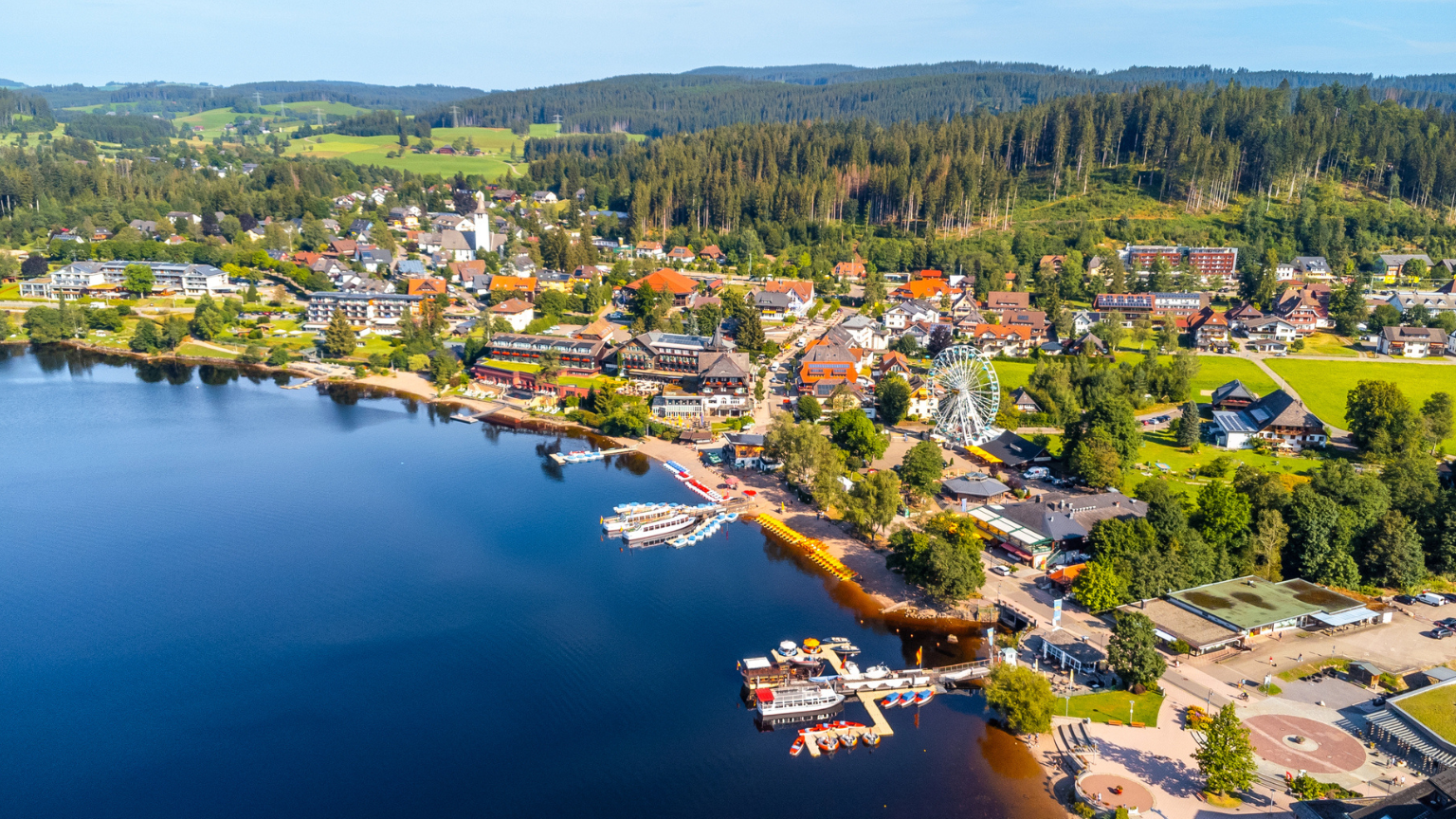
Titisee, Black Forest, Germany

The name Titisee catches attention immediately, and that seems to be part of the draw. This lake in Germany’s Black Forest attracts big crowds, but Rick Steves considers it a textbook tourist trap. The natural setting is fine, but the development around it leans heavily into coach tourism, with parking lots, souvenir stands, and restaurants built to handle groups more than independent travelers.
For many visitors, a quick stop here ends up feeling anticlimactic. You walk the lakeshore, maybe take a short boat ride, and realize there are far more dramatic landscapes in Germany that offer better scenery and fewer crowds. Steves’ argument is that if your time in the Black Forest is limited, you will probably get more out of exploring scenic valleys, half-timbered towns, or nearby mountain regions rather than spending hours at a lake whose main claim to fame is its popularity. Titisee is proof that a packed parking lot does not always equal a memorable sight.
Torture Museums Across Europe

If you see a sign for a “torture museum” in Europe, Rick Steves would tell you to walk right past it. These attractions pop up in countless cities, often near old towns where foot traffic is heaviest. They typically feature dimly lit rooms full of reproduction devices, lurid signs, and gory stories designed to shock rather than educate. Rick’s main issue is that they promise history but deliver little more than cheap thrills in exchange for a fairly steep admission price.
Very few torture museums contain real artifacts or meaningful context. Instead, they rely on dramatic lighting, mannequins, and graphic descriptions to keep visitors moving from room to room. Steves sees them as a waste of both money and precious sightseeing time on a trip that could be spent in genuine museums, churches, or historic sites. If you simply enjoy campy horror, you might still find them entertaining, but if your goal is to understand Europe’s past, Rick’s advice is to skip these entirely and look for well curated historical collections instead.
Mamertine Prison, Rome

Mamertine Prison in Rome has an impressive backstory. According to Christian tradition, it once held Saints Peter and Paul, which makes it an evocative name on any religious or historical itinerary. Rick Steves argues that the modern visitor experience does not live up to that powerful history. The site has been converted into a paid attraction with a short multimedia presentation and staged displays, but the original artifacts that once made it compelling have largely been removed.
Because of that, what you are paying for today is mostly the idea of standing in a significant place, plus some screens and narration layered on top. Rick’s point is not that the site never mattered, but that the current version feels like a commercial product more than a deep dive into history. If you are wandering the Roman Forum and have time to spare, it might be an interesting quick stop. If you are trying to prioritize, he would nudge you toward the many other ancient sites in Rome where more physical history is still on display.
Time Travel Vienna

Time Travel Vienna is heavily advertised as a fun, immersive way to experience the history of the Austrian capital. It promises action, special effects, and a crash course in the past through multimedia rooms and ride-style experiences. Rick Steves is not impressed. He describes this kind of attraction as a classic example of a “phony” tourist experience that uses big marketing campaigns and bundle deals to lure in visitors who might not realize what they are buying.
The problem, in his view, is that you end up paying a premium to watch staged history on screens when the real thing is literally all around you. Vienna is full of palaces, museums, cafés, and concert halls that connect you to its story in a much more authentic way. Steves suggests skipping packaged “time travel” shows and instead spending that money on a museum ticket, a classical concert, or even a long coffeehouse session where you can soak up daily life. You will get a far richer sense of the city for the same or less cost.
London Dungeon

The London Dungeon markets itself as a darkly entertaining journey through the city’s grisly past. There are actors, sets, jump scares, and plenty of jokes about torture and execution. Rick Steves singles it out as overpriced for what you actually get, especially when there are so many real historic sites nearby that are either free or far more meaningful. Long lines, high ticket prices, and a focus on theatrical stunts over genuine history all contribute to his “tourist trap” verdict.
If you have kids or teens who truly love spooky attractions, you might still enjoy it as a bit of theme park style fun. But if you are expecting to learn much about London’s history, you will probably walk away disappointed. In Rick’s view, you could spend the same amount of money visiting the Tower of London, a museum, or even doing a well guided walking tour that covers the city’s darker chapters with more depth. His advice is simple. If you want history, do not waste your time in a basement full of fake cobwebs.
Juliet’s House, Verona

Juliet’s House in Verona, complete with the famous balcony, sounds like a hopeless romantic’s dream. The trouble, as Rick Steves and other critics point out, is that it is mostly a modern invention built around a fictional character. The balcony was added in the twentieth century as tourism grew, and the house has been packaged as if it were actually connected to Shakespeare’s story. As a result, you get big crowds, long waits for photos, and walls covered in graffiti and love notes, all for a site whose historical roots are thin at best.
That does not stop it from being wildly popular. Tour groups file in, couples pose on the balcony, and visitors rub a statue for luck before moving on. Rick’s take is that people should know what they are paying for. If you enjoy a bit of playful fantasy and do not mind crowds, you might still have fun. If you are hoping for genuine literary or historical depth, you will be better off exploring Verona’s Roman arena, churches, and quiet streets instead. Juliet’s House is a perfect example of how a good story can spiral into a full-blown tourist trap when you do not look too closely at the details.
This article was written by Hunter and edited with AI Assistance