
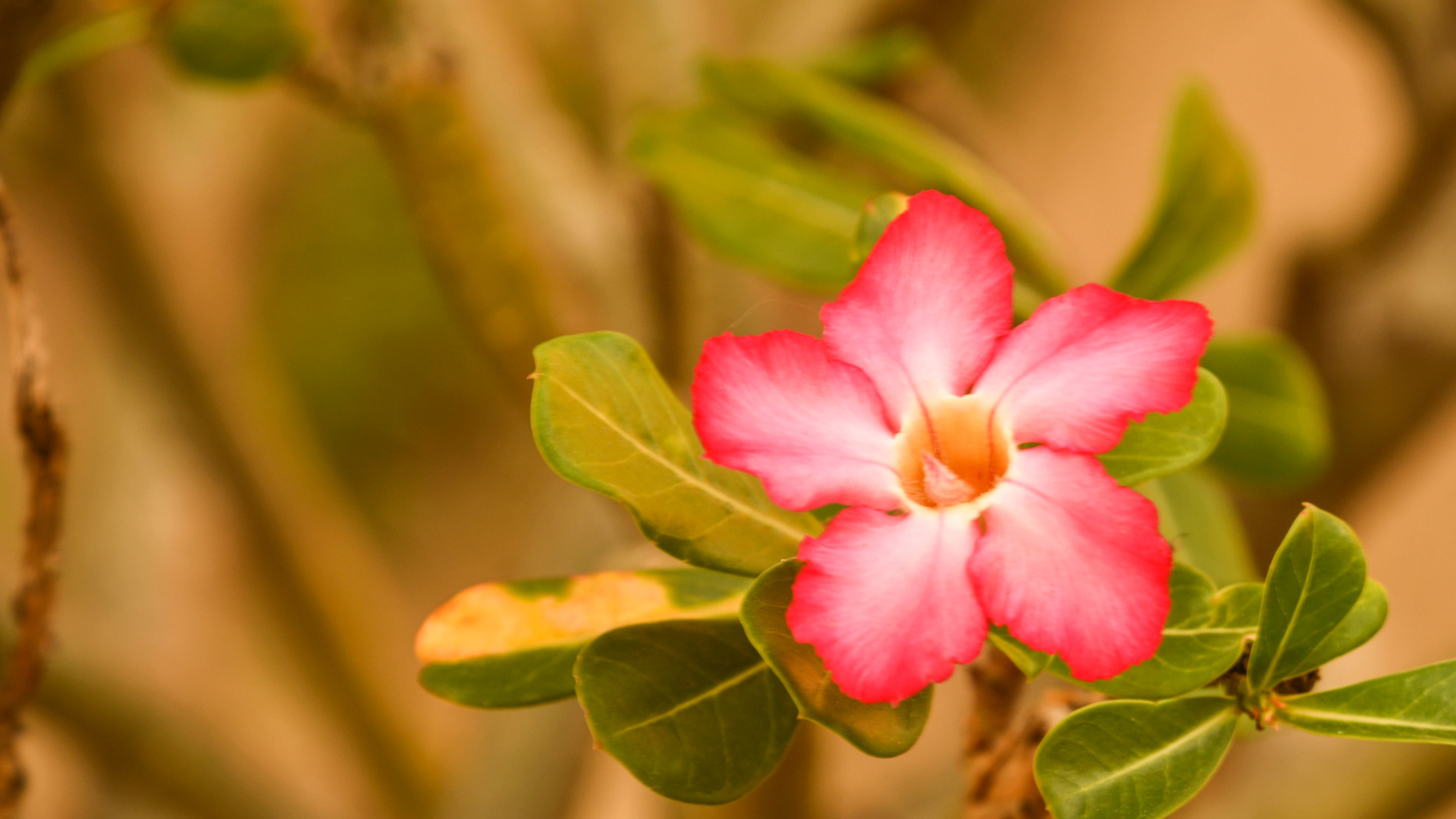

In late winter 2025, botanists and field researchers documented an extraordinary bloom of the Desert Rose (Adenium obesum) in Namibia's Namib Desert. This succulent plant, usually known for its resilience and sculptural form, produced an unusually prolific floral show amid some of the driest sands on Earth. The phenomenon was first reported near the edge of the Skeleton Coast, where clusters of deep pink and red trumpet-shaped flowers surfaced across arid landscapes that often seem inhospitable to plant life.
This rare event carries exciting scientific significance. Desert Rose plants typically bloom sporadically and modestly in response to unpredictable rainfall. However, this 2025 bloom indicates a unique interaction between late-winter climatic conditions and the plant’s adaptive strategies. It presents an opportunity to better understand how desert flora manages water storage and energy allocation to survive and flourish even in harsh environments.
The Discovery
The Desert Rose bloom was uncovered during a routine botanical survey conducted by the Namibian National Botanical Research Institute in early August 2025. Field teams observed vast patches of Adenium obesum flowering collectively over a 15-square-kilometer area near the Kuiseb River. Director Hannelie Botha described the scene as "a vivid carpet of pink and red flowers contrasting sharply with the golden sands." The plants’ characteristic swollen trunks, which serve as water reservoirs, were notably robust, suggesting ample hydration was achieved prior to blooming.
Adenium obesum flowers range between 2 and 5 centimeters long and display five wide petals resembling those of related species like Plumeria and Nerium. During the Namib bloom, many plants featured semi-double flower forms, giving the floral display added fullness. The timing—late winter—aligns with a rare convergence of increased nocturnal humidity and cooler daytime temperatures that likely triggered dormancy breaks and flowering hormones.
Remarkably, observations also noted the presence of polka-dot wasp moth caterpillars, known degraders of Desert Rose foliage in more tropical climes. Their presence this far south adds new data about the plant’s ecological interactions across ecosystems. The caterpillars’ feeding seemed limited, indicating that the plants’ latex toxins continued protecting its tissues effectively.
What Scientists Say
Experts emphasize the Desert Rose’s ability to thrive in extreme conditions by balancing water storage with timing of flowering. Dr. Reinhard Schultz, a leading succulent ecologist at the University of Cape Town, explained: "Adenium obesum’s swollen trunk is a remarkable adaptation. It stores water for long periods, allowing the plant to endure drought and to bloom spectacularly when moisture becomes available." He noted that the 2025 bloom is a concrete demonstration of this strategy in action.
Dr. Schultz also commented on the plant’s role as a living symbol of resilience: "It reflects how life in deserts must use limited resources wisely and appear when conditions are most favorable. The Desert Rose is an example of biological timing and resource management that can inspire new studies on climate adaptation." Researchers are now investigating the genetic triggers that signal the plant to shift from dormancy to bloom, aiming to understand the molecular basis of seasonal flowering in arid environments.
Moreover, the widespread flowering presents a unique chance to study pollinators of the Namib Desert. While many desert plants rely on wind or nocturnal pollination, Adenium obesum's brightly colored flowers likely attract daytime insects. Field entomologists are cataloging visiting species, hoping to learn more about the desert’s pollinator networks and their resilience amid changing climates.
How to Experience It
Travelers interested in witnessing this rare bloom can plan visits to Namibia’s Namib Desert during the late winter months of July and August. The Skeleton Coast area, accessible by guided tours from Swakopmund or Walvis Bay, offers the best vantage points. Local tour operators like Namib Desert Adventures provide specialized desert ecology excursions that include stops at known Desert Rose locations.
Visitors can hike modest trails that traverse flowering clusters, enjoying close views of the succulent’s trumpet-shaped blooms and swollen trunks. Given the fragile desert environment, travelers are urged to stay on marked paths to avoid damaging plants. The bloom also provides excellent photography opportunities, especially at dawn when the soft light enhances flower colors against sandy backdrops.
For those unable to visit in person, several Namibian botanical gardens and succulent nurseries maintain Desert Rose collections. These institutions have started to document the 2025 bloom extensively, offering virtual tours and educational materials online. Enthusiasts can also learn to cultivate Adenium obesum at home, where this adaptable plant blooms indoors under bright conditions with minimal water.
This flowering event highlights the value of continued desert exploration and study. It bridges nature’s extremes with human curiosity, offering insight into how life adapts creatively to Earth's harshest zones. From the robust trunks storing precious water to the fleeting, colorful blossoms, the Desert Rose bloom in Namibia invites deeper respect for survival in the driest of deserts.
This article was written by Will and edited with AI assistance.