
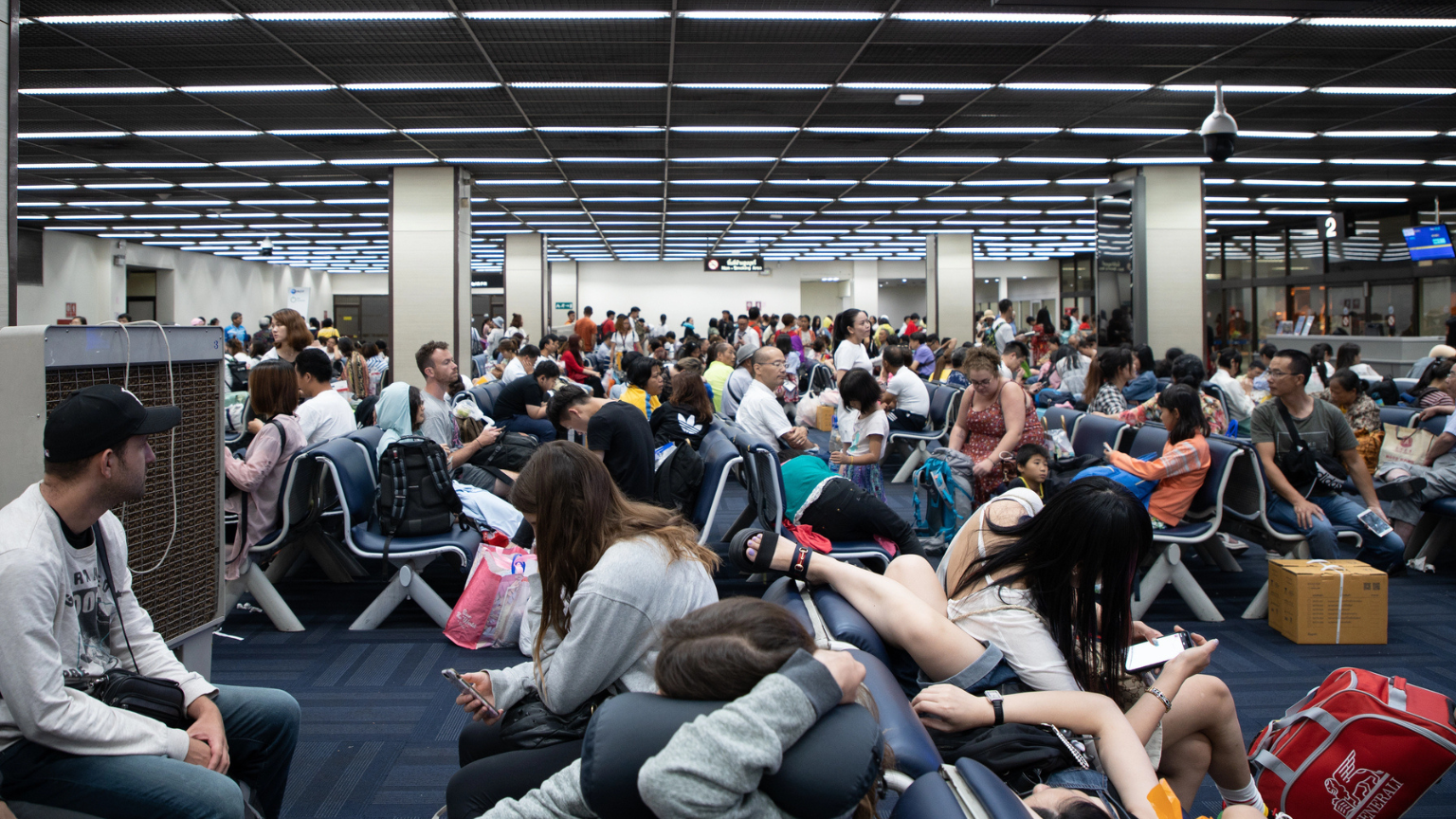

More than 2,000 flights were canceled across the United States on Monday as airlines struggled to recover from a chaotic weekend, winter weather hit key regions, and federal limits on air traffic continued to choke capacity at major airports. Another 6,000-plus flights were delayed, turning one of the busiest travel stretches of the season into a stressful guessing game for passengers and crews. All of it is unfolding against the backdrop of the record-breaking government shutdown and a public showdown over the people keeping the skies moving.
Flight Cuts, Delays, And A System Under Strain
According to flight tracking data, roughly 2,100 flights within, into, or out of the U.S. were canceled on Monday, with 6,432 delayed. The disruptions follow a weekend of severe operational strain, including nearly 3,000 cancellations on Sunday alone, one of the worst days for U.S. air travel in recent history. Airlines are contending with a stacked mix of challenges: a backlog from earlier cuts, early-season snow and freezing conditions, and federal caps limiting traffic at 40 major airports.
The Federal Aviation Administration has ordered phased reductions in flight volumes as air traffic control facilities struggle with staffing shortages made worse by the shutdown. Many controllers are working without pay, covering extra shifts, or facing mounting personal financial pressure. The cuts began at 4% and are scheduled to rise to 10% by mid-November, meaning travelers should expect continued turbulence in schedules, even outside of weather events.
Trump’s Ultimatum To Controllers
Tensions escalated further on Monday when President Donald Trump publicly demanded that air traffic controllers “get back to work, NOW!!!,” threatening to “substantially dock” anyone who does not report. In the same post, he claimed he would recommend a $10,000 bonus for controllers who worked through the shutdown without taking time off, though he did not outline how such a plan would be implemented or funded.
The message landed in a workforce already stretched thin. Controllers, designated as essential employees, have been required to work through the shutdown without pay, often while juggling childcare, bills, and second jobs. Many see the comments as overlooking the reality that they have continued to staff critical positions under immense strain.
Union Pushback: “We Are Not Political Pawns”
Air traffic control leaders responded quickly. ATC Union President Nick Daniels said controllers “absolutely deserve their pay” and any recognition for their efforts must come with serious engagement on working conditions, not public scolding. He emphasized that controllers have continued to show up throughout the shutdown and warned against using them as leverage in political fights.
“Air traffic controllers should not be the political pawn during a government shutdown,” Daniels said, underscoring that his members are navigating one of the most stressful and consequential roles in federal service while their livelihoods remain in limbo. He noted that some controllers have already resigned in recent days, and more may follow if uncertainty continues.
Major Hubs Take The Biggest Hit
The heaviest cancellations on Monday were concentrated at key hubs. Chicago O’Hare logged more than 450 canceled flights, Hartsfield-Jackson Atlanta International saw over 220, and New York’s LaGuardia recorded more than 140. These disruptions ripple out across the country, affecting connections, crew positioning, and aircraft availability.
Newark, JFK, LaGuardia, Atlanta, and other major airports have also seen prolonged delays over multiple days, with travelers facing long security lines, rolling gate changes, and last-minute cancellations. Airlines are warning customers to monitor their flights closely and expect itinerary changes as they navigate both capacity limits and weather challenges.
International Flights Shielded—For Now
Transportation Secretary Sean Duffy has stressed that the FAA’s capacity restrictions apply to domestic flights and select operations at U.S. airports, not to most international services. Cutting international flights, he noted, could violate bilateral agreements and invite reciprocal restrictions on U.S. carriers abroad. As a result, the agency is focusing reductions on domestic schedules, even as controllers handling that traffic remain under intense pressure.
Human Cost Behind The Disruptions
Behind the statistics are workers caught in an increasingly untenable position. Air traffic controllers are not the only ones affected. Tens of thousands of Transportation Security Administration employees are also working without pay, raising concerns about morale, absenteeism, and the ability to maintain smooth screening operations.
Union representatives describe the situation in blunt terms: with no paychecks coming in, some workers cannot cover childcare, rent, or basic expenses, making it difficult or impossible to report for duty. That reality feeds directly into staffing gaps, slower processing, and more operational risk. Even if a deal to reopen the government emerges, Daniels and others warn that the damage does not disappear overnight. The stress, fatigue, and staffing losses will linger long after the political headlines move on.
More Disruptions On The Horizon
Monday’s chaos is unlikely to be the peak. Flight trackers had already logged more than 1,000 cancellations for Tuesday in advance, signaling that the system will remain fragile in the days ahead. As the Thanksgiving travel rush approaches, the stakes grow even higher for travelers hoping to make it home and for the workers trying to keep the network safe and functional.
For now, passengers are advised to build in extra time, stay glued to airline alerts, consider flexible itineraries, and brace for changing plans. Until funding is restored and full staffing stabilizes, there is no quick switch that can instantly return U.S. air travel to normal. The system is still flying—but under conditions that are testing everyone involved.
Follow us on MSN for all your travel and lifestyle tips.
This article was written by Hunter and edited with AI Assistance