

Natchez is one of those places where the past is never far away. Cotton, slavery, river trade, music, and modern tourism all overlap in a small city perched high above the Mississippi River. You can stroll past grand mansions built on plantation wealth, stand at sites connected to the domestic slave trade, then finish the day listening to live music over a plate of catfish while paddlewheel boats glide past below the bluffs. It is beautiful, complicated, and surprisingly inviting all at once.
Getting There the Long Way Round
I could have driven straight from Jackson International Airport to Natchez, but that felt too easy for a place with this much history. Instead, I started in Greenwood, a laid back Delta town, and worked my way down on the backroads.
The route runs past huge open fields where cotton, soybeans, and other crops seem to stretch forever. Small towns slide by with fading main streets, old storefronts, and churches clustered around crossroads. Rusting sidings, weathered barns, and equipment sinking slowly into the soil are quiet reminders that agriculture still shapes this landscape, even if machines have long since replaced forced labor.
At one crossroads I stopped and, probably not entirely legally, plucked a cotton boll from the edge of a field. I had imagined that the fluffy cotton you find in shops must be heavily processed to feel so soft, but it turns out that padding is there from the start. It was immediately light, squashy, and strangely comforting in the hand.
Arriving in Natchez after that drive feels a bit like stepping from the wider Deep South into a compact stage where all of that history has been compressed. Here, the stories of the river, the cotton economy, slavery, and modern reinvention are all visible within a few blocks of one another.
Cotton, Slavery, and the River That Made Natchez
Natchez sits on high bluffs above a sweeping bend in the Mississippi River, a position that once made it strategically and economically powerful. Rich soils nearby helped turn plantations into some of the most profitable in the country, and enslaved people were pushed into this region in massive numbers to work those fields.
By the eve of the Civil War, the Natchez area was among the wealthiest corners of the United States. The city was also a major hub in the domestic slave trade. Markets such as Forks of the Road processed tens of thousands of men, women, and children who were sold and sent out to surrounding plantations. That legacy is heavy, and it hangs over many of the streets and elegant facades visitors admire today.
You see that past in the sheer number of antebellum homes and churches that still stand, many built directly on the profits of cotton and human bondage. Walking tours, museums, and historic sites now try to tell both sides of that story: the showpiece parlors and manicured gardens on one hand, and the brutal labor and broken families that paid for them on the other. Natchez is not just a pretty postcard; it is also a place where you are asked to sit with uncomfortable truths.
Mansions, Streets, and a City Built on Cotton
Among the many historic structures around downtown, places like the Belfast House add layers to the narrative. Tucked into an older building, it represents how Natchez continually reuses its architectural inheritance, turning former residences and commercial spaces into inns, restaurants, and gathering spots. Walking down those streets, it feels like almost every doorway comes with a story.
Stanton Hall is one of the best known showpieces. Built in the 1850s for Frederick Stanton, an Irish born cotton broker, it occupies an entire city block and is a textbook example of Greek Revival architecture. Tall columns, grand rooms, and meticulous details make it a physical display of how far cotton wealth could go. Today it operates as a historic house museum, showcasing the kind of taste and spending that defined the upper tier of Natchez society just before the Civil War.
Looking at that level of luxury, it is hard not to think about the contrast between the owner’s background and his adopted home. I found myself imagining Stanton walking through those rooms with a strong Northern Irish accent, an unlikely but vivid character in a Southern river town.
Balloon Festival and Seasonal Color
I happened to arrive during one of Natchez’s most photogenic periods, the annual balloon festival. On a good year, hot air balloons rise from fields and riverfront parks, floating over the bluffs and adding bursts of color to the skyline.
This time the weather refused to cooperate. Low clouds and light drizzle grounded the balloons, leaving them tethered instead of drifting gracefully over the river. Even so, the festival energy did not evaporate. Music spilled out onto the streets, food vendors set up in parks, and families wandered between stalls and stages in rain jackets and hoodies instead of shorts and sandals.
The fireworks display went ahead as planned, and it turned out to be a highlight. Explosions of color lit up the night sky and reflected off the wide Mississippi below, briefly turning the river into a shimmering mirror of reds, golds, and greens. Even without the balloons, Natchez still managed to put on a show.
Historic Streets and Riverfront Views
For all its heavyweight history, Natchez feels surprisingly approachable. The downtown area is compact, walkable, and full of character. Many buildings that once housed banks, merchants, and offices now hold galleries, boutiques, cafés, and small inns. Instead of feeling like a museum under glass, the historic district works as a living town where people actually shop, eat, and socialize.
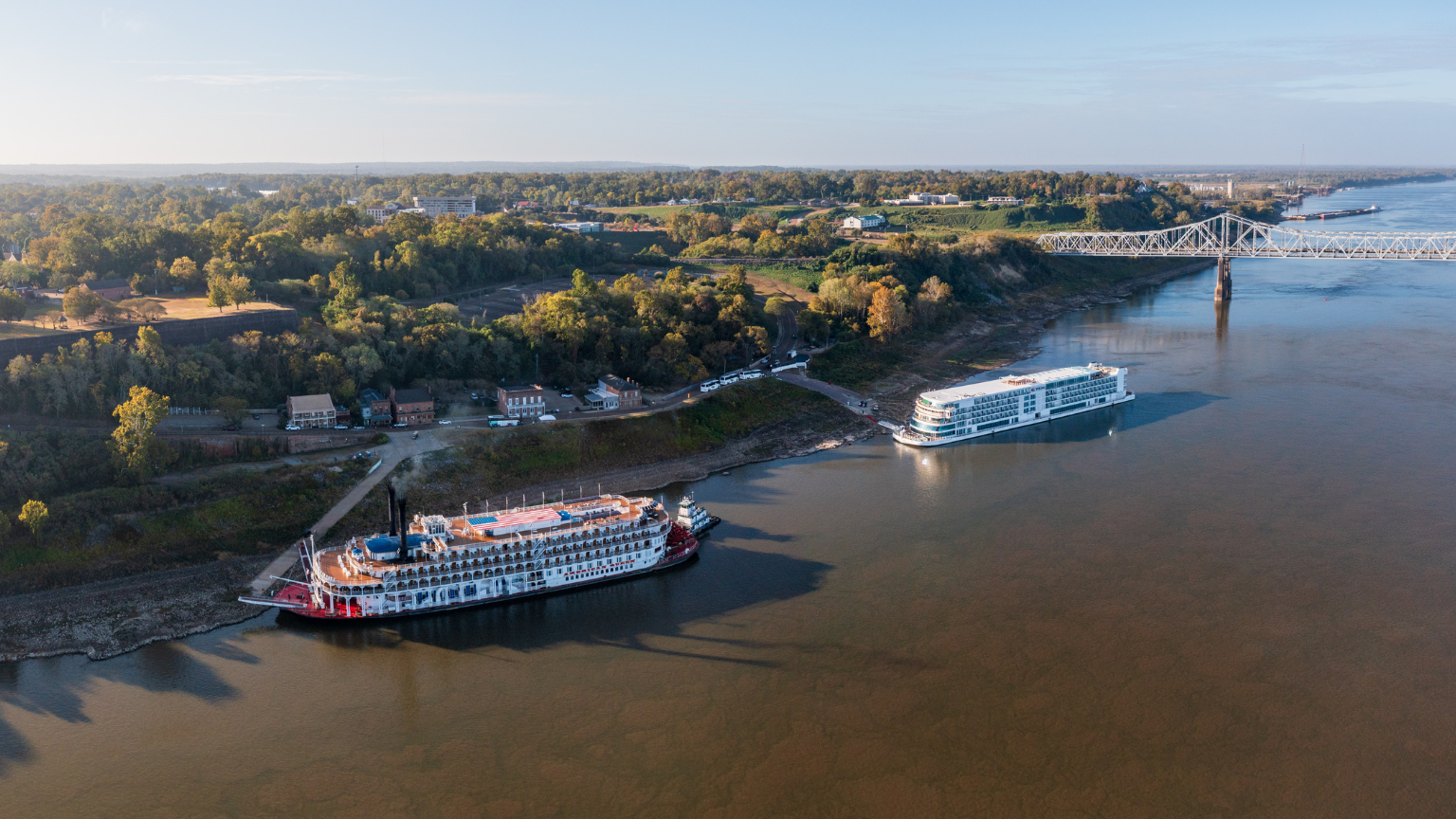
The riverfront is part of the experience. Parks and overlooks on the bluff give sweeping views of the Mississippi and the bridge that links Louisiana on the far bank. From certain points you can watch barges, tugs, and paddlewheel boats slowly moving along the water, framed by big skies and shifting light.
When a paddle steamer glides into the small quayside below, it is hard not to think about the days when similar boats carried cotton bales and enslaved passengers instead of tourists with cameras and cocktails. That contrast is one of the things that makes Natchez so distinctive. You are constantly aware that the easygoing riverside charm grew out of a much darker and more complicated past.
Shops, Food, and Live Music Everywhere
In town, the main streets are lined with independent businesses rather than big national chains. Antique shops, local art studios, and specialty food stores spill out onto the sidewalks, giving the city a slightly old world retail feel. You can browse for vintage furniture, regional cookbooks, handmade pottery, and jars of hot sauce in the space of a single block.
The food scene is varied for a place this size. There are simple diners serving big breakfasts, barbecue spots perfuming the air with smoke, and more polished restaurants that lean into Southern and Creole flavors. Over the course of my visit, I ate at several different places, from casual cafés to more formal dining rooms. The detail that stuck with me most was how often live music appeared.
Even the coffee shop where I grabbed breakfast one morning had musicians playing in the corner. In the evening, bars and restaurants filled with the sound of blues, country, and soul, often performed by local artists who seem to treat every night like a small concert. It gives Natchez a warm, lived in feeling that complements its complicated history.
A Town Worth Taking Your Time With
Natchez is not the biggest destination in the American South, but it is one of the most layered. It offers grand houses and gracious streets, but it also asks you to acknowledge where that elegance came from. At the same time, the modern city leans into festivals, food, and music, creating a welcoming atmosphere that invites you to stay a bit longer than planned.
If you are interested in the story of the Mississippi River, the cotton economy, and how communities grapple with difficult histories, Natchez is a place you should experience in person. Come for the river views and the mansions, stay for the conversations, the music, and the sense that this small city is still actively working through its past while enjoying its role as a relaxed, charming stop on the river.
Follow us on MSN for all your travel and lifestyle tips.
This article was written by Hunter and edited with AI Assistance