
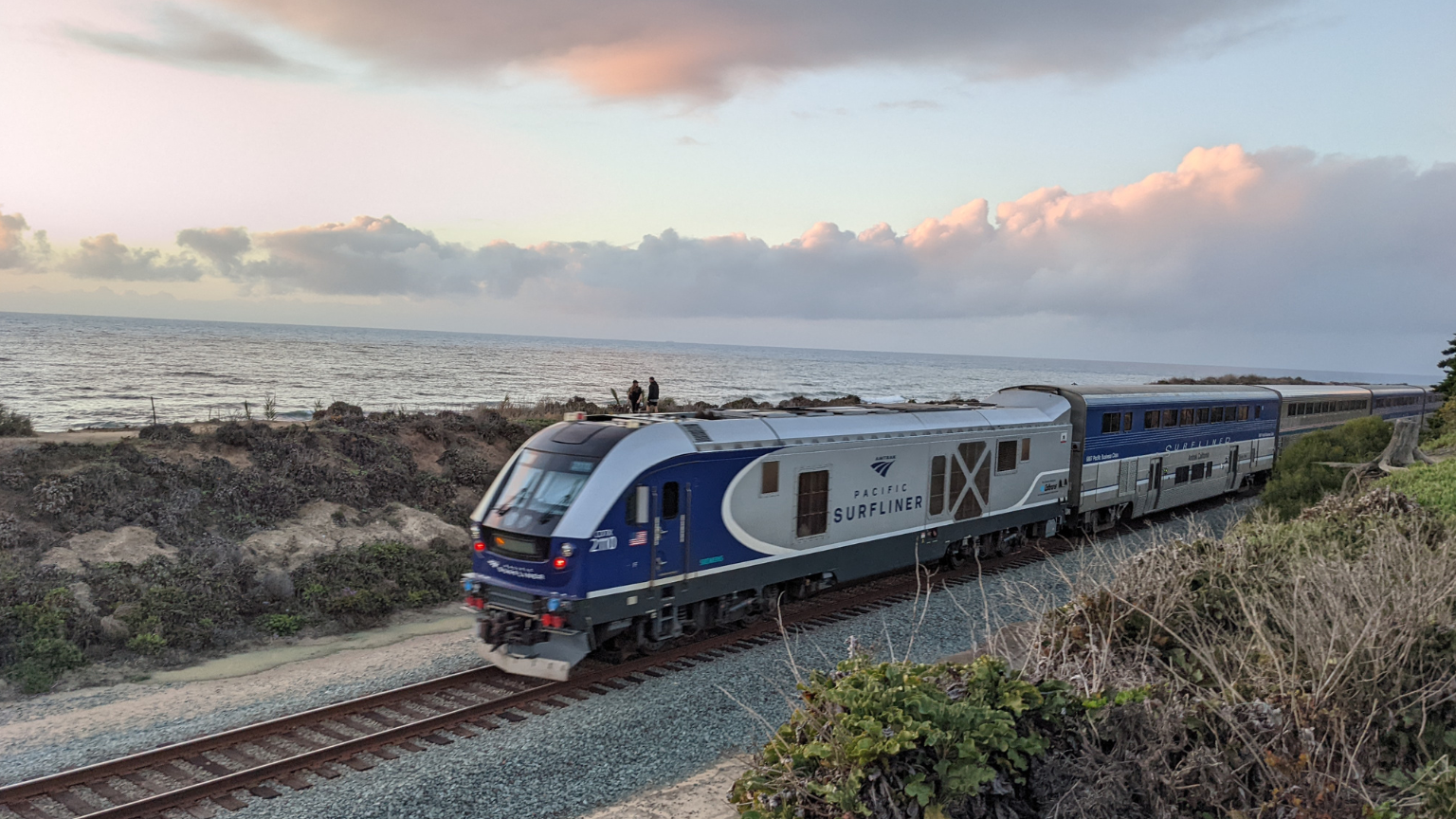

A quiet departure, a big question
No brass bands or confetti greet Amtrak’s 43 Pennsylvanian in New York. Inside the gleaming Moynihan Train Hall, the country’s premier rail hub hums without ceremony as a fully booked train eases out toward Pittsburgh. The contrast is striking: in 1830, America’s first scheduled passenger locomotive launched amid cannon fire and cheers; today, boarding is a simple shuffle to Track 13. Still, the coach is packed, proof that rail keeps a hold on American travel—especially for those willing to trade speed for a ground-level view of the country.
Why ride when flying is faster and cheaper?
A flight from New York to Los Angeles is often half the price and a fraction of the time. Yet rail offers something planes cannot: days of “see-level” America through a window—warehouses and wetlands, stadiums and cemeteries, deserts and farms. That panorama comes with trade-offs. Expect patchy Wi-Fi, occasional out-of-order restrooms, wailing toddlers, $6 hot dogs, $45 steak dinners, and delays that come with the territory. For some travelers, the view, the pace, and the chance encounters outweigh the inconveniences.
Moynihan Train Hall: glamour over comfort
New York’s $1.6 billion makeover of the Farley Post Office created a glass-topped cathedral to trains, complete with an Art Deco-style clock and soaring steel trusses. What it did not add, at least in the main concourse, is seating. Riders perch on the polished floor under departure boards as multiple trains already post delays. The building’s old postal creed—“Neither snow nor rain nor heat nor gloom of night…”—feels optimistic in a station where even the on-time screen flickers with caveats.
The privatization debate and the funding reality
Calls to privatize rail flare up regularly. Critics invoke high-speed networks in places like China while dismissing Amtrak as a cautionary tale. Rail advocates counter that every major passenger system in the world runs on public money and long-term planning. The United States has occasionally invested that way too—most notably through the Infrastructure Investment and Jobs Act, which promised billions for track, tunnel, and fleet upgrades. But political cycles reshape priorities. Budget cuts, leadership shake-ups, and canceled grants have all hit passenger rail, reviving the long-standing fight over whether trains are a public good or an expendable line item.
Through Pennsylvania: engineering marvels and modern bottlenecks
The Pennsylvanian’s most scenic stretch is Horseshoe Curve, a 19th-century feat that tamed the Alleghenies with a graceful bend of track. The conductor’s announcement sends half the car to the left windows. From the right side, the view is less romantic: an endless freight consist rolls past, each car stamped with Norfolk Southern’s horse logo. That logo matters. Amtrak runs most of its long-distance service on tracks owned by freight railroads, which legally must give passenger trains preference—but often do not. The Department of Justice has even taken a host railroad to court over chronic delays on a different Amtrak route, a rare enforcement step in a system where freight dispatchers control the signals and, practically, the schedule.
How we got here: the grand bargain
Amtrak was born in 1970 as a compromise. Private railroads, eager to shed money-losing passenger service, agreed to hand over their obligations to a new, federally backed corporation. In exchange, Amtrak could keep running over private tracks—for a price. The arrangement rescued intercity rail from extinction but locked in structural tensions: host railroads prioritize heavy freight, Amtrak pays rent to run second, and on-time performance depends on goodwill or government pressure. The larger American rail story is messier still—built on land seizures, exploited labor, and robber-baron fortunes—followed by a long decline as highways and airlines won federal favor.
Pittsburgh, then a long night to Chicago
The Pennsylvanian reaches Pittsburgh on schedule, but the connecting “Floridian” hybrid train runs hours late. The city’s Daniel Burnham–designed Union Station survives as luxury apartments; the actual Amtrak facility is a small annex with vending machines and a bathroom. As delays stack up, passengers scramble for rebookings and rides. Eventually, boarding begins after 2 a.m. The fatigue is familiar to anyone who has chased connections across the system: you nap upright, wake to someone’s superhero ringtone, and hope the next station has coffee and open outlets.
Union Station, Chicago: grandeur with strings attached
Chicago’s Great Hall, another Burnham jewel, can be rented for five-figure private events—weddings one weekend, commuters the next. The staff-only lounge has rules; business-class day passes cost extra; and the power outlets feel scarcer than they should. Miss a once-daily long-distance departure and you are stuck for 24 hours, with no refund. A sympathetic agent underlines tomorrow’s departure time in pen.
West on the Southwest Chief: old cars, new companions
The double-decker Superliners that carry the Chief are workhorses from the late 1970s and ’80s, many past 40 years old and due for retirement. New long-distance equipment has been promised for the early 2030s. Onboard, the community forms quickly. A transportation planner named Gary claims the observation car, shares trivia, and swears that if the train runs late enough the crew serves complimentary stew. People trade stories, crochet, play cards, and lean into the view: wind farms in the Midwest, river canyons and red rock farther west. In coach, entertainment is DIY; in the lounge, conversation flows.
The human side of long-distance rail
Onboard crews ride the whole way and absorb the stress. Most interactions are routine—coffee refills, seat checks, gentle reminders to wear shoes and flush. A few turn tense fast, like the passenger who berates a café attendant for refusing to pour into his personal metal mug. Rules are rules; the café uses its own cups. Tempers cool eventually. The train keeps rolling.
Railfans, webcams, and small-town stakes
In La Plata, Missouri, a camera mounted under the station roof streams every passing train to hundreds of viewers online. The audience underscores something easy to overlook: people care about passenger rail, not just out of nostalgia but out of necessity. In 2018, when Amtrak floated a bus “replacement” for part of the Southwest Chief to save on track costs, communities from Kansas to New Mexico revolted. The plan would have gutted ridership and severed a lifeline for small towns. Money was found; the train stayed.
Dining car rituals and dusty windows
As dusk paints New Mexico, the dining car fills with white tablecloths, tiny vases, and the clink of plastic-cup cocktails. Coach passengers can buy their way in; sleeper-car riders have dinner included. The menu is modest, but the moment feels special. Outside, the best sunset is always just out of frame, coloring mesas you wish you could pause to admire. Back in coach, someone has finger-written “I’M FILTHY” on the grime of a Superliner window, a wry nod to rolling stock that has earned a bath and a break.
Los Angeles arrival, and an ironic flight home
Four days after leaving New York, the Chief pulls into a cloudy Los Angeles. The trip delivered what rail promises: scenery, stories, and a sense of scale. The flight home delivers modern air travel’s own reality: diversions and holding patterns as storms close New York airspace. The plane ends the night hundreds of miles from the intended airport. Through the oval window, a set of tracks slips past in the dark. For a moment, even the most practical traveler second-guesses the choice.
So, is Amtrak the end of the line—or the start of a better one?
Amtrak is imperfect. Delays happen. Cars are old. Connections can be brittle. But it remains a national network that millions rely on—students, seniors, families who do not fly, and travelers who want the country at ground speed. The system works best when policy is steady, funding is patient, and dispatchers give passengers the priority federal law already promises. New trains, repaired tunnels, and dedicated corridors would help. So would a consensus that intercity rail is not a luxury, but part of how a large country moves. Until then, the case for trains is the same as it has always been: they connect places and people you miss from 30,000 feet, and they remind you that the distance between them is its own experience.
Follow us on MSN for all your travel and lifestyle tips.
This article was written by Hunter and edited with AI Assistance