

Get ready to be dazzled by some of the most awe-inspiring cathedrals from around the globe. These architectural marvels are not just places of worship; they're a testament to human creativity, resilience, and devotion. From the towering spires of Gothic cathedrals to the intricate mosaics of Byzantine basilicas, each tells a unique story of faith, art, and history. So, let's embark on a visual pilgrimage to explore these magnificent edifices.
1. Notre-Dame de Paris (The heart of French Gothic architecture)

Notre-Dame de Paris stands as a masterpiece of French Gothic architecture, attracting millions of visitors each year. Before the tragic fire in 2019, its spire reached skyward, a beacon over Paris. Inside, the rose windows captivate with their intricate designs and play of light, a testament to medieval craftsmanship. The cathedral's history spans centuries, a witness to pivotal moments from the crowning of kings to the celebration of liberation. Despite recent damages, Notre-Dame remains a symbol of resilience, currently undergoing restoration to reclaim its glory.
2. St. Peter's Basilica (A Renaissance masterpiece in Vatican City)

St. Peter's Basilica, the crown jewel of Vatican City, is a monumental testament to Renaissance art and architecture. Designed by legendary artists like Michelangelo and Bernini, it's home to the iconic dome that dominates Rome's skyline. The basilica houses unparalleled works of art, including Michelangelo's Pietà, a sculpture that combines beauty and sorrow in marble. It's also the largest church in the world, a space that envelops visitors in its grandeur and sanctity. Pilgrims and tourists alike are drawn to this spiritual center for its historical significance and architectural majesty.
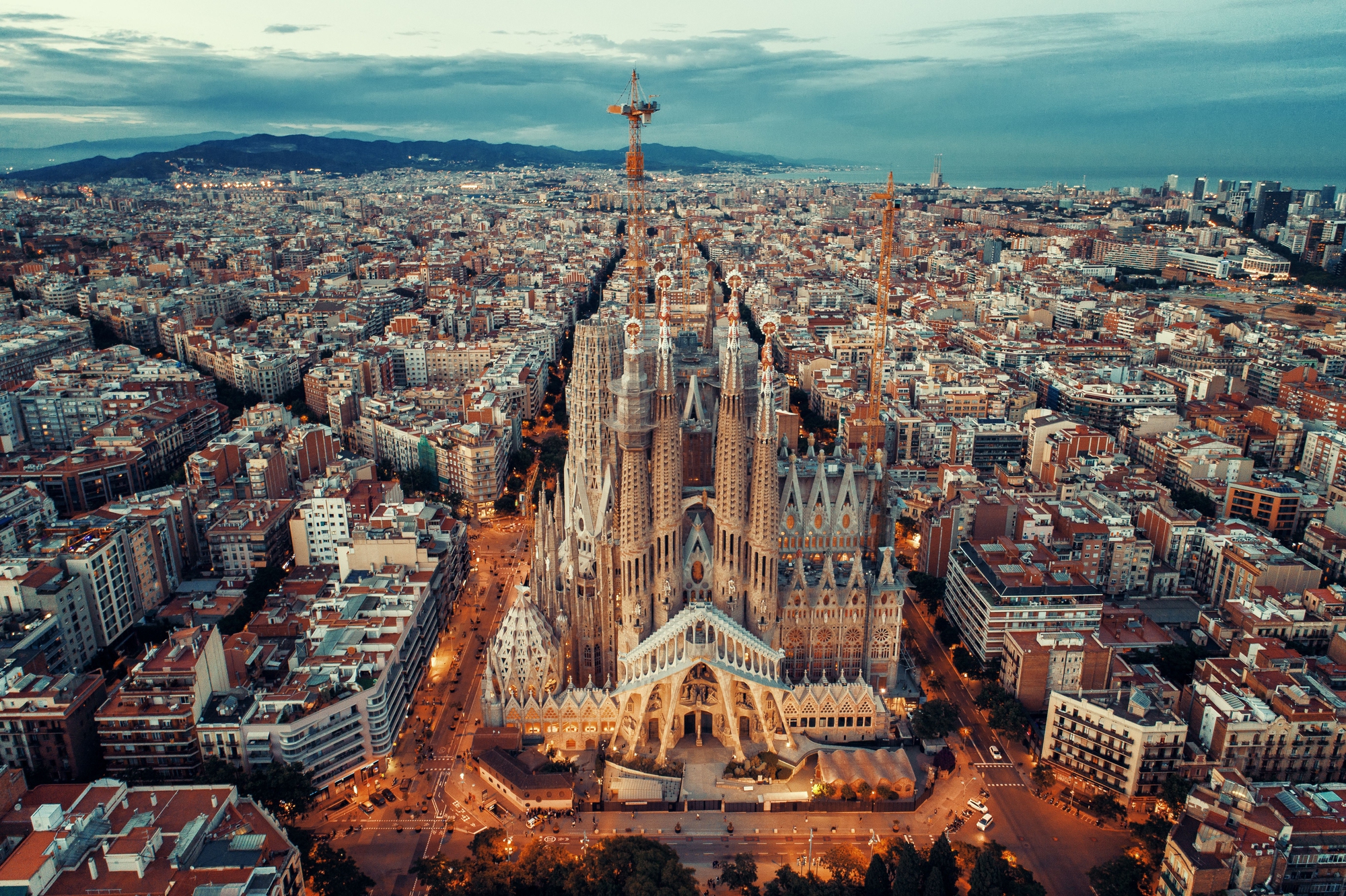
3. Sagrada Familia (Gaudí's unfinished symphony in stone)

The Sagrada Familia in Barcelona is Antoni Gaudí's magnum opus, a cathedral so ambitious, it remains unfinished over a century after its inception. Its facades tell biblical tales in stone, while the interior columns soar like a stone forest, branching out to support an awe-inspiring ceiling. Unique among cathedrals, its design blends Gothic and Art Nouveau, creating a visual feast that is endlessly fascinating. Every visit reveals new details, a testament to Gaudí's genius and the dedication of those continuing his work. Despite its ongoing construction, Sagrada Familia captivates with its otherworldly beauty and the promise of what's yet to come.
4. Chartres Cathedral (A stained-glass treasure trove)

Chartres Cathedral, set in the heart of France, is renowned for housing one of the world's most extensive collections of medieval stained glass. These windows, over a thousand years old, illuminate the interior with vivid stories from the Bible, creating a celestial atmosphere. Beyond its glass, the cathedral is a pinnacle of French Gothic architecture, with its two contrasting spires marking the evolution of the style. It's also home to the Sancta Camisa, a relic believed to be worn by the Virgin Mary. Chartres Cathedral not only stands as a monument of faith but also as a testament to medieval artistry.
5. Milan Cathedral (The marble giant of Italy)

Milan Cathedral, or Duomo di Milano, is a breathtaking sight, with its flamboyant Gothic façade covered in pink-tinged marble from the quarries of Lake Maggiore. It's the largest cathedral in Italy and the third largest in the world, a marvel that took nearly six centuries to complete. Over 3,400 statues and 135 spires adorn its exterior, creating a lace-like decoration that captivates the eye. The rooftop offers a unique experience, allowing visitors to walk among the spires and enjoy a panoramic view of Milan. The interior is equally impressive, with its vast nave leading to the stunning altar, showcasing the cathedral's spiritual and artistic grandeur.
6. Seville Cathedral (The final resting place of Christopher Columbus)

Seville Cathedral, officially known as the Cathedral of Saint Mary of the See, is a monumental Gothic structure in Spain and is the burial site of Christopher Columbus. It was built on the site of a grand Almohad Mosque, and today, the Giralda tower, originally a minaret, stands as a testament to this architectural heritage. The cathedral's interior is vast, housing numerous chapels adorned with exquisite artworks. It's recognized as the largest Gothic cathedral and the third-largest church in the world. Visitors are often awestruck by its grandeur, which reflects Seville's importance in the Age of Discovery.
7. Westminster Abbey (A coronation site for centuries)

Westminster Abbey in London is not just a cathedral; it's a living pageant of British history. It has been the coronation church since 1066, a tradition that links it intimately with the British monarchy. The Abbey is the final resting place for seventeen monarchs, alongside countless poets, scientists, and statesmen in Poets' Corner. Its Gothic architecture is awe-inspiring, with intricate stonework and beautiful stained glass windows. Westminster Abbey continues to be a site of national celebration and mourning, embodying the spirit and history of the United Kingdom.
8. Cologne Cathedral (Home to the Shrine of the Three Kings)

Cologne Cathedral, with its twin spires reaching towards the heavens, is a landmark of Cologne, Germany, and a masterpiece of Gothic architecture. It's famous for housing the Shrine of the Three Kings, a gold reliquary said to contain the remains of the Magi. The construction of the cathedral spanned several centuries, starting in 1248 and completed in 1880, a testament to enduring faith and craftsmanship. Inside, the cathedral's stained glass windows cast a kaleidoscope of light, while its vast interior can hold more than 20,000 people. This UNESCO World Heritage site draws visitors not just for its religious significance, but also for its architectural grandeur and historical depth.
9. Basilica of the National Shrine of the Immaculate Conception (America's Catholic Church)

The Basilica of the National Shrine of the Immaculate Conception, located in Washington D.C., is the largest Roman Catholic church in North America and one of the ten largest churches in the world. Its Byzantine-Romanesque design is a departure from the traditional Gothic style of many European cathedrals. The basilica's Great Upper Church boasts over 70 chapels and oratories that honor the Virgin Mary, reflecting a global tapestry of devotion. The stunning mosaic of Christ in Majesty in the apse is one of the largest of its kind in the world. This basilica serves as a center of worship, pilgrimage, and Catholic identity in the United States, welcoming visitors from all over the globe.
10. St. Basil's Cathedral (A colorful symbol of Russia)

St. Basil's Cathedral, officially known as the Cathedral of the Intercession of the Most Holy Theotokos on the Moat, is a cultural icon of Russia, instantly recognizable by its colorful, onion-shaped domes. Located in the heart of Moscow, on the Red Square, it was commissioned by Ivan the Terrible in the 16th century. Unlike any other cathedral in the world, its design combines elements of Russian architecture and a hint of Byzantine influence. The interior is a maze of galleries and chapels, each adorned with intricate frescoes and icons. St. Basil's stands not only as a monument to faith but also as a symbol of Russian artistic genius.
11. Florence Cathedral (The dome that inspired the world)

Florence Cathedral, formally known as the Cattedrale di Santa Maria del Fiore, is a jewel of the Italian Renaissance. Its dome, engineered by Filippo Brunelleschi, was a feat of architecture that influenced the development of building techniques throughout Europe. The cathedral's façade, a masterpiece of marble panels in shades of pink, white, and green, exemplifies Italian Gothic architecture. Inside, the vast interior is somewhat austere, directing attention upwards to the magnificent dome and its fresco of the Last Judgment. The cathedral, along with its bell tower and baptistery, forms one of Florence's most enduring and iconic ensembles.
12. Liverpool Cathedral (Britain's towering marvel)

Liverpool Cathedral stands as the largest cathedral in Britain and the fifth largest in the world. Its construction spanned the 20th century, a testament to modern faith expressed through ancient Gothic forms. The cathedral is renowned for its grandeur, including the Great West Window and the massive main organ, one of the largest and most powerful in the world. Visitors can ascend the tower for panoramic views of Liverpool and beyond, a breathtaking experience. Despite its relatively recent completion, Liverpool Cathedral has become a pivotal part of the city's cultural and spiritual landscape.
13. York Minster (A Gothic masterpiece in England)

York Minster dominates the city of York with its towering spires and remarkable presence. It's one of the largest cathedrals of its kind in Northern Europe, a masterpiece of Gothic architecture. The Great East Window, the largest expanse of medieval stained glass in the world, tells the biblical story from creation to the last judgment. The cathedral's undercroft reveals Roman and Norman foundations, a journey through the layers of history. York Minster not just embodies architectural grandeur but also serves as a vibrant center of worship and community.
14. St. Paul's Cathedral (London's iconic skyline feature)

St. Paul's Cathedral, with its magnificent dome, has been an iconic feature of London's skyline for over 300 years. Designed by Sir Christopher Wren after the Great Fire of London, it represents a departure from the Gothic style, embracing the grandeur of the Baroque. The Whispering Gallery within the dome is a marvel of acoustics, where whispered words can be clearly heard over 100 feet away. It has been the site of significant events, including the funerals of Lord Nelson and Winston Churchill, and the wedding of Charles, Prince of Wales, and Lady Diana Spencer. St. Paul's remains a symbol of resilience, faith, and the enduring spirit of London.
15. Vienna's St. Stephen's Cathedral (A mosaic roof like no other)

St. Stephen's Cathedral in Vienna is famed for its colorful, tiled roof, creating a mosaic of the double-headed eagle and the city's coat of arms. This landmark is a masterpiece of Gothic architecture, with a history that stretches back to the 12th century. Its South Tower offers breathtaking views of Vienna, a climb that rewards the adventurous. Inside, the cathedral houses numerous works of art, including the 14th-century stone pulpit and the Gothic winged altar. St. Stephen's Cathedral stands as a central figure in Vienna's cultural and spiritual life, a beacon for both locals and visitors.
16. Washington National Cathedral (America's spiritual home)

Washington National Cathedral, officially called the Cathedral Church of Saint Peter and Saint Paul in the City and Diocese of Washington, is a spiritual beacon in the United States. It is an example of neo-Gothic design, its construction completed in the 20th century, blending modern craftsmanship with medieval techniques. The cathedral has hosted many national events, including presidential funerals and interfaith services. Its stained glass windows, including one commemorating the moon landing, blend religious symbolism with American history. As a house of prayer for all people, it stands as a symbol of unity and faith in the nation's capital.
17. Basilica of Saint Denis (The birthplace of Gothic architecture)

The Basilica of Saint Denis, located in the suburbs of Paris, is often considered the birthplace of Gothic architecture. This cathedral was the first to use all of the elements that characterize Gothic style, including pointed arches, ribbed vaults, and flying buttresses. It serves as the final resting place for French kings, housing elaborate tombs that chronicle France's royal history. The stained glass windows and sculptures inside are masterpieces of medieval art, telling stories of saints and monarchs. The Basilica of Saint Denis not only marks the evolution of architectural style but also reflects the power and piety of the French monarchy.
18. Canterbury Cathedral (A pilgrimage site since the Middle Ages)

Canterbury Cathedral, one of the oldest and most famous Christian structures in England, has been a site of pilgrimage since the Middle Ages. It is the cathedral of the Archbishop of Canterbury, the leader of the Church of England and the worldwide Anglican Communion. The murder of Thomas Becket at this site in 1170 made it a center for pilgrimage in the medieval world. The cathedral combines elements of Romanesque and Gothic architecture, with stunning stained glass windows that illuminate its ancient stones. Canterbury Cathedral not only stands as a monument to religious history but also invites reflection on faith, art, and the human experience.
This article was written by a human and edited with AI Assistance