
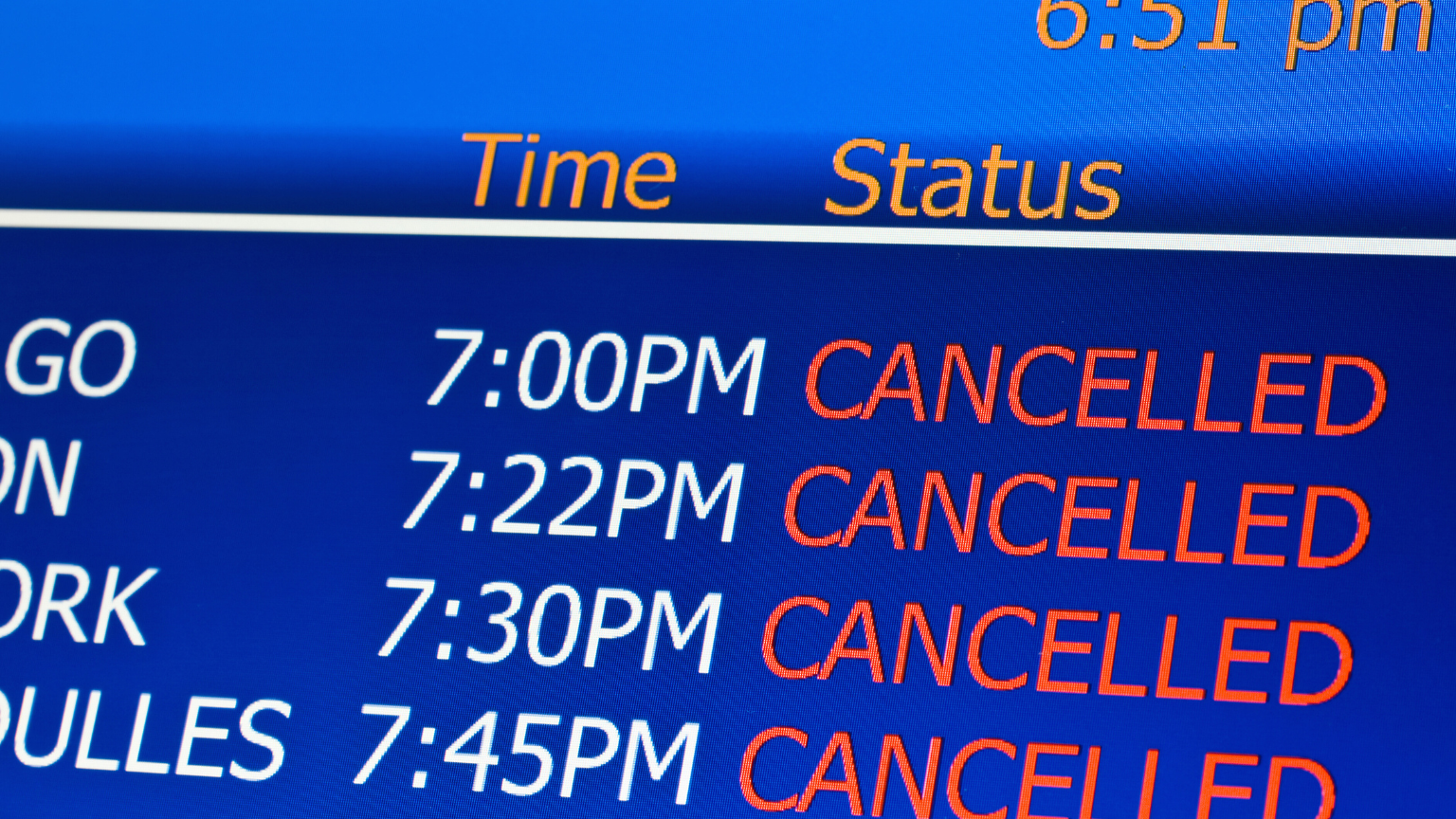

If your flight gets canceled or changed in a big way, you no longer need to chase a refund. Under the Department of Transportation’s automatic refund rule, airlines must trigger cash refunds on their own when you are owed one. Refunds must be sent promptly and in the original form of payment unless you choose something else. In everyday travel, that means less time on hold and more certainty about when your money comes back.
When you are owed a refund
You are entitled to a refund if an airline cancels your flight or makes a significant change and you do not accept the alternative offered. “Significant change” has clear benchmarks. If a domestic trip shifts by three hours or more, or an international trip shifts by six hours or more, you qualify. You also qualify if the airline switches your departure or arrival airport, adds connections, downgrades your cabin, or assigns a substitute aircraft that removes needed accessibility features for a passenger with a disability.
What “automatic” really looks like
Airlines must send the refund without waiting for you to ask when the right to a refund is clear. If the airline offers you rebooking or a travel credit and you decline, or if you do not respond by the airline’s stated deadline and its policy treats that as a decline, the automatic refund still applies. Carriers must also tell you that you are entitled to a refund before they try to steer you to vouchers or credits.
How fast the money shows up
Refunds must be issued within seven business days for credit card purchases and within twenty calendar days for other forms of payment. This timing applies to ticket refunds and to eligible fee refunds once they become due. In other words, once you clearly qualify for a refund, the clock starts.
Baggage and extra fees are covered too
If you paid for a checked bag and it is significantly delayed, you are owed an automatic refund of the baggage fee. The timing depends on the trip. For domestic flights, the refund is due if the bag is not delivered within twelve hours of the flight’s gate arrival. For international trips, the threshold is fifteen hours if the United States segment is twelve hours or less, and thirty hours if that United States segment is more than twelve hours. If you paid for an extra service that was not provided, like seat selection or onboard Wi-Fi that never worked, those fees must be refunded as well.
How you will be paid

Refunds are made in the original form of payment unless you agree to something different. Airlines must refund the full amount, which includes taxes and mandatory fees tied to the unused portion. If you prefer a cash equivalent instead, you can choose that, but the default is a straight refund.
Do you ever need to take action
Automatic refunds should run without extra steps when the situation is straightforward. There are a few moments where you still need to act. If your checked bag is delayed, you must file a mishandled baggage report with the operating carrier so the system recognizes the delay and triggers the refund. If an airline offers an alternative and asks for a response by a set deadline, reply either way so there is no doubt about your choice. If a refund does not arrive within the required timeline, file a complaint with the Department of Transportation.
Third party bookings and codeshares
The rule covers tickets sold by airlines and by ticket agents when they are the merchant of record. For codeshare or interline trips, the merchant of record is responsible for refunding the ticket, and the operating carrier has duties around fee and baggage notifications so the right party processes your refund. In practice, check your card statement to see who charged you for the fare, then start there.
What changed in 2025 practice
The refund framework took effect in stages, and by 2025 the core protections are in force. Airlines must automatically refund tickets for canceled or significantly changed flights, refund baggage fees for bags that miss the time windows, and refund ancillary fees for services you did not receive. Additional communicable disease travel credit provisions, including five year validity and transferability, were scheduled on a later timeline but are part of the same package of passenger protections.
Real world examples
Your outbound is canceled the night before travel. You decline a rebooking for a day later because the trip no longer works. The airline owes you a cash refund of the ticket price and eligible fees. The refund should hit your card within seven business days.
Your domestic bag misses the flight and arrives the next day. Since the bag was not delivered within twelve hours of gate arrival and you filed a mishandled baggage report, the checked bag fee must be refunded automatically.
You paid for a specific seat, but the aircraft swap gave you a different seat and the airline never delivered what you bought. The airline must refund that seat fee. If the swap also removed a needed accessibility feature for a traveler with a disability, the flight change itself may qualify as significant, which would trigger a ticket refund if you choose not to travel.
Your international connection pushes your arrival back by seven hours. That is a significant change. If you decide not to take the new itinerary, you are owed a refund.
At a glance
• You are owed a refund for canceled flights or significant changes that you do not accept.
• Significant changes include large time shifts, airport swaps, added connections, downgrades, and certain accessibility impacts.
• Refunds must be automatic and prompt, with seven business days for cards and twenty days for other payments.
• Baggage and ancillary fee refunds are included when bags or services fail to arrive on time or at all.
• File a mishandled baggage report to start the bag fee refund process when a bag is late.
This article was written by Hunter and edited with AI Assistance