
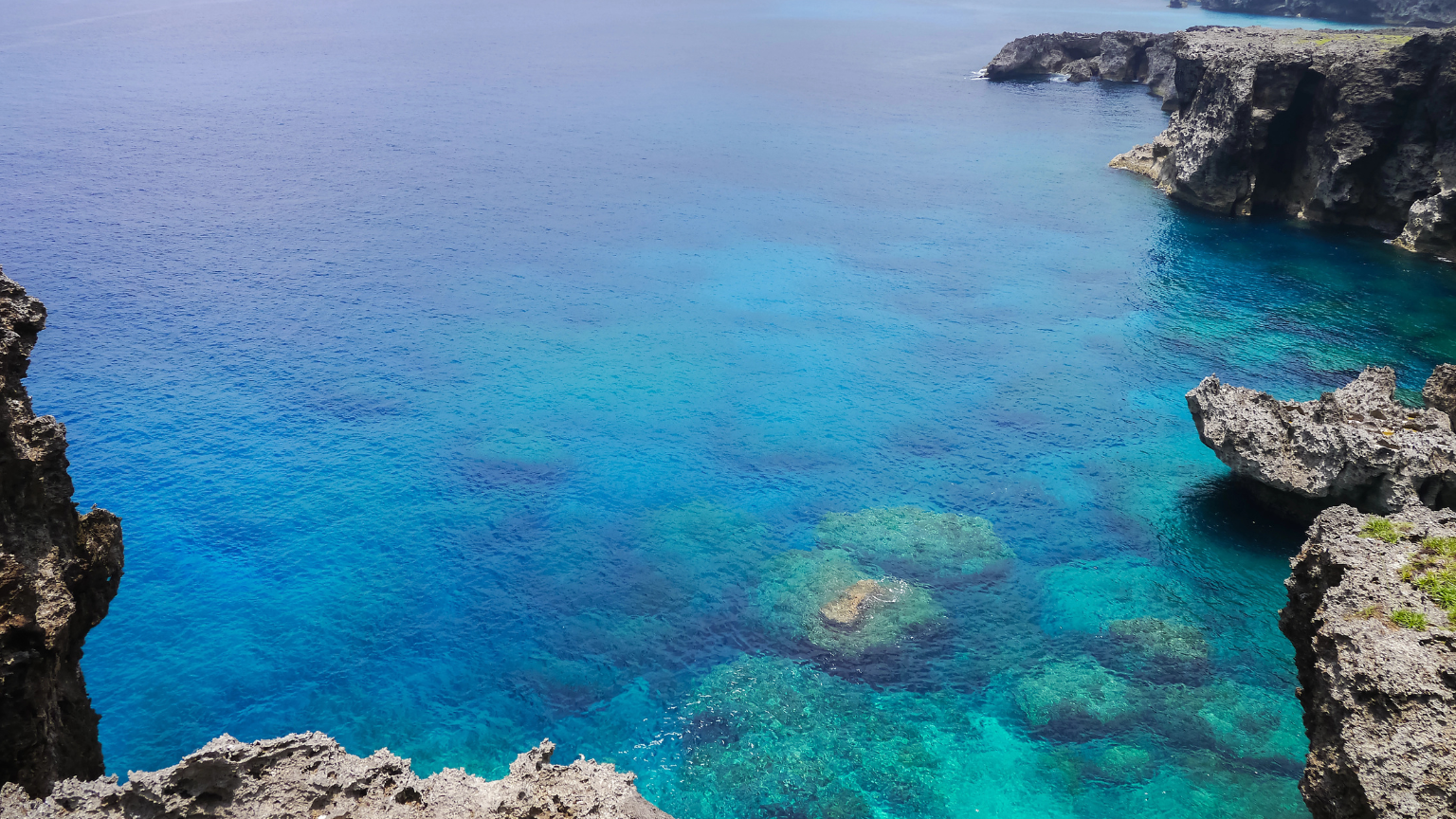

Off the coast of Yonaguni Island, Japan, researchers have uncovered a massive underwater city dating back about 7,000 years. The discovery includes large stone structures arranged in geometric shapes, resembling urban architecture. This site, near the famed Yonaguni Monument, offers new clues to early seafaring communities and their abilities to build along now-submerged coastlines.
For decades, the Yonaguni Monument itself has sparked debate. Some say it is a natural rock formation shaped by underwater currents. Others believe it represents the remains of a sunken civilization. This recent excavation reveals that complex structures coexist with the monument, strengthening the case for a man-made origin. The findings are helping scientists rethink how early maritime cultures lived and adapted to rising sea levels following the last Ice Age.
The Discovery
In late 2025, a team from Japan’s Ocean Research Institute used advanced sonar mapping and remote underwater vehicles to explore beyond the main Yonaguni formation. The researchers identified a sprawling cityscape beneath 25 meters of water. The site contains rectangular foundations, steps, terraces, and walls of sandstone blocks that link in a grid-like pattern over an area roughly two football fields wide.
Artifacts such as pottery shards and stone tools were recovered from sediment surrounding the ruins. Carbon dates estimate the remains to be around 5,000 BCE, placing them in the early Jomon period. This era is crucial for understanding Japan’s prehistoric transition from hunter-gatherer groups to settled societies. In addition, the alignment of the structures hints at knowledge of astronomy, water management, and community planning.
The research builds on earlier dives by local divers who first photographed the Yonaguni Monument in 1986. Earlier, the underwater stone formation was noted for its straight edges, terraces, and steps. Now, the broader city complex suggests a substantial inhabited area that was slowly submerged as sea levels rose after the last Ice Age.
What Scientists Say
Dr. Hiroshi Nakata, lead archaeologist of the project, states, "This site challenges previous views that complex settlements did not exist along Japan’s coastlines before recorded history. We can see evidence of planning and construction that requires organized societies."
Experts emphasize how submersion due to post-glacial sea rise may have erased many coastal settlements worldwide. "Finding well-preserved places like Yonaguni is rare," says marine archaeologist Dr. Susan Ramos. "They give us a window into early maritime life, showing how humans adapted to changing environments and rising waters." She also highlights the significance of combining geological and archaeological data to distinguish natural formations from man-made structures.
The discovery also informs debates about the origins of Japan’s Jomon culture. "Pottery fragments and stone tools found here match those from known prehistoric coastal sites," notes Dr. Nakata. "But this is the first time we see an entire submerged city layout with clear evidence of communal planning." The researchers suggest the settlement was likely abandoned as sea levels rose around 5,000 years ago, flooding the area.
Future studies planned include genetic analysis of seabed sediments and further exploration of nearby submerged landscapes. These could reveal connections to other ancient cultures in East Asia and provide insight into early human migration along coastlines.
How to Experience It
Though deep underwater, the vicinity of the Yonaguni Monument has become a popular diving destination. Access to the actual ruins is restricted to scientific teams to protect the fragile site. Still, divers can explore surrounding features, such as terraced rock formations and marine life that thrives around the structures.
The town of Yonaguni offers guided diving tours that focus on the monument and nearby underwater topography. Visitors can learn about the discoveries through local museums, such as the Yonaguni Island History Museum, which displays artifacts and interactive exhibits about the submerged city and Jomon culture.
For those unable to dive, virtual reality experiences and detailed underwater footage are increasingly available via museum programs and online platforms. These experiences allow viewers worldwide to witness the ruins’ scale, structure, and subtle details.
Additionally, travelers can explore on land the cultural heritage of Yonaguni Island itself, from ancient shrines to traditional fishing villages, offering context for the maritime lifestyle of its early inhabitants.
This discovery invites global attention to sunken coastal sites, many still hidden under oceans. It prompts travelers and scholars alike to consider how human history is closely tied to shifting shorelines and water’s power to shape civilizations.
As the scientific community continues study, the Yonaguni underwater city stands as a testament to ancient innovation and resilience. It broadens the map of early human achievements and enriches understanding of prehistoric maritime cultures.
This article was written by Will and edited with AI assistance.