
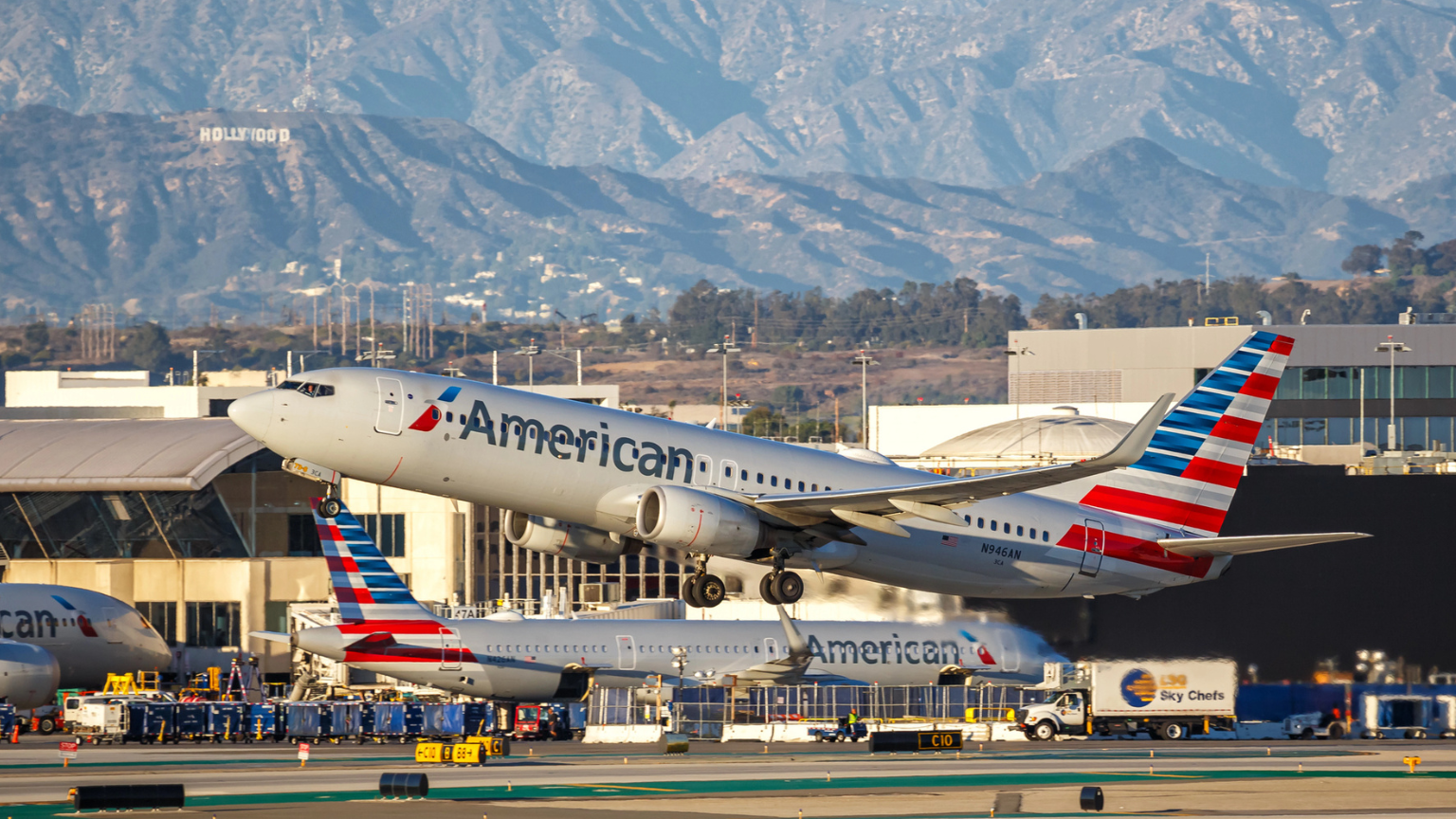

A quick-thinking American Airlines crew brought a high-speed takeoff to a halt at Los Angeles International Airport after a cargo jet crossed the active runway directly ahead of them. No injuries were reported, and both flights later continued their operations, but the incident is drawing fresh attention to runway safety at one of the nation’s busiest airports.
What Happened on the Runway
On Sunday night, an American Airlines flight bound for Boston accelerated down Runway 25R when a Boeing 777 freighter operated by AeroLogic taxied across its path. The American pilots immediately rejected the takeoff on instruction from the tower, bringing the aircraft to a stop before any conflict occurred. Controllers then directed the American flight back to the gate for checks and crew coordination.
The Timeline in Brief
AeroLogic Flight 619 had just arrived from Shanghai, landing at 10:33 p.m. and taxiing between parallel runways to reach its stand. According to tower instructions, the freighter was cleared to cross Runway 25L. Instead, it turned right, moving toward 25R—the runway American Airlines Flight 2453 was using for departure. As the situation developed, the tower issued urgent commands to stop the cargo aircraft and cancel the American takeoff.
Air Traffic Control Audio Highlights
Live ATC recordings captured the rapid exchange. The controller first called out to the cargo crew to stop, followed by an immediate cancellation of American 2453’s takeoff clearance. The American pilots confirmed they were stopping while the AeroLogic crew reported they were on the runway. The clipped, urgent phrasing is typical of controllers managing a fast-unfolding conflict on the surface.
Speed, Distance, and Stopping
Flight-tracking data indicates the American jet had reached roughly 167 miles per hour during its takeoff roll before braking. Even at that speed, the aircraft had sufficient runway remaining to decelerate safely, with about 1.3 miles separating it from the cargo plane. After the stop, the American flight taxied back to the terminal for inspections and crew resets, departing for Boston about two and a half hours later.
The Regulatory View
The Federal Aviation Administration said the AeroLogic aircraft crossed Runway 25R without authorization. Investigators will review controller instructions, ground radar data, cockpit voice and flight data recorders, and crew statements. A common focus in these inquiries is whether readbacks matched clearances and whether signage, lighting, or unexpected instructions contributed to the crew’s turn.
Callsigns, Clearances, and Possible Confusion
One detail likely to be examined is radio clarity. On the frequency, the cargo flight was occasionally addressed as “419” rather than “619,” a small slip that can become meaningful in a busy nighttime environment. Controllers also urged the freighter to cross “as fast as you can” due to arriving traffic—standard phraseology in time-sensitive moments, but another factor investigators will weigh as they reconstruct the sequence.
Why This Matters for Passengers
Runway incursions are rare, and the layers of protection are designed for exactly this kind of moment. Tower surveillance, standardized phraseology, cockpit procedures, and the option to reject a takeoff all worked as intended. For travelers, the most visible impact is usually a delay rather than a safety compromise. The American Airlines crew’s decision to stop—paired with the controller’s quick cancellation—prevented an already hazardous situation from escalating.
What Happens Next
American Airlines and AeroLogic are expected to cooperate fully with federal investigators and airport authorities. LAX may review signage, markings, and ground-movement briefings for newly arrived crews at late hours. Any safety notices or procedural tweaks that follow will be shared with airlines and air traffic controllers to reduce the chance of a repeat.
Bottom Line
This was a high-stress, high-speed situation that ended the way the system is designed to end—without injuries and with lessons to apply. The American Airlines pilots executed a textbook rejected takeoff, the tower acted decisively, and both aircraft completed their nights without further incident. For passengers, it is a reminder that aviation’s safety net is built with multiple layers, and when one thread frays, the others hold
Follow us on MSN for all your travel and lifestyle tips.
This article was written by Hunter and edited with AI Assistance