
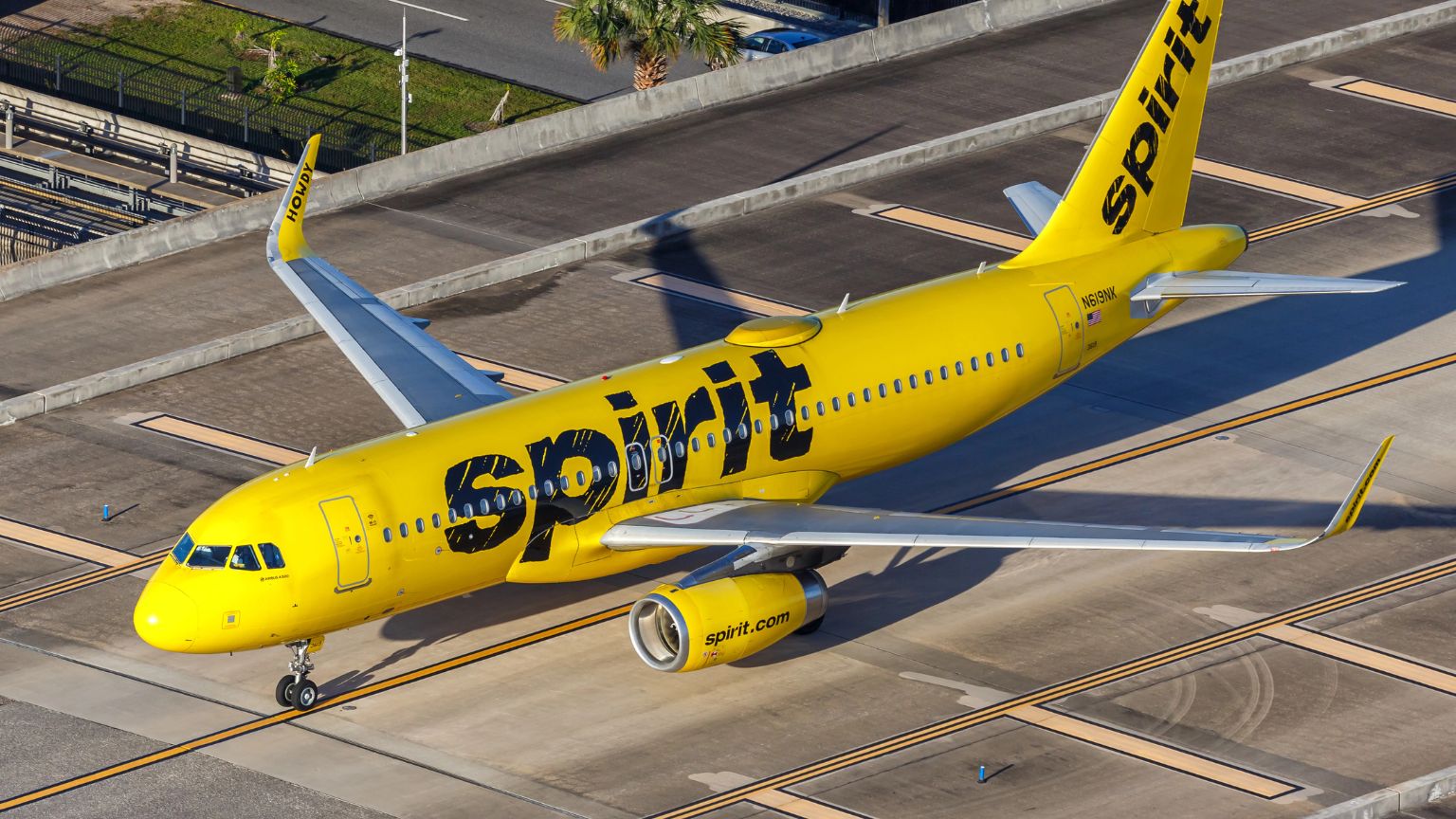

This week, a Spirit Airlines flight sparked buzz online after flight tracking data suggested it may have flown into Hurricane Erin at the height of the storm. At the time, Erin was a powerful Category 4 hurricane with winds exceeding 130 miles per hour. While the flight arrived safely, the unusual flight path raised plenty of questions.
What Happened
On Monday afternoon, Spirit Airlines flight NK2298 departed Philadelphia for San Juan, Puerto Rico. Flight tracker data shared online showed the Airbus A320 weaving close to the storm’s outer bands before turning south. The unusual path prompted comments across social media, with some joking that Spirit looked like it had taken on the role of a “Hurricane Hunter,” a nickname for aircraft that intentionally fly into storms for research purposes.
Some users claimed the plane flew through the storm, while others pointed out that the data might have been misleading. Another tracking service suggested that the flight skirted around the edge of the hurricane rather than cutting through its center.

Spirit’s Response
According to Spirit, the flight operated as planned and passengers were never at risk. The airline emphasized that safety is always the top priority. Pilots followed approved procedures and air traffic control instructions while en route, and the airline’s operations center had been monitoring the storm closely. Spirit noted that weather systems are always taken into account when determining flight paths, with adjustments made to ensure safe travel around or above areas of concern.
Flying Near Hurricanes
Flying near hurricanes sounds terrifying, but commercial pilots are trained to handle adverse weather. Aircraft can sometimes fly above hurricanes if conditions allow, though this is not common practice since storms can reach as high as 50,000 feet — higher than most planes can cruise.
Instead, the standard approach is to navigate around the storm. While winds aloft at cruising altitude are not necessarily hazardous, the real danger comes during takeoff and landing, when strong winds and heavy rain make conditions unpredictable.
That perspective helps explain what likely happened with the Spirit flight: while it may have looked dramatic on a tracking map, the plane was likely routed through safer portions of the storm system, avoiding the most turbulent areas.
A Stormy Time for Spirit
The flight comes at a time when Spirit Airlines is facing its own challenges. After struggling with financial strain, the airline filed for bankruptcy in late 2024 before emerging from the process in spring 2025. Even so, the company has acknowledged that it continues to face difficulties and its long-term future remains uncertain.
Against that backdrop, the image of a Spirit plane appearing to fly into a hurricane made waves online. But despite the dramatic headlines, the flight landed safely in San Juan, arriving just under an hour behind schedule.
The Bottom Line
The Spirit Airlines “hurricane flight” shows how easy it is for flight tracker maps to stir up controversy — but also how important context is. While the route looked unusual, pilots, air traffic controllers, and airline operations teams all worked together to ensure the flight remained safe.
For travelers, it’s a good reminder that modern aviation has layers of safety built in, even when powerful storms are involved. And while Spirit Airlines continues to face turbulence in the business world, this incident demonstrates that safety in the skies remains firmly in focus.
This article was written by Will and edited with AI assistance.