

Imagine standing at the edge of the earth, where towering trees whisper the ancient tales of the land, and the ocean hums back with waves that have danced to the moon's pull for millennia. These are places of unparalleled beauty, where the forest and ocean don't just meet—they intertwine in a harmonious embrace that feels almost magical. Here are 20 such breathtaking spots around the globe, each offering a unique symphony of natural wonders.
1. Olympic National Park, USA (A Rainforest by the Sea)

Olympic National Park in Washington State is a marvel where temperate rainforests spill onto over 70 miles of wild coastline. The Hoh Rain Forest, with its moss-laden trees and fern-filled understory, offers a verdant contrast to the rugged, driftwood-strewn beaches nearby. Here, the sound of waves crashing against the shore accompanies every step through the forest. It's a place where bald eagles soar above and tide pools brim with colorful marine life. The park's diverse ecosystem supports everything from towering Douglas firs to elusive coastal wolves.
2. Great Ocean Road, Australia (Twelve Apostles' Forest Guardians)

The Great Ocean Road stretches along Australia's southeastern coast, offering views where lush forests and sheer limestone cliffs meet the Southern Ocean. The Twelve Apostles, towering rock stacks carved by relentless waves, are guarded by dense eucalypt forests teeming with koalas and vibrant birdlife. This iconic route not only showcases breathtaking ocean vistas but also leads through rainforests where ancient trees and fern gullies thrive. It's a journey that encapsulates the essence of wild Australia. The contrast between the serene forests and the powerful ocean creates a stunning backdrop for adventure and exploration.
3. Tierra del Fuego, Argentina and Chile (The World's Southernmost Forests)

At the southern tip of South America, Tierra del Fuego is a land of extremes where dense, windswept forests meet the cold waters of the Southern Atlantic and Pacific Oceans. The region's Magellanic subpolar forests are some of the world's southernmost, enduring harsh winds and cold temperatures. Penguins share these remote beaches with seals, while the forests are home to unique wildlife like the Andean fox. The stark beauty of this landscape is unparalleled, with glacial peaks rising behind ancient woodlands. It's a place where the sea's chill is warmed by the rich biodiversity of the forests.
4. Na Pali Coast, Hawaii, USA (Cliffs Cloaked in Green)

The Na Pali Coast on Kauai, Hawaii, is a dramatic landscape where verdant cliffs plunge straight into the Pacific Ocean. These cliffs, cloaked in lush tropical vegetation, offer some of the most jaw-dropping scenery on the planet. Hiking trails like the Kalalau Trail provide access to secluded beaches framed by the forest. Waterfalls cascade down these cliffs, feeding the fertile land before reaching the sea. It's a place where the vibrant greens of the forest contrast with the deep blues of the ocean, creating a paradise for nature lovers and adventurers alike.
5. Amalfi Coast, Italy (Mediterranean Splendor)

Italy's Amalfi Coast is renowned for its extraordinary beauty, where steep mountains covered in thick forests and terraced gardens meet the turquoise waters of the Mediterranean. Picturesque towns like Positano and Amalfi cling to the cliffs, their colorful buildings a stark contrast to the natural greens and blues. Lemon groves and vineyards thrive in the fertile soil, their produce as vibrant as the scenery. The area's hiking trails offer stunning vistas of the sea, weaving through forests and past historic sites. It's a harmonious blend of human and natural landscapes, where the scent of lemons and the sea air mingle.
6. Cape Breton Highlands, Canada (Where Moose Meet the Atlantic)

In Nova Scotia, the Cape Breton Highlands are where rugged mountains blanketed in dense forests drop dramatically into the Atlantic Ocean. This national park offers a unique mix of Acadian, boreal, and taiga habitats, making it a haven for wildlife including moose, bald eagles, and lynx. The Cabot Trail, winding through the park, provides stunning ocean views and forested paths. Here, the Gulf of St. Lawrence and the Atlantic meet, their waters framing the highlands. It's a landscape that encapsulates Canada's wild beauty, where every turn reveals another breathtaking scene.
7. Abel Tasman National Park, New Zealand (Golden Sands and Green Canopies)

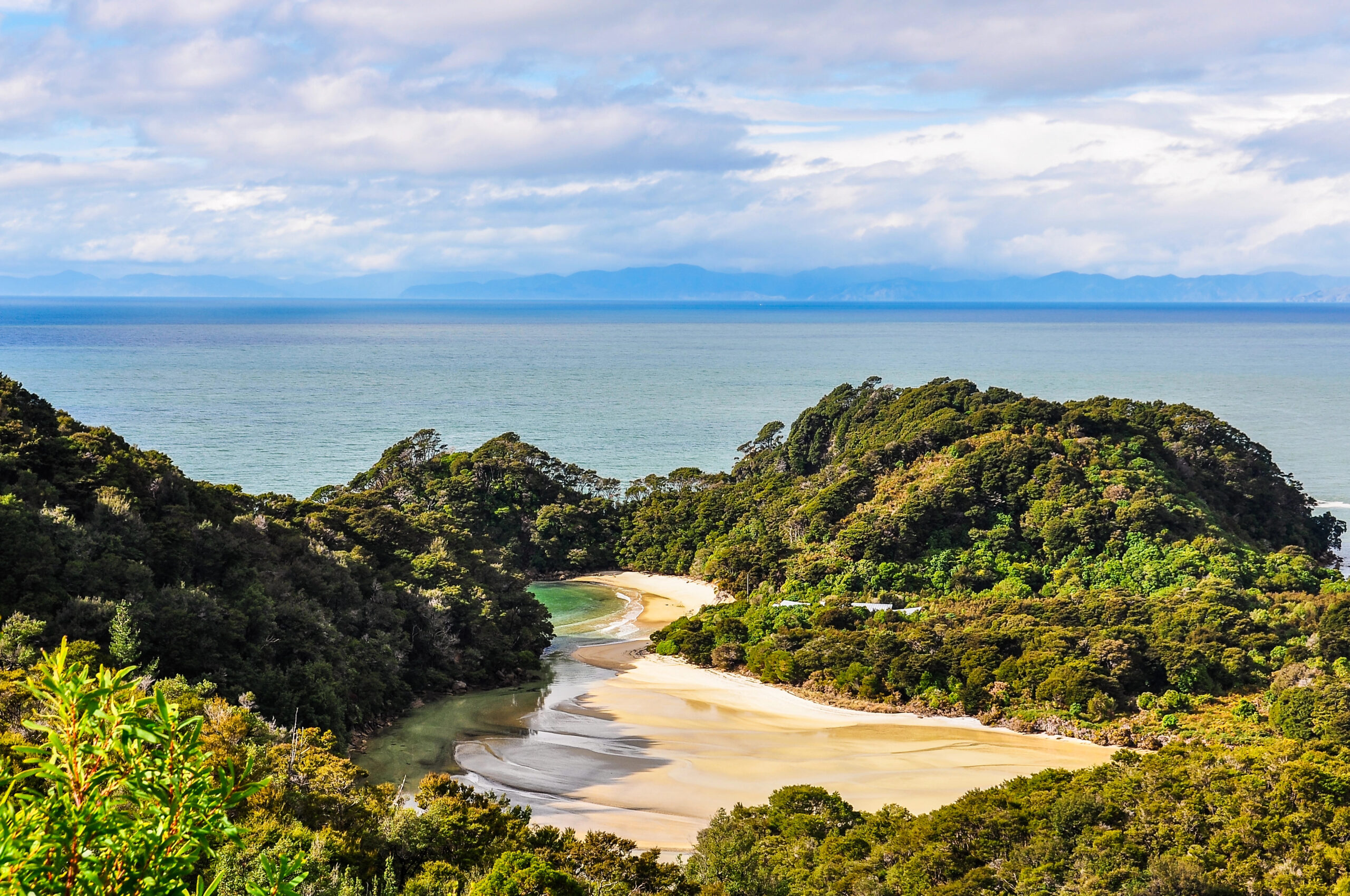
New Zealand's Abel Tasman National Park is a coastal paradise where golden sandy beaches are juxtaposed against lush native forests. Famous for its Great Walk, the park offers trails that weave through fern gullies and over headlands, offering spectacular views of the Tasman Sea. The clear waters invite kayaking and swimming, while the forests are alive with the songs of birds like the tui and bellbird. It's one of the few places where one can start the day with a forest hike and end it with a sunset swim. The park's accessible yet pristine nature makes it a top destination for those seeking both forest and ocean adventures.
8. Sintra-Cascais Natural Park, Portugal (Fairytale Forests and Rugged Coasts)

Portugal's Sintra-Cascais Natural Park is a place of fairy tales, where mystical forests meet the wild Atlantic coast. The park's UNESCO-listed Sintra Mountains are blanketed in lush woodland and dotted with palaces and castles that seem to emerge from the pages of a storybook. Along the coast, dramatic cliffs offer sweeping ocean views, with secluded beaches nestled below. The area's rich biodiversity is evident in both its marine and terrestrial ecosystems. It's a magical landscape that captures the imagination, where history and nature intertwine in spectacular fashion.
9. Pacific Rim National Park Reserve, Canada (Temperate Rainforests and Thunderous Waves)

On Vancouver Island, the Pacific Rim National Park Reserve showcases the raw beauty of temperate rainforests abutting the might of the Pacific Ocean. This park is famous for its long, sandy beaches and the wild, wave-lashed coastline. The West Coast Trail, originally a lifeline for shipwrecked sailors, now offers hikers a challenging adventure through ancient forests and along rugged shores. The area is rich in Indigenous culture, with totem poles and traditional canoes marking the landscape. It's a place that encapsulates the spirit of the wild Pacific Northwest, where the forest's deep greens meet the ocean's vast blues in a dynamic display of nature's contrasts.
10. Costa Verde, Brazil (Emerald Forests and Crystal Waters)

Brazil's Costa Verde, stretching between Rio de Janeiro and São Paulo, is a breathtaking expanse where lush Atlantic rainforest descends to meet crystal-clear ocean waters. This coastline is dotted with secluded beaches, accessible only by trails through the dense foliage or by boat. The area is a biodiversity hotspot, supporting a wide array of wildlife including colorful birds and rare primates. Small, colonial-era towns nestled among the hills offer a glimpse into Brazil's past, while the ocean provides a playground for water sports enthusiasts. It's a vibrant, living canvas where the forest's emerald hues blend seamlessly with the ocean's azure tones.
11. Big Sur, California, USA (Rugged Cliffs and Redwood Forests)

Big Sur, a stretch of California's central coast, is where the Santa Lucia Mountains rise abruptly from the Pacific Ocean, cloaked in ancient redwood forests. This dramatic landscape offers some of the most iconic views in California, with misty forests giving way to sheer cliffs and rocky shores. The area's state parks, like Julia Pfeiffer Burns and Pfeiffer Big Sur, offer trails that meander through towering redwoods to overlooks offering expansive ocean views. The scenic Highway 1 winds its way through this stunning landscape, providing easy access to both the forests and the coast. It's a place where the majesty of the redwoods is matched only by the power of the Pacific, creating a truly awe-inspiring experience.
12. Garden Route, South Africa (Diverse Ecosystems on Display)

South Africa's Garden Route is a spectacular journey along the southeastern coast, where dense forests, wetlands, and rivers meet the Indian Ocean. This region is celebrated for its astounding biodiversity, including the Knysna forest, home to ancient trees and elusive elephants. The coastline features pristine beaches and rugged cliffs, offering a variety of oceanic activities from whale watching to surfing. The Garden Route also includes several national parks and reserves, each providing a unique perspective on the region's complex ecosystems. It's a destination that offers something for every nature lover, where the diversity of landscapes creates a mosaic of ecological wonders.
13. Olympic Peninsula, USA (Moss-Covered Wonder)

The Olympic Peninsula in Washington State is another gem where dense, moss-covered forests meet the Pacific's rugged shoreline. This area is home to the Olympic National Park, a UNESCO World Heritage site, recognized for its exceptional natural beauty and diverse ecosystems. The park's beaches, like Ruby Beach, are famous for their sea stacks and tide pools, while the interior hosts expansive rainforests and alpine environments. The region is a haven for wildlife, including elk, cougars, and a variety of marine species. It's a place where one can truly feel the ancient spirit of the land, as the forest and ocean have coexisted in harmony for millennia.
14. The Dingle Peninsula, Ireland (Celtic Mystique Meets the Atlantic)

Ireland's Dingle Peninsula is a place where the mystique of Celtic history intertwines with the wild Atlantic Ocean. The landscape is marked by rolling hills and dense, fairy-tale forests that reach out to rugged cliffs and sandy beaches. This area is steeped in history, with ancient ruins and traditional Gaelic-speaking villages dotting the landscape. The peninsula's coast offers some of Ireland's most breathtaking views, with the Blasket Islands visible off the shore. It's a place that captures the heart with its beauty and the imagination with its stories, where the green of the land seems to dance with the blues of the sea.
15. Fiordland National Park, New Zealand (Where Fjords and Forests Merge)

In the southwest corner of New Zealand, Fiordland National Park is a majestic landscape where steep fjords carved by glaciers meet dense rainforests. This park is part of Te Wahipounamu, a UNESCO World Heritage area, recognized for its dramatic landscapes and untouched wilderness. The park's fjords, like the famous Milford Sound, are lined with towering cliffs and waterfalls that drop directly into the sea. The dense forests are home to a variety of birdlife including the iconic kiwi. It's a place of surreal beauty, where the stillness of the forests contrasts with the dynamic movements of the sea.
16. Lofoten Islands, Norway (Arctic Beaches and Northern Lights)

The Lofoten Islands in Norway offer a unique combination of arctic beaches and rugged mountains, all within the Arctic Circle. These islands are known for their traditional fishing villages, dramatic peaks, and sandy beaches that would not look out of place in a warmer climate. During the summer, the midnight sun illuminates the landscape, while winter offers the chance to see the northern lights above. The ocean teems with life, making it a popular spot for whale watching. It's a place where the majesty of the mountains meets the mystery of the sea, offering a stark beauty that's both serene and awe-inspiring.
17. Andaman and Nicobar Islands, India (Tropical Paradises Untouched)

The Andaman and Nicobar Islands are a group of islands at the juncture of the Bay of Bengal and Andaman Sea, where lush tropical forests descend to untouched beaches. These islands are a biodiverse hotspot, with coral reefs teeming with marine life and dense forests home to unique species of flora and fauna. The beaches are renowned for their crystal-clear waters and white sand, offering a tranquil escape from the world. The islands' remote location has preserved their natural beauty, making them a perfect spot for eco-tourism. It's an idyllic paradise where the forest and ocean exist in perfect harmony, offering a glimpse of the earth's untouched splendor.
18. Haida Gwaii, Canada (Rich Indigenous Culture Amidst Natural Beauty)

Haida Gwaii, off the northern coast of British Columbia, Canada, is a group of islands where ancient rainforests meet the rich waters of the Pacific. Known as the "Galapagos of the North," this archipelago is home to unique species and rich indigenous Haida culture. The islands offer a mix of secluded beaches, old-growth forests, and cultural heritage sites. The ocean around the islands is a vital part of the ecosystem, supporting a diverse range of marine life. It's a place where the connection between land, sea, and people is palpable, offering a profound experience of nature's beauty and cultural richness.
19. Connemara, Ireland (Wild Atlantic Way's Jewel)

Connemara, on Ireland's west coast, is part of the Wild Atlantic Way and offers some of the most stunning landscapes where mountains, bogs, and woodlands meet the Atlantic Ocean. This rugged region is known for its stone walls, thatched cottages, and vast national park, which offers miles of trails through diverse habitats. The coastline is a mix of sandy beaches and rocky inlets, with the Atlantic providing a dramatic backdrop. Connemara is also home to Kylemore Abbey, nestled at the base of a mountain by a lake, adding a touch of human history to the natural beauty. It's a place of wild, untamed beauty, where the land's rich greens and the ocean's deep blues create a breathtaking vista.
20. Bruce Peninsula, Canada (Freshwater Meets the Forest)

The Bruce Peninsula in Ontario, Canada, is a unique landscape where dense forests meet the clear, turquoise waters of Georgian Bay and Lake Huron. This area is renowned for its rugged limestone cliffs and the ancient cedar trees that cling to them. The Bruce Trail, Canada's oldest and longest marked footpath, provides access to some of the country's most breathtaking scenery. The peninsula's waters are home to shipwrecks and diverse marine life, making it a popular spot for diving and snorkeling. It's a place where the calm of the forest contrasts with the clarity of the freshwater, offering a serene yet vibrant natural experience.
This article was written by a human and edited with AI Assistance