

Imagine wandering through villages where every corner tells a tale, where the architecture isn't just about shelter but about storytelling. These aren't your average tourist destinations; they're gateways to a world where myth and reality intertwine. Each of these 20 villages offers a unique glimpse into a world shaped by legends, where buildings whisper ancient secrets and streets are paved with stories.
1. Hobbiton, New Zealand (A Real-life Shire)

Set in the rolling hills of New Zealand, Hobbiton brings the world of J.R.R. Tolkien's "The Hobbit" to life. This village was meticulously constructed for the filming of the "Lord of the Rings" and "The Hobbit" film series, featuring hobbit holes, gardens, and the Green Dragon Inn. Visitors can wander through the Shire, feeling like they've stepped into Middle Earth. The architecture here, with its round doors, earth-covered homes, and attention to whimsical details, captures the essence of hobbit life. It's a place where fantasy feels real and the landscape seems to hold magic.
2. Alberobello, Italy (Trulli Magical Cones)

Alberobello is famed for its trulli, conical-roofed houses that look like they've sprung from a fairy tale. These unique structures, made from local limestone and without mortar, have a mysterious origin steeped in lore. Some say they were designed to be easily dismantled to evade taxes on new settlements. Today, they create a captivating skyline that transports visitors to a time of myths and legends. Alberobello's trulli are not just houses; they're a testament to human ingenuity and the enchanting power of folklore.
3. Giethoorn, Netherlands (Venice of the North)

In Giethoorn, the absence of roads and the abundance of canals create a serene, otherworldly setting. Known as the "Venice of the North," this village relies on boats for transportation, with quaint thatched-roof cottages dotting the waterways. Legend has it that the canals were formed by the footsteps of giants. Whether that's true or not, there's a magical quality to floating along Giethoorn's waterways, under its bridges, and past its perfectly manicured gardens. It's a place where the pace slows, and the architecture harmonizes with the rhythm of the water.
4. Shirakawa-go, Japan (Gassho-zukuri Fairy Tales)

Shirakawa-go is renowned for its gassho-zukuri farmhouses, whose steep thatched roofs resemble hands joined in prayer. These architectural wonders were designed to withstand heavy snowfall, telling a story of adaptation and survival. Folk tales abound of spirits dwelling in the surrounding forests, protecting the village. At night, the village transforms into a scene from a storybook, with the farmhouses lit up, casting a warm glow against the snow. Shirakawa-go is a testament to the harmony between human habitation and the whims of nature.
5. Hallstatt, Austria (A Lake That Mirrors Fairy Tales)

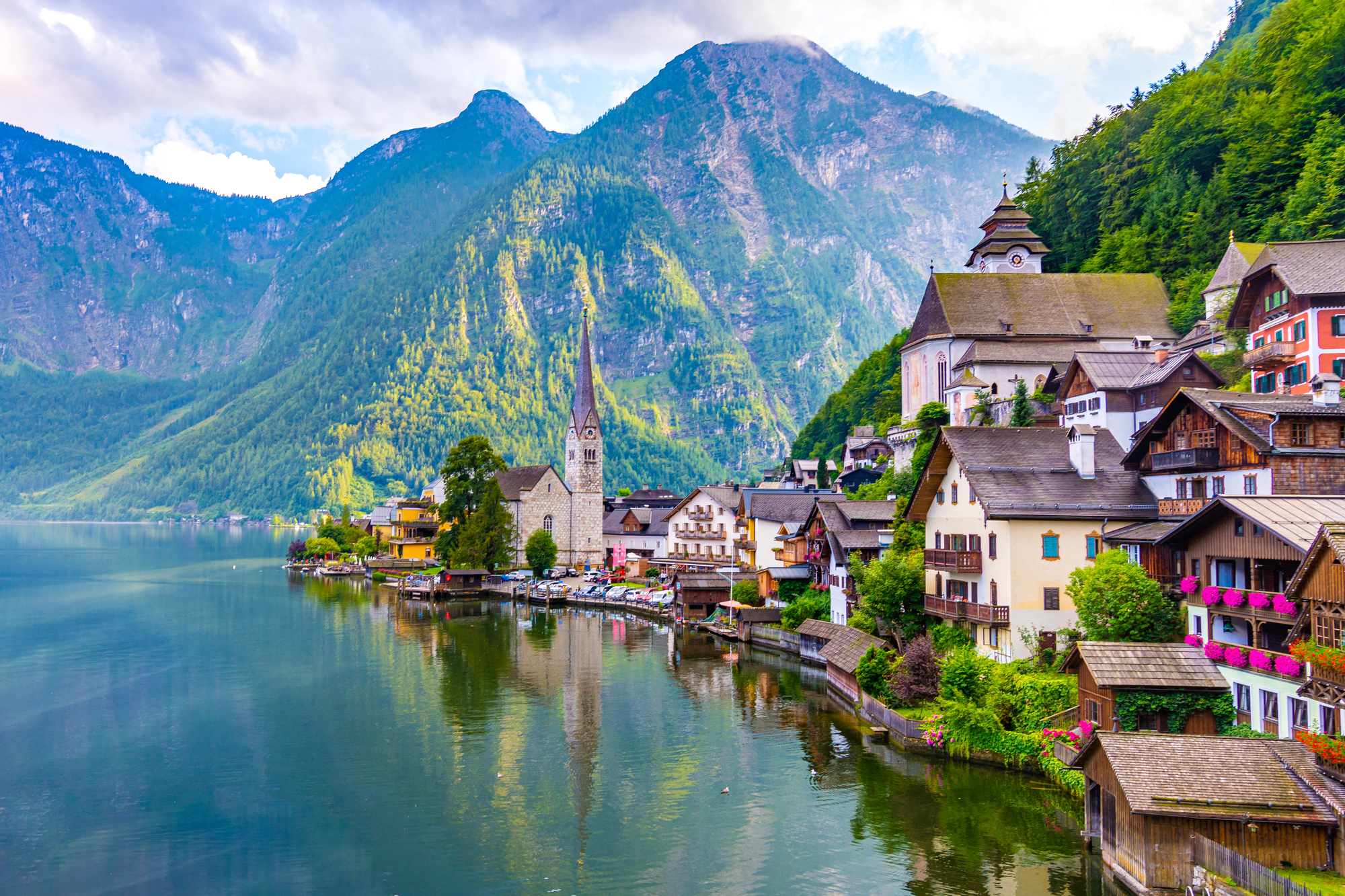
Perched by a lake, Hallstatt looks like a painting come to life, with its 16th-century Alpine houses and Gothic churches. Legends speak of a dragon that once lived in the lake, guarding precious salt mines. This village is a blend of natural beauty and architectural charm, where every building tells a story of wealth and danger. Visitors are captivated by its beauty and the reflection of the village in the lake's still waters, creating a symmetrical dreamland. Hallstatt's allure lies in its ability to make myths feel like history and history feel like myths.
6. Sintra, Portugal (Palaces Among the Clouds)

Sintra is a dreamscape of palaces, estates, and castles amid lush forests that seem to whisper ancient tales. The Moors, who once ruled this land, are said to have been inspired by the mystical mountains, constructing palaces that blend with the natural landscape. The Pena Palace stands out with its riot of colors and architectural styles, looking like something out of a fantasy novel. Sintra's misty forests and high vantage points offer views that seem to stretch into another realm. It's a place where the lines between history and myth blur, enveloping every visitor in its enchanting embrace.
7. Chefchaouen, Morocco (Blue as the Sky)

Chefchaouen's blue-painted streets and buildings create a surreal, dreamlike atmosphere. There are several theories about why the city is painted blue, from religious reasons to keeping mosquitoes away, but the effect is undeniably magical. Walking through Chefchaouen feels like stepping into a legend, where the sky has descended to the streets. The blue hues vary, creating a canvas that mirrors the changing sky from dawn till dusk. This village is not just a place; it's a mood, colored in shades of myth and reality.
8. Pariangan, Indonesia (Minangkabau’s Mythical Roofs)

In Pariangan, the Minangkabau architecture takes center stage with its buffalo-horn shaped roofs, said to symbolize victory and community. This village, nestled at the foot of Mount Marapi, is steeped in myths of its origins and the significance of its designs. The roofs are not just architectural feats; they are a symbol of the matriarchal society's strength and unity. According to local lore, the village's location was chosen by the buffalo, an animal revered in Minangkabau culture. Pariangan is a blend of natural beauty and cultural depth, where architecture and mythology merge.
9. Cappadocia, Turkey (Fairy Chimneys and Underground Cities)

Cappadocia's landscape is dotted with "fairy chimneys" and vast underground cities, carved out by both nature and man. These formations have inspired tales of fairies living in the valleys, and ancient hideouts from invaders. The rock-cut homes and churches, some still in use today, tell a story of human ingenuity and the desire to merge with the mystical landscape. At dawn, hot air balloons fill the sky, offering a view of Cappadocia that feels like floating in a dream. It's a place where the earth itself seems to speak of myths long forgotten.
10. Mont Saint-Michel, France (A Monastery in the Sky)

Mont Saint-Michel appears like a mirage, rising from the tidal flats with its imposing abbey perched atop. Legends tell of the archangel Michael instructing the bishop of Avranches to build a church on this rocky island. It's a masterpiece of medieval architecture, with the abbey, the winding streets, and the fortified walls creating a step back in time. The dramatic tides add to the mystique, sometimes isolating the Mont from the mainland, as if it's a piece of heaven on earth. Visiting Mont Saint-Michel is like walking through a legend, where history and myth are indistinguishable.
11. Pingyao, China (A Time Capsule of Tradition)

Pingyao, with its well-preserved ancient city wall and traditional courtyard homes, offers a glimpse into China's imperial past. Legends of ancient warriors and scholars abound, with the architecture serving as a backdrop to tales of heroism and wisdom. The city's layout, based on Feng Shui and traditional Chinese cosmology, suggests a deeper connection between the earthly and the divine. Walking through Pingyao's narrow streets feels like navigating a maze of stories, where every turn reveals a new chapter of China's rich history. It's a place where the past is present, and myths are woven into the fabric of daily life.
12. Portmeirion, Wales (An Italianate Fantasy)

Portmeirion is a whimsical village on the coast of Wales, designed in the style of an Italian village. Its creator, Sir Clough Williams-Ellis, aimed to show that beautiful architecture could enhance the natural landscape. The village is a colorful patchwork of buildings, with styles ranging from Baroque to Gothic, and stories of mythical creatures hiding around corners. Portmeirion has served as the backdrop for numerous films and TV shows, most famously "The Prisoner," adding to its mystique. It's a place where architecture plays and fantasies come to life, challenging the boundaries between reality and imagination.
13. Mykonos, Greece (A Labyrinth of White and Blue)

Mykonos, with its iconic white buildings and winding streets, was designed to confuse pirates who might invade. The mix of narrow alleys and bright, blue accents creates a mesmerizing maze under the Aegean sun. Local lore speaks of mermaids and gods walking among the inhabitants, blending with the island's vibrant nightlife. The architecture, with its simplicity and beauty, reflects the islanders' relationship with the sea and the sky. Mykonos is not just a paradise for beach-goers; it's a canvas where myths and reality dance in the daylight.
14. Riquewihr, France (A Wine Lover’s Fairy Tale)

Nestled in the heart of Alsace's vineyards, Riquewihr looks as if it's been lifted straight from the pages of a storybook. This medieval village, with its colorful half-timbered houses and cobblestone streets, is surrounded by myths of vineyard spirits and wine gods. The architecture here serves not just as a home for its residents but as a testament to the village's long-standing relationship with wine-making. The enchanting atmosphere is heightened during the harvest season, when the village becomes a hub of festivities. Riquewihr is a blend of history, legend, and the art of wine, creating a fairy tale for the senses.
15. Goreme, Turkey (Living in Fairy Tales)

Goreme, located in the heart of Cappadocia, is famous for its rock formations and cave dwellings, which have been inhabited since ancient times. The landscape looks as if it's been sculpted by giants, with homes and churches carved into the stone. Local legends tell of saints and hermits who found refuge in these caves, seeking solitude and connection with the divine. The architecture here is a direct response to the landscape, creating a harmonious blend of natural and human-made wonders. Goreme's allure lies in its ability to make visitors feel like they've stepped into a world where the lines between reality and myth are blurred.
16. Český Krumlov, Czech Republic (A Bohemian Rhapsody)

Český Krumlov, with its towering castle and baroque buildings, seems to have been plucked from a medieval tale. The Vltava River snakes through the town, adding to its fairy tale ambiance. Legends of noble families and their intrigues abound, with the castle's opulent rooms and secret passages serving as the setting for many a whispered story. The town's layout, with its meandering streets and hidden courtyards, invites exploration and imagination. Český Krumlov is a testament to the enduring allure of Bohemian culture, where every stone and river bend has a story to tell.
17. Luang Prabang, Laos (Where Spirits Dwell)

Luang Prabang, a UNESCO World Heritage site, is nestled at the confluence of the Mekong and Nam Khan rivers. The town is revered for its well-preserved architecture and Buddhist temples, which are believed to be protected by guardian spirits. The fusion of traditional Lao homes and European colonial buildings tells a story of cultural confluence and resilience. Legends of the Buddha smiling upon this land add a layer of mysticism to the town's serene beauty. Luang Prabang is a place where the spiritual and the earthly coexist, offering a tranquil retreat into a world governed by faith and legend.
18. Sighisoara, Romania (Birthplace of Dracula)

Sighisoara's claim to fame is its link to Vlad the Impaler, the inspiration for Bram Stoker's Dracula. This medieval fortress town, with its towers, cobbled streets, and colorful buildings, seems to have been preserved in time. The Clock Tower, with its intricate mechanisms and eerie figures, watches over the town, adding to its gothic atmosphere. According to local lore, the town is haunted by the spirits of those who once lived here. Sighisoara is not just a place of historical significance; it's a gateway to a world where folklore and reality intertwine, chilling and enchanting visitors.
19. Jaisalmer, India (A Golden Fantasy)

Jaisalmer, known as the "Golden City," rises from the Thar Desert like a mirage, its yellow sandstone buildings glowing in the sunlight. The fort, which still houses a living community, seems to whisper tales of ancient trade routes and desert mysteries. According to legend, the city was founded by a prince who was told by a sage that it would become a sanctuary for artists and merchants. The intricate carvings and ornate architecture speak of a rich cultural heritage and the desert's stark beauty. Jaisalmer is a place where the past is etched into every stone, inviting visitors to lose themselves in its timeless allure.
20. Bibury, England (A Snapshot of Old England)

Bibury, often described as the most beautiful village in England, seems untouched by time. The 17th-century stone cottages of Arlington Row are a picturesque testament to traditional English architecture. Local legend has it that fairies bless the village, which might explain its timeless charm. Bibury’s trout farm and the lush countryside that surrounds it offer a peaceful retreat into a world that feels removed from modern hustle. It’s a living postcard, where history and legend nestle side by side, offering a glimpse into a simpler, more enchanted time.