

When people think of iconic city skylines, towering skyscrapers often come to mind. But not all breathtaking cityscapes are built on the back of high-rise buildings. Around the world, some cities boast skylines that are famous for their natural beauty, historical architecture, or a unique silhouette that can't be found anywhere else. Let's take a trip around the globe to check out 20 cities whose famous skylines are not made of skyscrapers.
1. Venice, Italy (A labyrinth of waterways)

Venice is a city that seems to float on water, with a skyline dominated by bell towers, domed churches, and historic buildings rather than modern skyscrapers. The most iconic part of its skyline is perhaps the silhouette of the Basilica di San Marco and its adjoining Campanile. As you glide through the city's canals on a gondola, the lack of high-rise buildings allows for an unobstructed view of Venice's architectural marvels. This unique skyline is a testament to the city's rich history and stands as a symbol of the delicate balance between nature and human habitation. It's a picturesque scene that seems straight out of a Renaissance painting.
2. Cape Town, South Africa (Table Mountain's majestic backdrop)

Cape Town's skyline is nothing short of breathtaking, with the flat-topped Table Mountain towering over the city. This natural wonder, along with the nearby Lion's Head and Devil's Peak, creates a dramatic background that frames the city's buildings and beaches. Unlike cities famed for their skyscrapers, Cape Town's charm lies in how its low-rise architecture blends seamlessly with the natural landscape. The view from the Victoria & Alfred Waterfront, with the mountain standing guard in the distance, is a perfect example of this harmony. Cape Town demonstrates that a city doesn't need towering buildings to have a memorable skyline.
3. Paris, France (The Eiffel Tower's unmistakable silhouette)

The skyline of Paris is iconic for its historical landmarks, with the Eiffel Tower taking center stage. This iron lattice tower, together with other historical edifices like the Notre Dame Cathedral and the Sacré-Cœur Basilica, creates a skyline that is instantly recognizable worldwide. Paris's strict height restrictions on buildings ensure that its skyline remains uncluttered and that these monuments continue to dominate the city's profile. The gentle slopes of Montmartre offer panoramic views of the city's relatively low-rise landscape, allowing the architectural beauty of Paris to shine. The city's skyline is a testament to its rich history and cultural heritage.
4. Edinburgh, Scotland (A castle atop an extinct volcano)

Edinburgh's skyline is medieval and majestic, with the Edinburgh Castle perched high on Castle Rock, an extinct volcano, providing a dramatic focal point. The city's Old Town and New Town, both UNESCO World Heritage Sites, contribute to the skyline with their historical and neoclassical buildings, respectively. Unlike modern metropolises, Edinburgh's skyline tells the story of a city that has evolved over centuries. The spire of St. Giles' Cathedral and the craggy Arthur’s Seat, another extinct volcano, add to the unique topography of the city. Edinburgh's skyline is a blend of natural beauty and architectural splendor, making it one of the most distinctive in the world.
5. Prague, Czech Republic (A city of a hundred spires)

Prague's skyline is a tapestry of Gothic, Baroque, and Renaissance architecture, with the spires of St. Vitus Cathedral and the Prague Castle standing tall against the city's backdrop. This city, often described as the 'City of a Hundred Spires,' offers a skyline that is rich in architectural diversity and history. The Vltava River meanders through Prague, with the Charles Bridge providing a picturesque foreground to the city's panoramic views. The absence of skyscrapers allows for uninterrupted views of the city's historic districts, making every vantage point a postcard-worthy scene. Prague’s skyline is a testament to the city's enduring beauty and architectural heritage.
6. Quebec City, Canada (The only walled city in North America)

Quebec City stands out with its fortified walls and the iconic Fairmont Le Château Frontenac hotel, giving the skyline a distinctly European feel in North America. This UNESCO World Heritage Site is celebrated for its preservation of colonial architecture, with the hotel's towering presence reminiscent of a French chateau. Quebec City's skyline is defined not by modern skyscrapers but by stone buildings and steeples that have stood the test of time. The historic district's cobblestone streets and the Dufferin Terrace offer splendid views of the Lower Town and beyond. Quebec City's skyline is a harmonious blend of history, culture, and natural beauty, making it uniquely captivating.
7. Istanbul, Turkey (Where continents collide)

Istanbul’s skyline is a stunning mosaic of minarets, domes, and towers, set against the backdrop of the Bosphorus Strait. The Hagia Sophia and the Blue Mosque, with their impressive domes and slender minarets, dominate the cityscape and symbolize Istanbul's rich cultural heritage. This city, where Europe meets Asia, has a skyline that reflects a blend of Byzantine, Ottoman, and modern influences. The Galata Tower offers panoramic views of the city's sprawling landscape, where the silhouette of the Suleymaniye Mosque adds to the historic skyline. Istanbul's skyline is a testament to its role as a crossroads of civilizations.
8. Kyoto, Japan (A city of temples and pagodas)

Kyoto, once the imperial capital of Japan, is home to a skyline characterized by traditional Japanese architecture, including numerous temples and pagodas. The golden Kinkaku-ji (Golden Pavilion) and the towering To-ji pagoda stand out against the city's more modern structures, providing a glimpse into Japan's ancient past. Unlike cities dominated by steel and glass, Kyoto's skyline is a serene blend of natural landscapes and historical buildings. The city's preservation of its cultural heritage ensures that even as it modernizes, the essence of ancient Kyoto remains intact. This unique skyline offers a peaceful contrast to the hustle and bustle of Japan's more urbanized cities.
9. St. Petersburg, Russia (The cultural heart of Russia)

St. Petersburg's skyline is dominated by golden spires and grandiose buildings, reflecting the city's status as the cultural heart of Russia. The Peter and Paul Fortress, with its iconic spire, and the elaborate Church of the Savior on Spilled Blood, with its colorful onion domes, are standout features against the city's horizon. This city, built on the Neva River, showcases an elegant blend of European architectural styles, from Baroque to neoclassical. The absence of tall skyscrapers allows St. Petersburg's historical buildings to command the skyline, offering views reminiscent of an imperial past. St. Petersburg's skyline is a visual narrative of Russia's rich cultural and architectural heritage.
10. San Francisco, USA (A bridge that's an architectural marvel)

While San Francisco does have its share of skyscrapers, its skyline is most famously defined by the majestic Golden Gate Bridge. This iconic suspension bridge, with its Art Deco elements and "International Orange" color, stands out against the backdrop of the San Francisco Bay. The hilly terrain of the city offers unique vantage points from which the bridge and the historic Alcatraz Island can be seen, creating a skyline that is as varied as it is beautiful. San Francisco's mix of modern and Victorian architecture adds to the charm of its cityscape. The skyline here tells the story of a city that has grown and evolved, yet remains tied to its historical landmarks and natural beauty.
11. Marrakech, Morocco (A city painted in red)

Marrakech's skyline is a vibrant tapestry of red earth-toned buildings, reflecting the city's nickname, "The Red City." The Koutoubia Mosque, with its towering minaret, stands as a testament to Islamic architecture and dominates the cityscape. Unlike cities that boast gleaming skyscrapers, Marrakech's low-rise silhouette is punctuated by the Atlas Mountains in the distance, creating a stunning natural backdrop. The city's historic medina, a UNESCO World Heritage Site, offers a maze of narrow streets lined with traditional riads and bustling souks. Marrakech's skyline is a blend of natural beauty, architectural splendor, and cultural richness, making it a mesmerizing sight.
12. Lisbon, Portugal (A city of seven hills)

Lisbon's skyline is shaped by its rolling hills, offering panoramic views of red-roofed buildings, ancient ruins, and the Tagus River. The São Jorge Castle stands prominently atop one of these hills, its silhouette a reminder of Lisbon's storied past. Unlike cities where modern skyscrapers dominate, Lisbon's charm comes from its historic neighborhoods like Alfama, with its winding streets and tiled facades. The Jerónimos Monastery and the Belém Tower, both UNESCO World Heritage Sites, add historical depth to the city's skyline. Lisbon's unique topography and architectural heritage create a skyline that is both picturesque and deeply rooted in history.
13. Bruges, Belgium (A medieval fairytale)

Bruges is often described as a medieval fairytale town, and its skyline does nothing to dispel this notion. The city's belfry, an 83-meter-high tower, looms over the market square and provides panoramic views of cobbled streets and canals. Unlike urban landscapes filled with skyscrapers, Bruges boasts historic buildings and churches that have been meticulously preserved. The city's canals, often referred to as the Venice of the North, add to the charm of the skyline, reflecting the Gothic architecture. Bruges's skyline, with its enchanting mix of medieval architecture and idyllic waterways, transports visitors back in time.
14. Havana, Cuba (A time capsule of architecture)

Havana’s skyline tells the story of a city frozen in time, with its colorful colonial buildings and vintage cars. The Capitolio and the Morro Castle stand out as iconic landmarks against the city's seaside backdrop. Havana lacks the modern skyscrapers that characterize many other capitals, allowing its historic charm to shine through. The city's Malecón, a long seawall and promenade, offers stunning views of the Gulf of Mexico, with the skyline serving as a beautiful contrast. Havana’s skyline is a vibrant mix of history, culture, and natural beauty, captivating all who visit.
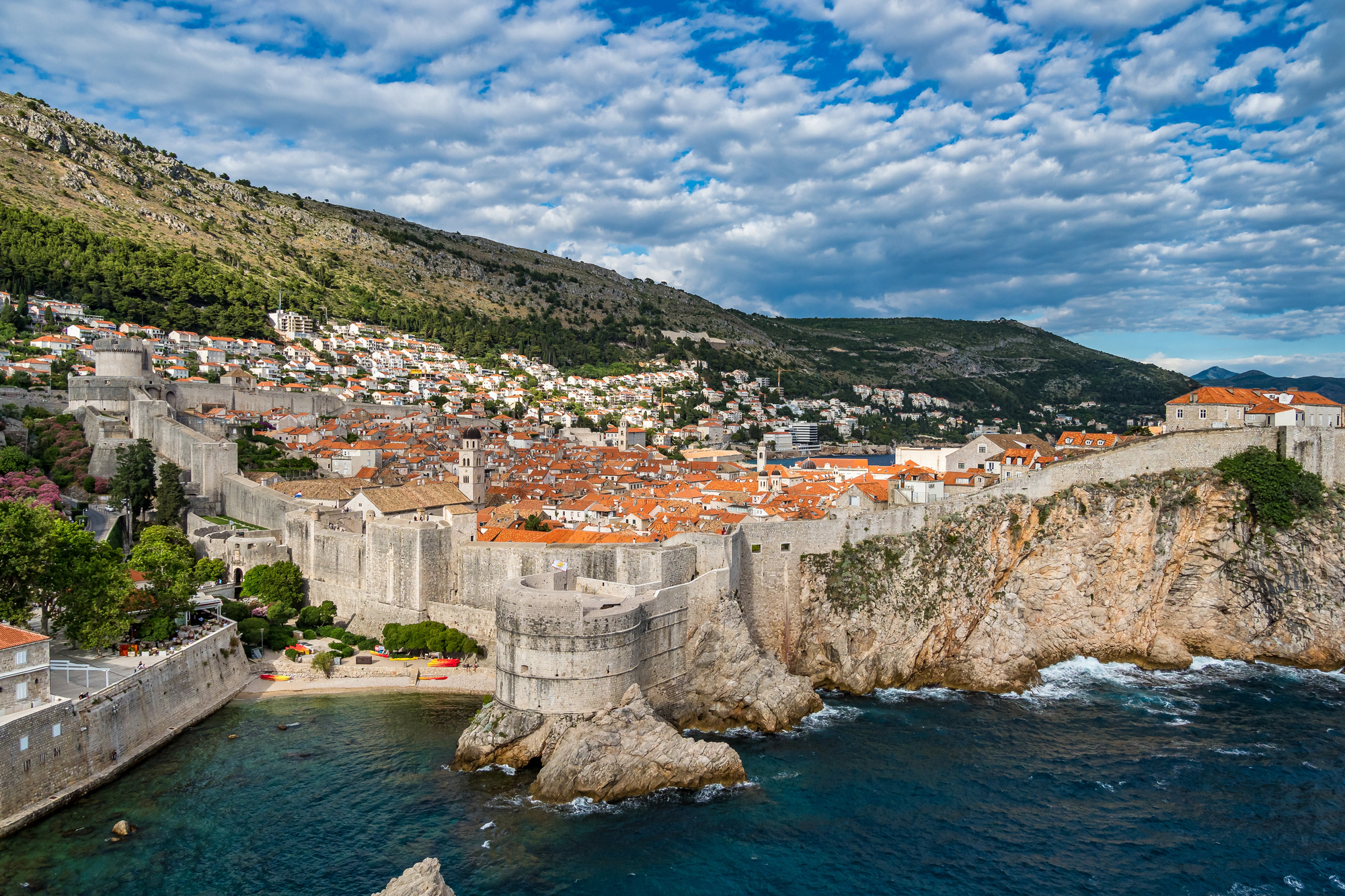
15. Dubrovnik, Croatia (The Pearl of the Adriatic)

Dubrovnik's skyline is renowned for its medieval walls and the shimmering Adriatic Sea that serves as its backdrop. The city's Old Town, a UNESCO World Heritage Site, is encircled by these impressive fortifications, creating a skyline that looks like it's straight out of a storybook. The Sponza Palace and the Rector's Palace add to the city's historic silhouette, with their distinctive Renaissance architecture. Unlike cities defined by modern skyscrapers, Dubrovnik's skyline is a testament to its rich history and enduring beauty. The city's location along the Dalmatian coast offers breathtaking views that blend the old with the natural beauty of the sea.
16. Stockholm, Sweden (A city spread across islands)

Stockholm's skyline is unique, spread out over 14 islands, where the sea intertwines with urban life. The city's historical center, Gamla Stan, with its colorful buildings and cobblestone streets, adds a charming element to the skyline. Unlike metropolises dominated by skyscrapers, Stockholm's skyline is marked by church spires and the greenery of its many parks. The City Hall, with its imposing tower featuring the Three Crowns, is one of Stockholm's most iconic buildings. Stockholm showcases how a city can embrace its natural landscape, creating a skyline that is both diverse and harmonious.
17. Athens, Greece (Ancient ruins meet urban sprawl)

Athens' skyline is a striking mix of ancient ruins and modern living, with the Acropolis standing tall as the city's eternal symbol. The Parthenon, perched atop the Acropolis, provides a historical counterpoint to the sprawling urban landscape below. Unlike cities that have embraced skyscrapers, Athens has maintained a balance, where modern buildings do not overshadow its ancient monuments. The hills around Athens offer breathtaking views of the city, where the past and present merge seamlessly. Athens' skyline is a testament to the city's resilience and its ability to blend centuries of history with the demands of modern life.
18. Budapest, Hungary (A tale of two cities)

Budapest's skyline is a narrative of unity, where the hilly Buda meets the flat Pest, divided and yet connected by the Danube River. The city's skyline is crowned by the Gothic Revival spires of the Hungarian Parliament Building, one of the largest buildings in Hungary. The Buda Castle and Fisherman's Bastion on the Buda side offer a fairytale-like backdrop to the city's more modern Pest side. Unlike cities dominated by the glass and steel of skyscrapers, Budapest's skyline is a harmonious blend of historical and architectural styles. Budapest's skyline, especially when viewed from the Chain Bridge at night, is a breathtaking sight that encapsulates the city's vibrant history and culture.
19. Jaipur, India (The Pink City's royal heritage)

Jaipur's skyline is dominated by the majestic Amer Fort, the Hawa Mahal, and the City Palace, showcasing the city's royal heritage. Known as the Pink City for its distinctly colored buildings, Jaipur's skyline is a blend of Rajput and Mughal architecture. Unlike cities characterized by modern skyscrapers, Jaipur's architectural wonders are low-rise and spread out, allowing them to stand out against the arid landscape of Rajasthan. The Nahargarh Fort, perched on the edge of the Aravalli Hills, provides panoramic views of the city, highlighting the contrast between the ancient architecture and the bustling streets below. Jaipur’s skyline is a testament to its past as a center of royal power and its continuing allure as a cultural hub.
20. Santiago, Chile (A metropolis shadowed by the Andes)

Santiago's skyline is a stunning juxtaposition of urban development and the majestic Andes mountains. The city itself has a mix of modern high-rises and colonial-era architecture, but it's the natural backdrop that truly defines its skyline. Unlike cities that are recognized solely for their architectural feats, Santiago's landscape is enhanced by the snow-capped peaks that loom over it. The San Cristóbal Hill provides a vantage point from which both the urban sprawl and its mountainous borders can be appreciated. Santiago's skyline, with its blend of man-made structures and natural wonders, offers a unique visual experience that captures the essence of Chile.
This article was written by a human and edited with AI Assistance