

Some towns do not just live with their history, they fight to protect it. You see it in the paint choices, the streetlights, and the way even small renovations are debated at city hall. New buildings are expected to respect older ones, and shortcuts that erase character are not welcome. For travelers, this kind of preservation focus means you get more than a pretty backdrop for photos. You get streets, squares, and waterfronts that still feel connected to the past, but with enough comfort to make a long weekend easy. If you love wandering through places where every brick, beam, and balcony has a story, these towns belong on your list.
Charleston, South Carolina

Charleston is one of the strongest examples of a town that treats historic preservation as a daily responsibility rather than a trend. The historic district is full of pastel row houses, iron balconies, and church steeples that are carefully protected by strict design review boards. Property owners must follow detailed guidelines when they repaint, add shutters, or adjust porches, which keeps the streetscape consistent and elegant. New construction is limited in height and encouraged to blend with traditional forms, so the skyline stays low and human scaled. Walking through neighborhoods like South of Broad or along the Battery, you notice how little visual clutter there is and how well the old buildings fit together. It feels like a living city that just happens to be wrapped in one of the most beautiful historic districts in the country.
Savannah, Georgia

Savannah’s famous grid of leafy squares exists today because residents fought hard to keep it intact. The city uses a network of historic districts, overlay zones, and a strong preservation commission to protect everything from townhouse façades to cobblestone lanes. Owners who want to alter historic buildings face careful review, which has kept the original rhythm of streets and squares in place. New hotels and apartments must respect height limits and design standards so that the historic core does not disappear behind modern towers. As you wander through the different wards, each square feels like a small outdoor room framed by restored homes and churches. The result is a city where preservation is both a tourist draw and a point of local pride woven into everyday life.
St. Augustine, Florida

St. Augustine proudly calls itself the oldest continuously inhabited European founded city in the United States, and it works hard to look the part. The historic area around St George Street is lined with Spanish colonial style houses, coquina stone walls, and small courtyards that have been restored with care. Preservation rules govern building heights, exterior materials, and even signage, which keeps modern intrusions from overwhelming the old core. Museums and historic homes are embedded in ordinary streets rather than fenced off, so everyday errands still take place inside centuries old walls. Even small details like wooden balconies, clay roof tiles, and narrow lanes are protected and repaired instead of replaced with generic modern finishes. As a visitor, you feel like you are moving through a tightly held piece of history that still functions as a real coastal town.
Williamsburg, Virginia

Williamsburg is a rare example of a town where preservation itself is the main attraction. The colonial core was restored on a large scale in the twentieth century, and that effort has continued with constant maintenance and research. Original buildings sit alongside carefully reconstructed ones, all guided by archaeological evidence and historic documentation. Craftspeople still work with traditional techniques on timber, brick, and plaster, which keeps skills alive as well as structures. Just beyond the preserved area, the modern town has been planned to avoid visually overpowering the historic streets and green spaces. Visiting Williamsburg feels less like stepping into a static museum and more like walking through a small city that happens to have paused its central district in the late 1700s.
Santa Fe, New Mexico

Santa Fe might be a capital, but it behaves like a small town when it comes to protecting its historic look. Design rules in the central area require adobe or adobe style construction, which means rounded corners, flat roofs, and earth toned plaster are the norm rather than the exception. Even national brands have to adapt to these forms, so the streets around the plaza and Canyon Road feel remarkably cohesive. Older churches, homes, and civic buildings are repaired with traditional materials instead of being replaced with concrete and glass. The result is a city center that looks like a continuous adobe landscape, even as galleries and restaurants bring new life into the interiors. For travelers, Santa Fe offers one of the strongest examples of how firm design rules can keep a historic identity intact without freezing a town in time.
Annapolis, Maryland

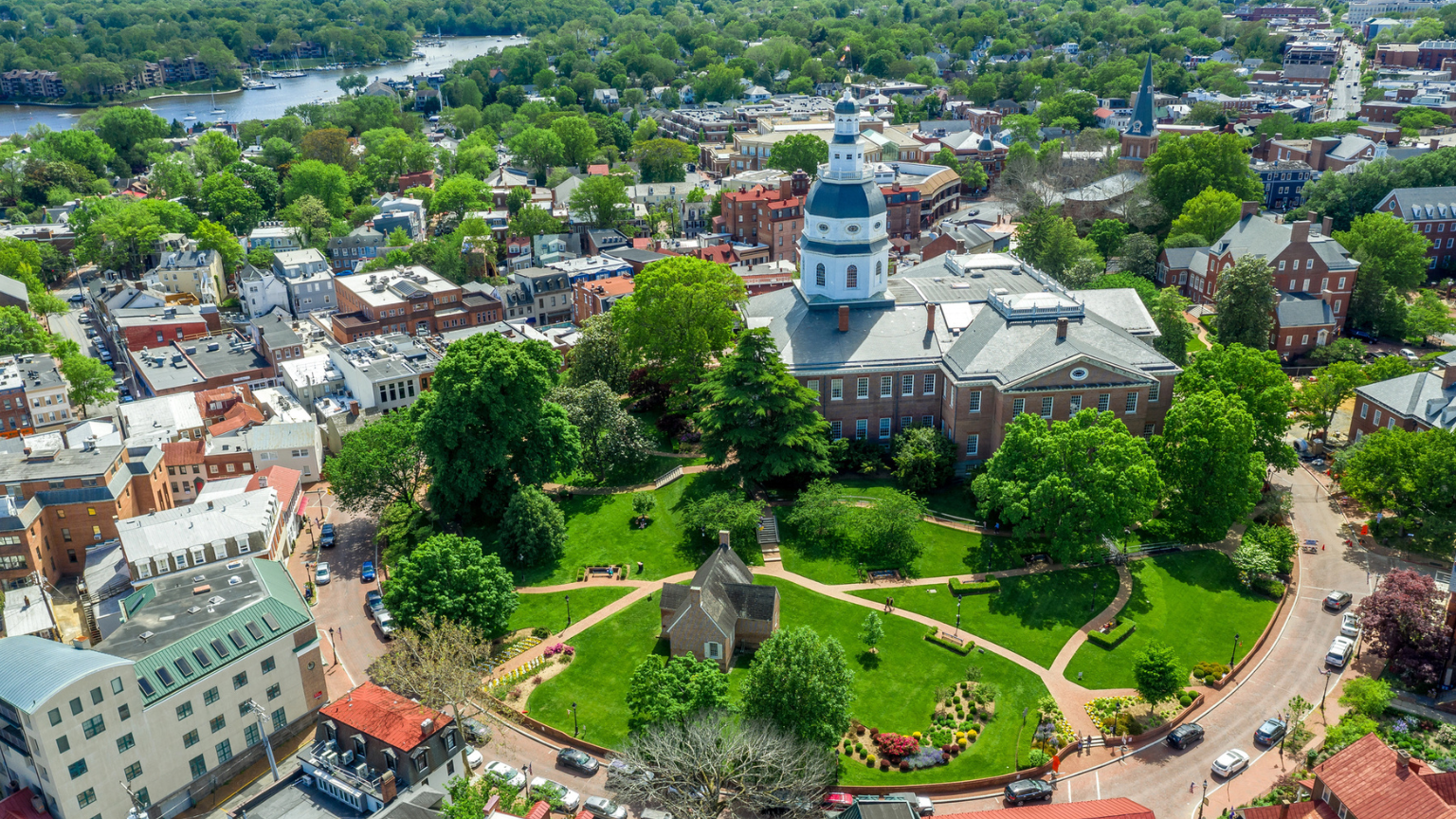
Annapolis is a compact waterfront capital where eighteenth century architecture is treated almost like a shared heirloom. The historic district around the harbor and state house has strict guidelines that control building height, façades, and any major exterior changes. Brick sidewalks and narrow streets are kept in scale rather than widened into anonymous boulevards, which preserves intimate views toward the harbor and domed state capitol. Many old houses and commercial buildings now hold law firms, boutiques, and cafés, but their exteriors have changed very little. When you walk up from the docks into town, you move through layers of preserved history rather than a string of disconnected tourist spots. The effect is a downtown that feels genuinely old, yet busy and useful enough that locals still treat it as their everyday center.
Galena, Illinois

Galena sits in the hills of northwest Illinois and looks almost unchanged from its nineteenth century boom days. The long, curving main street is lined with brick commercial buildings that have been carefully preserved, right down to old style cornices and window shapes. Local ordinances limit major exterior changes and discourage out of scale modern construction in the historic core. Many former warehouses and storefronts now hold inns, antique shops, and restaurants, but most of the original brickwork and detailing remains. Up the hill, quiet residential streets show off more period homes with plaques telling you who lived there and when. As a traveler, you can easily imagine riverboats tying up nearby while you browse the shops, yet you still have access to modern comforts and a relaxed small town atmosphere.
Richmond, Texas

Richmond is a small town southwest of Houston that has chosen to make preservation part of its growth plan rather than an afterthought. The historic downtown has brick storefronts, a classic courthouse square, and older homes that local officials have worked to protect with design guidelines and updated zoning. New development is encouraged to respect those views and scales, so you do not suddenly see a tall, out of place building in the middle of the old streets. Tree preservation and traditional street details like brickwork and simple lighting keep the town center shaded and pleasant. Many of the preserved buildings have been given new lives as boutiques, galleries, and offices, which helps support ongoing maintenance. It is a good example of how a town can grow with the surrounding metro area while still holding on tightly to its historic heart.
Greenbelt, Maryland

Greenbelt is one of the most interesting preserved towns from the New Deal era, and its history is as much about planning as architecture. Built in the 1930s as a model community, it was designed around curving paths, shared green spaces, and cooperative housing. Instead of tearing those buildings down, residents have worked through co ops, neighborhood groups, and local government to protect the original layout and structures. The central shopping area and community spaces still sit within their original footprints, with simple modernist lines and pedestrian friendly design. Preservation efforts focus on both the buildings and the ideals behind them, so cooperative institutions remain central to town life. Visitors walking along the paths and courts can see how the town’s original vision of shared space and modest, well designed housing still shapes daily life.
Bruges, Belgium

Bruges is often held up as the classic medieval town, and one look at its canals and stepped gables makes it clear why. The historic center has been protected for many years by strong preservation regulations that control signage, building heights, and exterior changes. Most of the old houses, warehouses, and churches retain their traditional forms, even when their interiors have been adapted for modern use. Cars are restricted or discouraged in much of the center, which helps protect old pavements and keeps the streets feeling calm and walkable. Restoration work is ongoing, but teams use traditional materials and techniques where possible to preserve original details. Wandering through Bruges, you are surrounded by layers of history that still feel cohesive rather than patched together from surviving fragments.
Český Krumlov, Czech Republic

Český Krumlov curves around a river below a hilltop castle, and the whole town feels like a pocket sized storybook scene. Its historic center is tightly protected, with plastered façades, red roofs, and narrow streets preserved as a complete ensemble. Local regulations limit new construction and major exterior changes, so you do not see modern towers sticking up among the old rooftops. The castle complex above town is maintained with similar care, including historic interiors and courtyards that invite slow exploration. Even with a steady flow of visitors, the town has managed to balance tourism with careful oversight of signs, storefronts, and renovations. If you enjoy places where medieval street plans and Renaissance buildings still shape everyday movement, Český Krumlov is a clear standout.
Bath, England

Bath is famous for its honey colored stone and elegant Georgian crescents, and it works very hard to stay that way. Preservation here is not limited to one square or street. Instead, much of the town is covered by protection that controls building materials, heights, and major changes to historic structures. The Roman baths, pump rooms, and sweeping terraces are constantly maintained and upgraded in ways that respect original designs. Modern buildings are required to use similar stone and sympathetic forms, which keeps the overall look remarkably unified. Street after street of terraced houses and squares still read as a complete eighteenth century vision, even as residents live modern lives inside. For visitors, it is one of the most immersive historic towns you can wander on foot, with preservation decisions visible in every sightline.
Lunenburg, Nova Scotia

Lunenburg’s hillside streets above the harbor are a patchwork of brightly painted wooden houses, and the town has chosen to protect that look carefully. The old town layout, with its grid of streets running down to working wharves, is preserved as a historic district with strict rules on exterior changes. Traditional wooden siding, trim, and window styles are maintained or replicated, and homeowners are encouraged to use bold colors that highlight the architecture without changing its form. Old warehouses and shipyard buildings along the waterfront have been adapted into restaurants, offices, and shops, but they still reflect their original shapes and positions. The town’s fishing and shipbuilding heritage is honored not only in museums but in the preserved fabric of the harbor itself. Walking through Lunenburg, you see how a living working town can also be a carefully protected historic landscape.
Luang Prabang, Laos

Luang Prabang sits between two rivers and is wrapped around a hill of temples, creating a town that feels both spiritual and historic. Its preservation work focuses on a blend of traditional Lao wooden houses and graceful colonial era buildings. Height limits, materials rules, and façade controls keep new construction low and compatible with older streets. Many guesthouses and cafés occupy restored wooden houses with verandas, shutters, and tiled roofs that match their neighbors. Monasteries are maintained with fresh paint, gilding, and structural repairs, and daily rituals like morning alms are treated as cultural heritage worth safeguarding. Even as visitor numbers rise, the town has kept its quiet streets and layered architecture intact enough that evenings still feel calm and deeply rooted in local tradition.
Hoi An, Vietnam

Hoi An’s old town is one of the most complete historic trading quarters in Asia, and preservation is a big reason it has stayed that way. Dozens of wooden shophouses line narrow streets, often with carved beams, tile roofs, and internal courtyards that families have maintained for generations. Authorities limit car traffic in much of the center during key hours, which protects the old pavements and keeps the atmosphere relaxed. Strict guidelines prevent major alterations to façades and rooflines, so the town’s ochre walls and wooden balconies remain consistent even as new businesses move in. Lanterns strung above the streets at night highlight the preserved architecture rather than hiding it. For visitors, Hoi An offers the rare experience of staying, dining, and shopping inside a historic fabric that has changed very slowly on the outside.
York, England

York wraps layers of Roman, medieval, and Victorian history inside still standing city walls, and its residents take that legacy seriously. Large sections of the stone walls have been repaired and opened as walking paths, giving you elevated views of narrow streets and the massive cathedral. In the old core, half timbered buildings and narrow lanes are protected by strict planning rules that limit modern alterations. Shop signs and lighting are controlled so they do not overwhelm historic façades, which keeps areas like the Shambles feeling authentic. Archaeology plays a major role in planning decisions, since so much of York’s history lies underground as well as above. The result is a town where simply walking from the station to the cathedral takes you through more than a thousand years of built history, much of it carefully preserved.
Colonia del Sacramento, Uruguay

Colonia del Sacramento sits on the River Plate with an old quarter that feels like a small chunk of Iberia relocated to South America. Its historic streets are paved with irregular stones and lined with low houses in white and pastel colors, often with tiled roofs and simple wooden doors. Preservation regulations keep new development outside the old grid and control alterations to façades and rooflines. Old bastions, gates, and lighthouse structures are maintained and folded into everyday routes rather than isolated behind barriers. Many of the homes have become cafés, guesthouses, or small shops, but interiors are adapted gently to preserve original walls and courtyards. As you wander under flowering trees and along the riverfront, you get a strong sense of how valuable this preserved corner of colonial history is to both locals and visitors.
Taos, New Mexico

Taos is a striking example of a town where historic preservation covers both architecture and living culture. Around the plaza, many adobe buildings that date back generations are still in use as shops, galleries, and restaurants. Local codes favor earth toned plaster, flat roofs, and traditional details, which keeps new construction from clashing with older structures. Just outside town, Taos Pueblo represents one of the oldest continuously inhabited communities in North America, with multi story adobe buildings that residents maintain using long standing methods. Both the town and the Pueblo take preservation seriously, treating repairs as part of cultural life rather than a special event. Visitors who come for the nearby mountains and desert scenery often find themselves staying longer to explore the layers of history embedded in the streets, walls, and plazas.
This article was written by Hunter and edited with AI Assistance