

You do not need a day pass or a lobby to find the brightest blue on earth. These spots trade pool decks for trailheads and boardwalks, and the soundtrack is wind, birds, and water instead of speakers. Each place puts nature first, with simple paths, small village cafes set back from shore, and rules that keep the water clear. Come early, carry out what you carry in, and bring shoes that can handle rock, sand, and river stone. If you love quiet swims, glassy reflections, and nights under stars without floodlights, this list is your sweet spot.
Laguna 69, Peru

Laguna 69 sits at 15,000 feet in Huascarán National Park, where glaciers pour minerals into a basin that glows an almost electric blue. You reach it on foot from the Cebollapampa trailhead, with switchbacks that open to waterfalls and views of Pisco and Chacraraju. There are no resorts at the lake, only scree slopes, wildflowers, and a cirque of ice that creaks on sunny days. The water is snowmelt cold, so most people celebrate with photos on the boulder beach rather than a swim. Come prepared for altitude, bring layers, and start early to beat afternoon clouds. Yungay and Huaraz have lodging, but the lake itself is pure wilderness.
Lake Sorapis, Italy

Tucked behind the Dolomites near Cortina, Lake Sorapis looks like a bowl of turquoise paint spilled under jagged towers. The color comes from rock flour suspended in fresh glacial runoff, which scatters light into milky blue. You get there by a scenic balcony path that clings to the mountain before dropping to the shoreline. There are no resorts at the lake, only a rustic rifugio set back from the water and a ring of larch trees for shade. Summer weekends can be busy, so go early or pick a weekday and you will hear only boots on gravel and marmots whistling. Swimming is discouraged to protect the fragile shallows, which keeps the surface mirror smooth.
Blue Eye Spring, Albania

The Blue Eye, called Syri i Kaltër, is a karst spring that bubbles up from a limestone shaft so deep divers have never mapped its bottom. The water is sapphire in the center and shifts to emerald at the edges where it fans into a cool stream. You reach it by a short forest walk near Muzinë, and the air temperature drops the moment you step under the canopy. There are no resort complexes here, only a small café up the path and picnic spots along the river. Visit in the morning to see the sun hit the spring and send swirls of light across the limestone lip. The site is protected, which keeps motor traffic away from the water and preserves the quiet.
To Sua Ocean Trench, Samoa

To Sua is a collapsed lava tube on the south coast of Upolu that filled with clear seawater filtered through volcanic rock. A wooden ladder leads down to a floating platform where vines trail from the rim like curtains. The color shifts with the sky, from bottle blue to sea glass green, and you can feel the tide breathing through hidden channels. There are no resorts at the trench, only a family run garden park above and a simple changing pavilion. Bring reef shoes, since the current can be lively, and time your swim for mid tide when the water is calmest. After a dip, explore the blowholes and surf flats along the coast, which are just as uncrowded.
Laguna Parón, Peru

Laguna Parón is the largest lake in the Cordillera Blanca and one of the bluest, flanked by the razor ridge of Artesonraju. A gravel road climbs from Caraz to a quiet parking area, then a short path brings you to granite slabs where the color explodes. There are no resorts or shoreline buildings, only a ranger hut and a weathered cross on the viewpoint. Hire a local boatman if you want to glide over the blue and look straight into underwater boulders. Mornings offer glassy reflections and the best mountain light, while afternoons bring wind that darkens the surface. Pack lunch, water, and sun protection because there is no shade at this elevation.
Blue Lake Rotomairewhenua, New Zealand

Deep in Nelson Lakes National Park sits Blue Lake, which holds some of the clearest natural water ever measured. The lake is sacred to Māori, swimming is not allowed, and that respect keeps the shoreline pristine. You reach it on a multiday tramp from St Arnaud or by linking valley tracks that pass through beech forest and swing bridges. There are no resorts, no stores, and no powerlines, only hut bunks and the steady rush of alpine streams. Visit for the hush at dawn when the surface becomes a perfect lens for the clouds. Even from the bank you will see pebbles far below as if you could pick them up by hand.
Blue Pools, Haast Pass, New Zealand

A short forest trail off State Highway 6 leads to swing bridges over the Makarora River and a set of deep blue pools framed by white gravel bars. The water is mountain cold and so clear that trout look suspended in air. There are no resorts or commercial buildings in the valley, only a small car park and information signs at the trailhead. Photographers love the midday light when the sun lifts over the gorge and the river turns luminous. In summer you can wade the edge, but respect the current and keep to the shallows. Stay for sunset and you may have the pools to yourself, with only kea calls for company.
Hinatuan Enchanted River, Philippines

On the east coast of Mindanao, the Enchanted River runs a short course from a deep spring to the sea, colored a blue so saturated it seems unreal. The water is brackish, part river and part tidal, and the clarity hints at caves below the visible channel. Facilities are set back behind the trees, and there are no resorts lining the banks. The best time to visit is early, when the sunlight angles through the forest and the surface looks like polished stone. Bring cash for the small entrance fee and choose a quiet weekday if you want longer stretches of silence. Local bangkas wait downstream if you feel like drifting into the mangroves after your swim.
Great Soča Gorge, Slovenia

The Soča River is famous for an impossible cyan tone that runs from the Julian Alps to the Italian border. The Great Soča Gorge is a narrow marble canyon where the river funnels into chutes and jade pools. There are pullouts and trails along the banks, but you will not find resorts, only pastures, spruce, and the sound of water. Wetsuits help if you plan to enter the current, which remains cold even in July. Photographers should come on a bright day when the white rock bounces light into the water and deepens the color. Stay nearby in rustic guesthouses and keep the gorge for quiet mornings and late afternoons.
Verzasca River Pools, Switzerland

Near the stone bridge at Lavertezzo, the Verzasca River steps through bedrock into clear blue basins that look carved with a chisel. The water is glacier fed and transparent, and the stripes in the stone create abstract patterns beneath the surface. There are no resorts on this stretch, only a small village, a church bell, and picnic tables tucked among the rocks. Swim with care, since levels can change with releases from the dam upstream. Early summer and early autumn bring the best clarity, with fewer visitors and softer light. Walk the riverside path to find quieter ledges where you can sit with your feet in the flow.
Río Celeste, Costa Rica

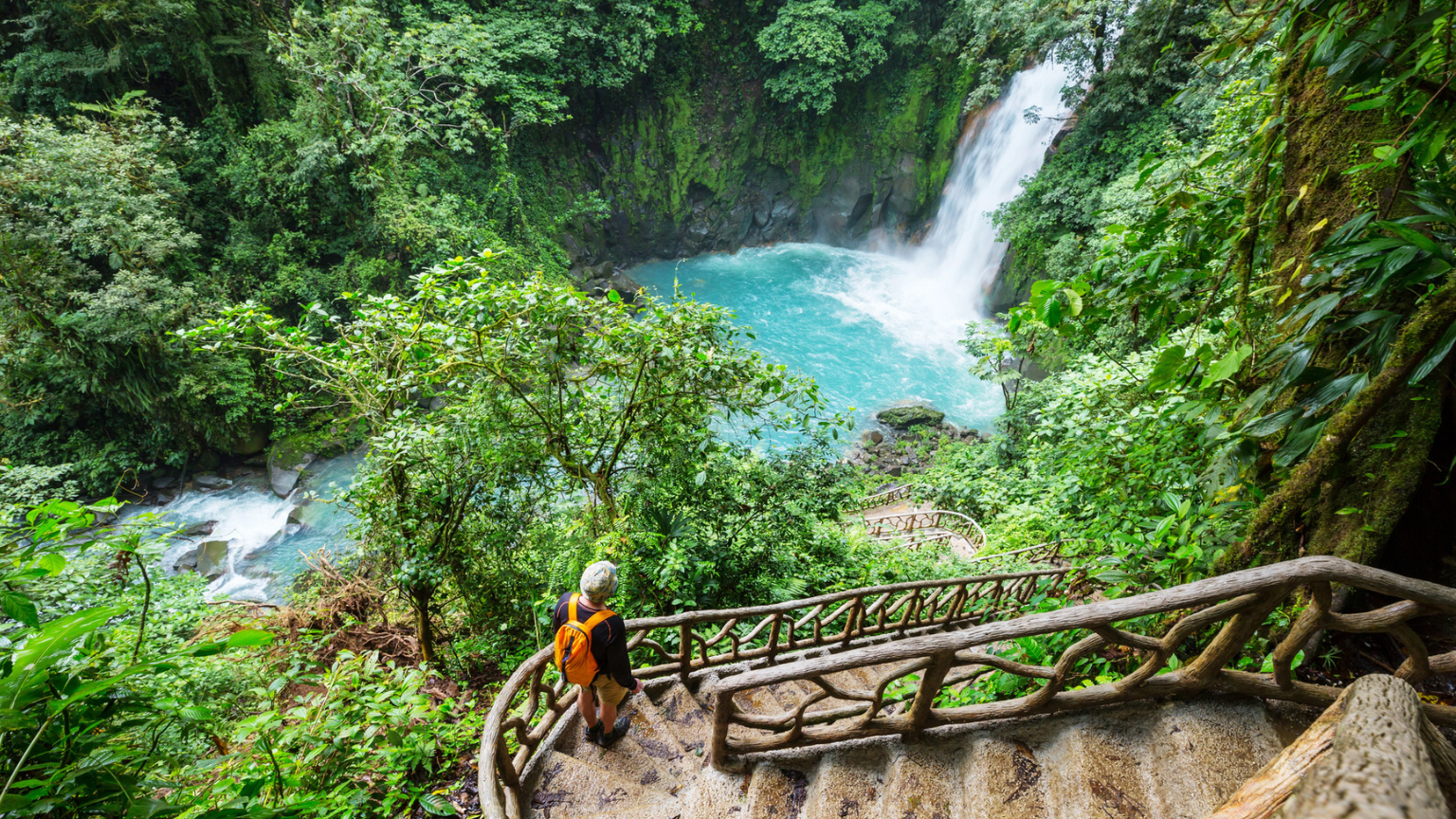
Inside Tenorio Volcano National Park, two clear streams meet and suddenly turn a bright powder blue due to a chemical reaction with volcanic minerals. The color is most intense at a calm bend under rainforest trees, and the waterfall is one of the most photogenic in the country. There are no resorts inside the park and no swimming is allowed, which keeps the water undisturbed. A well marked path and stairs make the walk accessible, but the clay can be slick after rain, so good shoes are important. Aim for a dry morning after a clear night for the strongest color. Small lodges sit on the highway outside the boundary, leaving the river itself quiet.
Semuc Champey, Guatemala

Semuc Champey is a limestone bridge in the Alta Verapaz that hides a roaring river and displays a series of terraced turquoise pools on top. The water is bathing friendly, warm in the sun, and lined with jungle where butterflies drift above the stones. There are no resorts at the site, only basic facilities at the entrance and footpaths that climb to a scenic overlook. Because of the remote location, days start and end slowly, and the pools can feel almost private if you time it right. Bring river sandals and a dry bag, since you will want to move from pool to pool. Stay in Lanquín or Santa Cruz and keep the bridge itself for simple swims.
Garibaldi Lake, British Columbia, Canada

Garibaldi Lake is a vast cobalt bowl held in by a lava dam and ringed with snowy peaks. The trail climbs steadily through hemlock and meadows before dropping to a shore lined with pumice and driftwood. There are no resorts or road access to the water, only a backcountry campground that sells out fast in summer. On calm days the lake reflects the glaciers so sharply that it feels like a second sky. Late July and August bring the warmest hiking conditions, though the water remains cold enough to bite. Sunrise is magic if you are camping, when the first light turns the ice pink and the lake turns a darker blue.
Grüner See, Austria

Grüner See, the Green Lake, appears each spring when snowmelt floods a meadow and turns it into a clear emerald basin. Paths, benches, and even small footbridges end up underwater, which makes the reflections feel surreal. There are no resorts on its banks, only forest and a tidy village a short walk away. Water levels change through the season, so check locally, and come on a still day to see the submerged park at its clearest. Swimming is not permitted, a rule that protects the fragile grass and keeps the water crystalline. Autumn reveals the dry lakebed again, which is just as peaceful for a picnic.
Exuma Cays Land and Sea Park, Bahamas

Inside this protected area you find miles of luminous water that shift from pale topaz to deep azure over sandbars and coral heads. The park has no resorts and no private development within its boundaries, only moorings for boats and ranger stations on a few cays. Kayakers can slip across flats where nurse sharks and rays cruise like shadows. Snorkelers drift over garden like reefs with almost no boat noise. Come on a rising tide for the clearest visibility over the shallows. Pack everything you need and plan to leave no trace, since services are deliberately minimal.
Cala Goloritzé, Sardinia, Italy

Cala Goloritzé is a petite cove beneath a limestone arch on Sardinia’s wild east coast, where the water glows blue against a beach of tiny white pebbles. You reach it by a hot, scenic hike from the Su Porteddu trailhead or by boat that must anchor off the beach. There are no resorts in the cove, only cliffs, juniper, and the sound of gentle surf. The protected status limits visitor numbers and keeps the water free of motors near shore. Bring plenty of water and a sun umbrella since there is little natural shade after mid morning. Swim the edge of the arch for the best color contrast under the rock.
Navagio, Shipwreck Beach, Zakynthos, Greece

Navagio sits in a crater like bay where chalk cliffs hold a strip of white sand and water that glows Caribbean blue. The famous wreck adds drama but the real show is the light, which changes the shade of the bay hour by hour. There are no resorts on the beach and no road down, only boat trips that drop you for a timed visit. For a quieter experience, ride the first boat of the day and stay toward the ends of the shore. The clifftop viewpoint gives a breathtaking overhead look, but keep behind the barriers and respect the wind. Pack sandals for cobbles and a dry bag, then enjoy the water that looks lit from within.
Luskentyre Beach, Isle of Harris, Scotland

Luskentyre is a wide sweep of sand where the North Atlantic shows its gentler side in shades of blue and green. On a clear day the water looks tropical, and the only sounds are gulls and the tide. There are no resorts here, only a single lane road, a few crofts, and dunes lined with marram grass. Low tide exposes bright sandbars that shift the color every few minutes. Bring a windbreaker even in summer, since the breeze can be lively. Stay in Tarbert or a local guesthouse and keep Luskentyre for long walks and sea air.
Aitutaki Lagoon Motus, Cook Islands

Outside the small village center, the motus of Aitutaki’s lagoon are undeveloped sand islets scattered across a shallow blue bowl. Many are protected or privately conserved, and there are no resort buildings on the most remote ones. Small boats drop visitors for picnics and snorkel sessions over giant clam gardens and coral heads. Wade from sandbar to sandbar as the tide reveals soft ripples in the lagoon floor. The best light is from late morning to mid afternoon when the sun sits high and the blue glows through the shallows. Pack out all trash and leave the motus as you found them, with only your footprints as proof you were there.
This article was written by Hunter and edited with AI Assistance