

Some old towns have so many souvenir shops and tour buses that it is hard to imagine anyone ever lived there. Then there are historic quarters that still feel like real neighborhoods, where laundry hangs over cobbled lanes and the smell of dinner drifts out of open windows. These places carry centuries of history in their stones, but they are not frozen in time. People still argue on balconies, kids still race through squares, and locals still claim the same cafe tables every morning. If you want to step into the past without feeling like you are walking through a museum, these historic quarters deliver that rare, timeless atmosphere.
Alfama, Lisbon, Portugal

Alfama feels like a maze built before straight lines were invented. This hillside district tumbles down toward the Tagus River, all narrow alleys, tiled facades, and tiny squares where you will probably hear someone singing fado behind half open doors. In the early morning, older residents chat from windows while delivery trucks squeeze through impossibly tight streets. At night, the neighborhood glows with warm light from family run taverns serving grilled sardines, caldo verde soup, and pitchers of wine. It is easy to get lost here, which is part of the charm, since every wrong turn leads to another viewpoint or hidden staircase. Even as Lisbon has become hugely popular, Alfama still feels like a lived in corner of the city, not just a backdrop for visitors.
Trastevere, Rome, Italy

On the far side of the Tiber from central Rome, Trastevere mixes centuries of history with a laid back, almost village feel. By day, you see ivy covered walls, laundry hanging above cobbled streets, and locals doing their daily errands. Small churches reveal stunning interiors that you might share with only a handful of other people. By evening, the piazzas fill with students, families, and travelers, all cruising between wine bars, trattorias, and gelato shops. Street performers appear, yet the energy stays more neighborhood than theme park. If you step a few blocks away from the busiest squares, you quickly find quiet lanes where the past feels very close and the present is just as real.
Gamla Stan, Stockholm, Sweden

Stockholm’s old town, Gamla Stan, rises from the water like something from a storybook. Narrow streets twist between mustard and terracotta colored buildings, and the royal palace sits at the edge as if it has always been there. During the day, cruise passengers and day trippers fill the main routes, but early morning and late evening reveal a softer, quieter city. You can wander into small courtyards, peek into artisan shops, and sip coffee in cafes that feel more local than touristy. The island is compact, yet every corner seems to hold another carved doorway or hidden passageway. With its mix of Viking history, gilded halls, and everyday apartments, Gamla Stan feels both ancient and surprisingly normal at the same time.
Old Town, Tallinn, Estonia

Tallinn’s Old Town looks almost too perfect at first glance, with its stone walls, pointed towers, and red tiled roofs. Climb up to one of the viewing platforms and you get a skyline that could easily pass for a fantasy film set. Down on the streets, however, you quickly notice that this is still a working city. Office workers cut through medieval lanes on their way to modern jobs, and local families wander the same squares that once hosted markets centuries ago. Cafes and restaurants tuck into old merchant houses, combining creaky floors and thick walls with creative menus. At night, the glow from lantern lit streets makes everything feel a little bit magical without tipping into kitsch. It is one of those rare places where a UNESCO listed old town still has a living, breathing pulse.
Gothic Quarter, Barcelona, Spain

Barcelona’s Gothic Quarter is the kind of place where a single block might include a Roman wall, a Gothic cathedral, and a trendy tapas bar. The streets are tight and twisting, sometimes so narrow that you can almost touch both sides if you stretch out your arms. Musicians set up in echoing squares, their notes bouncing off stone as people drift through. Locals still head to neighborhood markets and small bars tucked away from the busiest routes, especially in the early morning and late afternoon. You can walk from a quiet cloister directly into a buzzing plaza crowded with students and street performers. The mix of old stones and everyday city life makes the quarter feel timeless, even as Barcelona evolves around it.
Old Town, Prague, Czech Republic

Prague’s Old Town can be crowded, but it is hard to deny how timeless it feels when you stand under the astronomical clock and listen to the bells chime. Gothic towers, Baroque facades, and crooked medieval streets all press together in a relatively small space. The trick is to wander away from the main square and Charles Bridge, where side streets offer glimpses of everyday life between the landmarks. You might duck into a little cafe tucked under a vaulted ceiling or find a quiet courtyard behind an old wooden gate. At dawn or late at night, when the crowds drop away, you can hear your own footsteps on the cobblestones and see why this city has charmed visitors for centuries. The Old Town wears its history openly, yet you are always sharing it with the people who live and work there now.
Old Quebec, Quebec City, Canada

Old Quebec feels like someone lifted a slice of Europe and set it down above the St. Lawrence River. Stone houses with steep roofs line the narrow streets of the Upper Town, while the Lower Town gathers around the waterfront with colorful facades and cobbled squares. The city’s fortified walls still wrap around much of the old quarter, and you can walk along them for wide views of the river and the newer parts of town. Street performers and carriage rides give the area a storybook atmosphere, but look a little closer and you see school kids, shopkeepers, and office workers going about their routines. Cafes are full in winter as people escape the cold over steaming bowls of soup and hot chocolate. In summer, balconies overflow with flowers and people linger on terraces late into the light evenings. It is a historic district that manages to feel both grand and cozy at once.
French Quarter, New Orleans, USA

The French Quarter is famous for its nightlife, but it is the morning and quiet side streets that really show its timeless character. Wrought iron balconies draped with plants and flags hang over sidewalks worn smooth by centuries of footsteps. Jazz spills from doorways at almost any hour, and the sound of a trumpet echoing down a narrow street can make time feel fuzzy. Locals still live above the bars and shops, stepping out onto their galleries to chat with neighbors or watch the world go by. Corner groceries, old school po’boy shops, and weathered churches remind you that this is more than a weekend playground. Between the grand townhouses, hidden courtyards, and constant soundtrack, the French Quarter feels like its own world inside a modern American city.
Gion and Higashiyama, Kyoto, Japan

In Kyoto, the historic districts of Gion and Higashiyama still carry the quiet grace of an older Japan. Wooden machiya houses line stone lanes, lanterns glow softly at dusk, and temple roofs peek above the rooftops. In the early morning, before the buses arrive, you can hear nothing but your footsteps and the occasional bicycle passing by. Locals on their way to work walk the same routes that pilgrims and merchants once used centuries ago. Tea houses with sliding doors and small signs remain discreet, serving a clientele that has always valued privacy over spectacle. While social media has made these neighborhoods busier, there are still moments when the light, the architecture, and the hush combine to make the streets feel completely timeless.
Old Havana, Havana, Cuba

Old Havana is worn at the edges, which is exactly why it feels so alive. Colonial buildings in pastel shades line plazas and side streets, their balconies crowded with plants, washing lines, and people watching the action below. Classic cars rumble past crumbling facades, and music drifts from open windows, doorways, and corner bars. Children play soccer in alleys, older men gather around domino tables, and families lean on railings to chat across the street. Restoration projects have brought fresh paint and careful repairs to some blocks while others remain beautifully faded. That mix of polished and imperfect gives Old Havana a sense of real time layered over deep history. It never feels fragile, just endlessly animated.
Stone Town, Zanzibar, Tanzania

Stone Town sits right at the edge of the Indian Ocean, a dense tangle of alleys, carved doors, and coral stone buildings. As you wander, you catch glimpses of turquoise water between the houses and hear the call to prayer rise and fall over the rooftops. The architecture reflects centuries of trade, with Arab, Persian, Indian, and European influences woven into one compact quarter. Markets brim with spice, fruit, and fish brought in at first light, and local families still use the waterfront park as their evening gathering place. You will see kids jumping into the sea at sunset, older men playing board games under the trees, and street vendors grilling corn and seafood for the crowd. It is a place where history is not just preserved in museums, but lived every day in the streets.
Marrakesh Medina, Marrakesh, Morocco

The Medina of Marrakesh is a full body experience. You smell spices, leather, and citrus before you even find their source. You hear motorbikes, donkey carts, and bargaining voices all bouncing off pinkish red walls. Yet beyond the busy souks and the spectacle of the main square, the old quarter still holds quiet riads, neighborhood bakeries, and small mosques that anchor daily life. Turn down the right alley and suddenly the noise fades, replaced by the sound of a fountain in a courtyard and birds chattering in overhanging trees. Many of the high walls hide family homes and traditional guesthouses that have been there for generations. The Medina feels timeless not because it is frozen in the past, but because the same patterns of trade, community, and ritual continue in the middle of a modern city.
Old City, Cartagena, Colombia

Cartagena’s walled Old City hits you first with color. Bright houses in shades of mustard, cobalt, and coral line the streets, framed by wooden balconies draped with bougainvillea. Horse drawn carriages clip along the cobblestones, yet inside the walls you also see delivery scooters, schoolchildren, and office workers slipping in and out of heavy wooden doors. Plazas fill with vendors selling fruit, arepas, and crafts, while churches ring their bells overhead. At sunset, both locals and visitors walk the top of the old defensive walls to watch the sky change colors over the Caribbean Sea. Music and conversation spill into the streets well into the evening, but early mornings can feel almost contemplative. Cartagena’s historic center has all the charm of a postcard, yet it remains firmly rooted in everyday Colombian life.
Old City, Jerusalem

The Old City of Jerusalem compresses thousands of years of history into a space that feels surprisingly small once you start walking it. Four quarters intersect here, each with its own atmosphere, faith traditions, and daily routines. You pass shopkeepers arranging goods in narrow souks, families hurrying children to school, and pilgrims making their way to some of the most significant religious sites in the world. Stone steps are worn smooth by countless feet, and arches frame glimpses of domes, towers, and rooftops patched together across the centuries. Call to prayer, church bells, and street chatter layer on top of each other as the day unfolds. In the quieter corners, the sense of time almost seems to blur, as if past and present are breathing the same air.
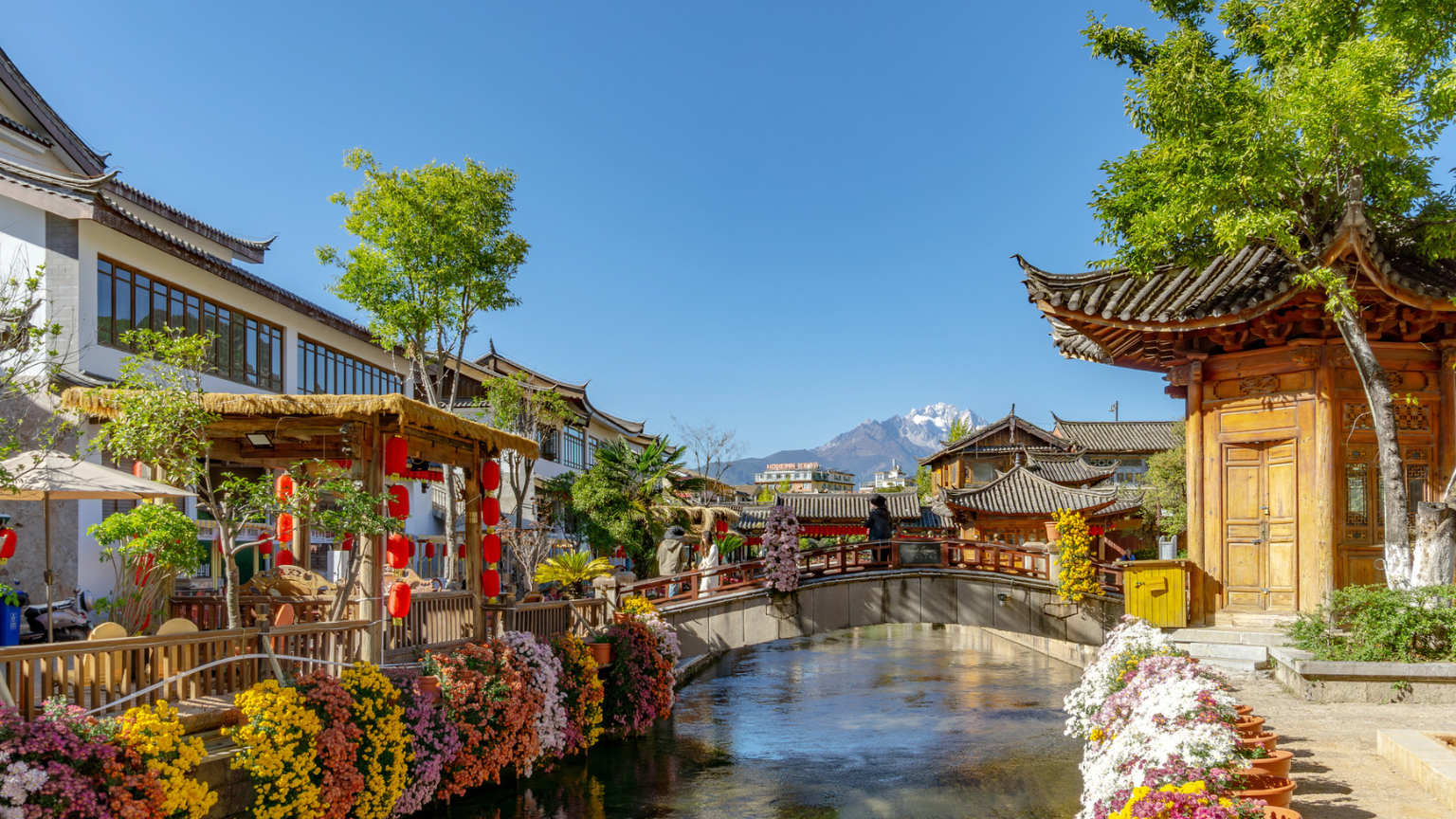
Old Town, Lijiang, China

Lijiang’s Old Town, in Yunnan province, is a lattice of canals, wooden houses, and stone bridges set against a backdrop of snow capped mountains. Traditional Naxi architecture gives the streets a distinctive look, with carved beams, tiled roofs, and red lanterns hanging over doorways. Water flows along channel edges and under bridges, bringing a gentle soundtrack to the whole quarter. Early mornings belong to local residents, who sweep doorways, shop for fresh vegetables, and chat on low stools outside their homes. As the day goes on, travelers join the flow, yet you can still slip into side alleys and find quiet corners where time feels slower. At night, the reflections of lanterns in the water and the smell of grilled food give the town a timeless festival quality.
Old Town, Dubrovnik, Croatia

Dubrovnik’s Old Town, wrapped in massive stone walls, looks almost unreal when you first see it from above. Terracotta roofs, marble streets, and polished stone buildings reflect centuries of maritime wealth and careful restoration. Cruise ships and television fame have brought plenty of visitors, but the rhythms of local life still poke through the glossy surface. Cats sun themselves on warm steps, church bells mark the hours, and laundry hangs in side streets just a few turns away from the main promenade. If you walk the wall circuit early in the morning or close to sunset, you get long views over both the sea and the city without much company. Inside the walls, small courtyards, side chapels, and tiny bars remind you that this is still a community as well as a showpiece. Dubrovnik may be well known, but in the quieter moments it easily earns its place among the world’s most timeless historic quarters.
This article was written by Hunter and edited with AI Assistance